A residential complex of up to 40 stories and 2,037 units planned for the Myeongmok-dong 572-1 area; 567 long-term jeonse units to be supplied, including newlywed-targeted 'Mirinaezip' housing
A redevelopment plan for the Sagajeong transit-oriented area in Jungnang-gu has cleared a key Seoul planning hurdle, paving the way for a 2,037-unit residential complex of up to 40 stories.
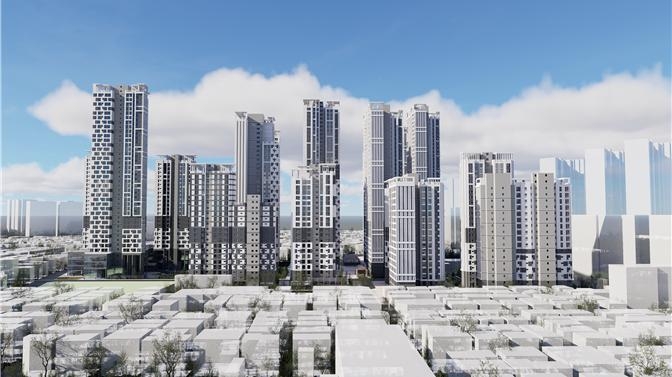
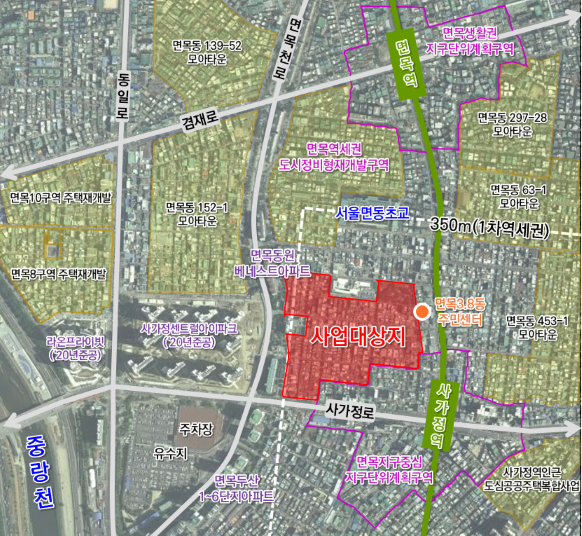
A plan to designate a redevelopment zone and set improvement guidelines for the "Sagajeong Transit-Oriented Long-Term Jeonse Housing Urban Renewal Redevelopment Project" at Myeongmok-dong 572-1, Jungnang-gu, passed the Seoul Metropolitan Government's 8th Urban Planning Committee review on May 20 with conditional approval.
The site sits near Sagajeong Station on subway Line 7, offering strong access to the Gangnam area and proximity to the Dongbu Arterial Road, giving it favorable transportation links.
With the review cleared, a total of 69,712.7 square meters will be newly designated as a redevelopment zone. Within that area, three lots covering 54,437.60 square meters are slated for a residential complex of 16 buildings — ranging from 4 below-ground floors to a maximum of 40 above-ground floors — with a combined 2,037 units.
The supply includes 567 long-term jeonse units and 137 redevelopment rental units. Half of the long-term jeonse units will be offered as "Mirinaezip" housing for newlyweds, a program expected to help younger households achieve residential stability.
Resident amenity and infrastructure improvements are also part of the plan. A new park of roughly 7,123.8 square meters will be created in connection with the existing Kkachi Children's Park, and neighborhood commercial facilities will be placed along the southern streetfront adjacent to Sagajeong Station to activate the street and link up with existing businesses.
Sagajeong-ro 49-gil, which runs north-south through the site, will be widened from 8 meters to 10 meters to improve the pedestrian environment. A visual corridor connecting Jungnangcheon stream and Yongmasan will also be secured to allow natural ventilation and enhance the urban landscape, with varied building heights planned to harmonize with the low- and mid-rise residential neighborhoods nearby.
Several other housing improvement projects are already under way in the surrounding area — including the Myeongmok Station transit-oriented long-term jeonse redevelopment project and Moa Town initiatives targeting aging low-rise residential blocks — raising expectations for a broad upgrade of living conditions across the Myeongmok-dong neighborhood.
A district official said the approved improvement plan is expected to drive simultaneous upgrades to the aging residential environment around Sagajeong Station and expand local infrastructure. "We will do everything we can to ensure the project moves forward so that residents can feel a real improvement in their living environment alongside the supply of quality housing," the official said.
Jungnang-gu is currently advancing 27 housing development projects within the district selected as candidate sites by the Ministry of Land, Infrastructure and Transportation and the Seoul Metropolitan Government. By type, the projects comprise eight redevelopment and reconstruction sites, five urban public housing complex projects, and 14 Moa Town projects.
seouldream01@heraldcorp.com