CU switches to soft water to keep convenience store rice fresh
BGF Foods' Jincheon factory produces up to 360,000 meals a day
Soft water improves rice moisture retention by about 20%
Automation rate to double to 30% within three years
Smart cooker rollout targets up to 10,000 units next year
"When rice is refrigerated, it hardens — a process called retrogradation. Rice cooked with soft water stays delicious even the next day after refrigeration."
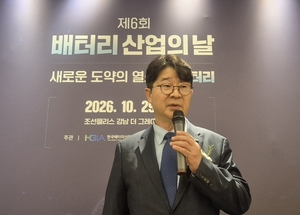
Im Hyeong-geun, head of BGF Retail's product division, made the remarks Wednesday at a media briefing held at BGF Foods' food center in Jincheon, North Chungcheong Province, explaining the soft water now used in CU convenience store ready-made meals.
Convenience store items such as triangle kimbap go through refrigerated distribution and in-store display before reaching consumers. Unlike freshly prepared food eaten immediately after cooking, the rice in these products can harden or lose texture over time. CU turned its attention to the water used to cook the rice as a way to address the problem.
Soft water has low hardness — meaning it contains less calcium, magnesium and other minerals. The lower the hardness, the more easily water penetrates the internal structure of rice grains, aiding starch absorption and boosting the rice's ability to retain moisture. In internal tests conducted by BGF Retail, rice cooked with soft water showed moisture retention more than 20 percent higher than conventionally cooked rice, even near the end of its shelf life.
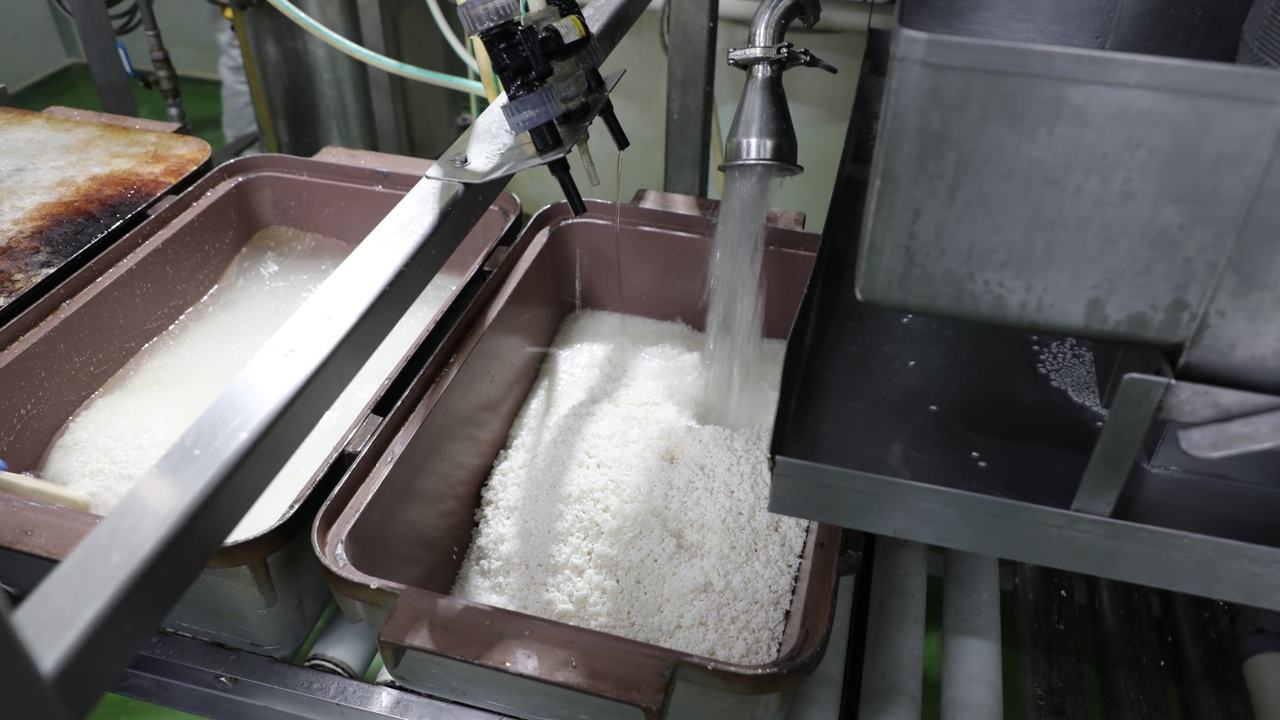
After about 10 months of research, CU introduced soft water with a hardness level of 5 milligrams per liter or below. The water previously supplied to its manufacturing facilities had a hardness of 50 to 120 milligrams per liter. CU uses water softeners to reduce the mineral content of tap water. Soft water is now used throughout the entire process — from washing and soaking the rice to the actual cooking stage. All ready-made meals using CU-supplied rice are now made with 100 percent soft water.
BGF Foods operates three factories nationwide: in Jincheon, North Chungcheong Province; Wanju, North Jeolla Province; and Seogwipo, Jeju. The Jincheon factory is the largest of the three, with a daily production capacity of up to 360,000 meals. It currently produces about 300,000 meals a day, consuming roughly 10 tons of rice. Products made there include dosirak, triangle kimbap, kimbap, sandwiches and hamburgers.
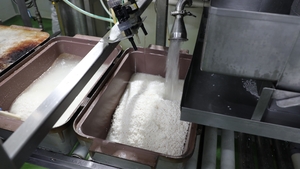
A tour of the factory on Wednesday showed the full journey of a ready-made meal — from rice storage through cooking and rapid cooling to product assembly and packaging. The process moved in sequence: washing the rice, soaking it, loading it with water into cookers, and cooking. Rice and water were fed in automatically to precise weight specifications. Once rapidly cooled, the cooked rice was routed to separate production lines for each type of ready-made meal.
The factory floor mixed manual and automated processes. On the triangle kimbap line, automated equipment placed fillings onto the rice. Rectangular portions of rice traveled along a conveyor belt while an automatic filling machine deposited the ingredients on top. The filled rice was then shaped into the familiar triangle and packaged automatically.
Some lines still required human hands. On the kimbap line, workers stood side by side adding fillings while a machine sliced and wrapped the rolls. Sandwiches were assembled by workers who spread fillings across each slice of bread by hand. Toppings such as meat — which vary in size and shape — also had to be placed manually because their irregularity makes automation difficult.
BGF Foods plans to introduce automated equipment on whichever processes can be mechanized first, raising both production efficiency and product consistency. According to BGF Foods, kimbap packaging once required nine workers, but that number dropped to three after automatic packaging equipment was introduced in June last year.
"Ready-made meal manufacturing is labor-intensive, and many processes still depend on people," said Song Yeong-min, CEO of BGF Foods. "We are pursuing automation and workforce reduction to ensure consistent quality." BGF Foods plans to raise its overall manufacturing automation rate from the current roughly 15 percent to about 30 percent within three years.
BGF Retail's food technology push is also extending into its stores. The Smart Cooker — the first of its kind in the convenience store industry — is the flagship example. The device combines a microwave, air fryer and oven in one unit. Scanning a product's barcode triggers automatic cooking according to a preset recipe. CU spent about a year co-developing the appliance with the manufacturer.
The Smart Cooker applies a different recipe to each product. Pizza and chicken, for instance, are first heated in microwave mode and then crisped using the air fryer or oven function. The device can store about 1,000 preset recipes across its product range. Cooking times are longer than with a standard microwave — the pizza and chicken demonstrated Wednesday each took about three to four minutes, though times vary by product.
CU has secured 500 Smart Cooker units and plans to complete in-store installation by the end of next month. Next year, the company aims to expand the rollout to as many as 10,000 units, replacing existing microwaves with the new appliance.
CU's push to apply technology across the manufacturing process and in-store cooking reflects its ambition to position convenience stores as a destination for everyday meals, not just snacks. This year, the company expanded its ready-made meal lineup with bite-sized "mini kimbap" and small-portion ready-made meal options.
Next year, CU plans to improve packaging and containers to make eating on the go more convenient. The company also intends to expand meal-replacement ready-made meals made with wholesome ingredients such as chicken breast, eggs and bananas, and to diversify its menu of rice, bread and noodle options so consumers can choose based on the occasion.
"We are extending technology to products and in-store cooking to provide a proper meal solution," Im said. "We will grow beyond the convenience store into a comprehensive meal solution platform."
Oct. 30, 2026