Trump's new tariffs hit China-alternative producers, prompting firms to consider returning
US plans to impose excess-capacity tariffs on 14 economies
Vietnam faces up to 35%, India 25%, Singapore 20%
High tariff rates threaten Southeast Asia's export edge
Southeast Asian FDI hit a record $246 billion last year
Global firms' supply chain shifts, investment plans at risk
Concerns are growing that the Donald Trump administration's new tariff measures — including duties targeting excess production capacity — could slow the accelerating shift away from China that has reshaped global manufacturing since the US-China trade war. Southeast Asian countries such as Vietnam, which have emerged as favored alternatives to China as production bases, risk losing their price competitiveness against Chinese goods under the new tariffs. Some companies that relocated facilities outside China to reduce their tariff burden may now conclude it makes more sense to move back.
Bloomberg reported Thursday (local time) that new US tariff measures targeting 14 economies across Asia and Europe would hit the biggest beneficiaries of the so-called "China Plus One" investment strategy. China Plus One refers to the approach of diversifying supply chains into third countries such as those in Southeast Asia to manage rising costs and production risks in China. The strategy had been gaining momentum as US-China tensions deepened and Washington raised tariffs on Chinese goods, prompting global companies to restructure their supply chains.
The latest tariff announcements are expected to deepen the dilemma for global companies, as simply moving production outside China may no longer be enough to avoid US trade barriers.
"A lot of companies are going to say, 'If this is the case, I'm just going to go back to China,'" said Deborah Elms, head of trade policy at the Hinrich Foundation in Singapore. "Why would you take on all the paperwork, the compliance costs, the uncertainty of changing tariff rates — if you don't have to?"
Earlier, the Office of the United States Trade Representative said Southeast Asian nations had not done enough to address the transshipment of investment and goods from so-called "non-market economies" — a term that in effect refers to China. The tariff rates proposed by the US reach up to 35% for Vietnam, 25% for India and 20% for Singapore, though countries that conclude trade negotiations with Washington could receive lower rates.
Global companies have been accelerating supply chain diversification since the US began imposing tariffs on Chinese goods in 2018. Manufacturers have expanded their production footprints across other parts of Asia to reduce their US tariff exposure while maintaining existing facilities and suppliers in China.
Foreign direct investment flowing into Southeast Asia last year reached a record $246 billion. It was the first time since the early 1990s that FDI inflows into Southeast Asia surpassed those into East Asia.
According to the Association of Southeast Asian Nations, FDI into Southeast Asia's manufacturing sector jumped nearly 50 percent year-on-year last year to $40 billion, driven by investment across a wide range of industries including electronics, semiconductors and automobiles.
In announcing the new tariff policy, the USTR criticized China for encouraging the expansion of overseas manufacturing capacity. Bloomberg said the criticism was particularly relevant to Southeast Asian countries, where Chinese companies have set up production facilities in rapid succession, causing manufacturing output and exports to the US from major Southeast Asian nations to jump.
Analysts say the new US tariffs could erode Southeast Asia's appeal as a manufacturing alternative to China. "Even if all the ongoing trade negotiations are concluded, the new tariff rates will reduce the competitive advantage of Southeast Asian exports over Chinese goods," said Erica Tay, an economist at Maybank Securities in Singapore.
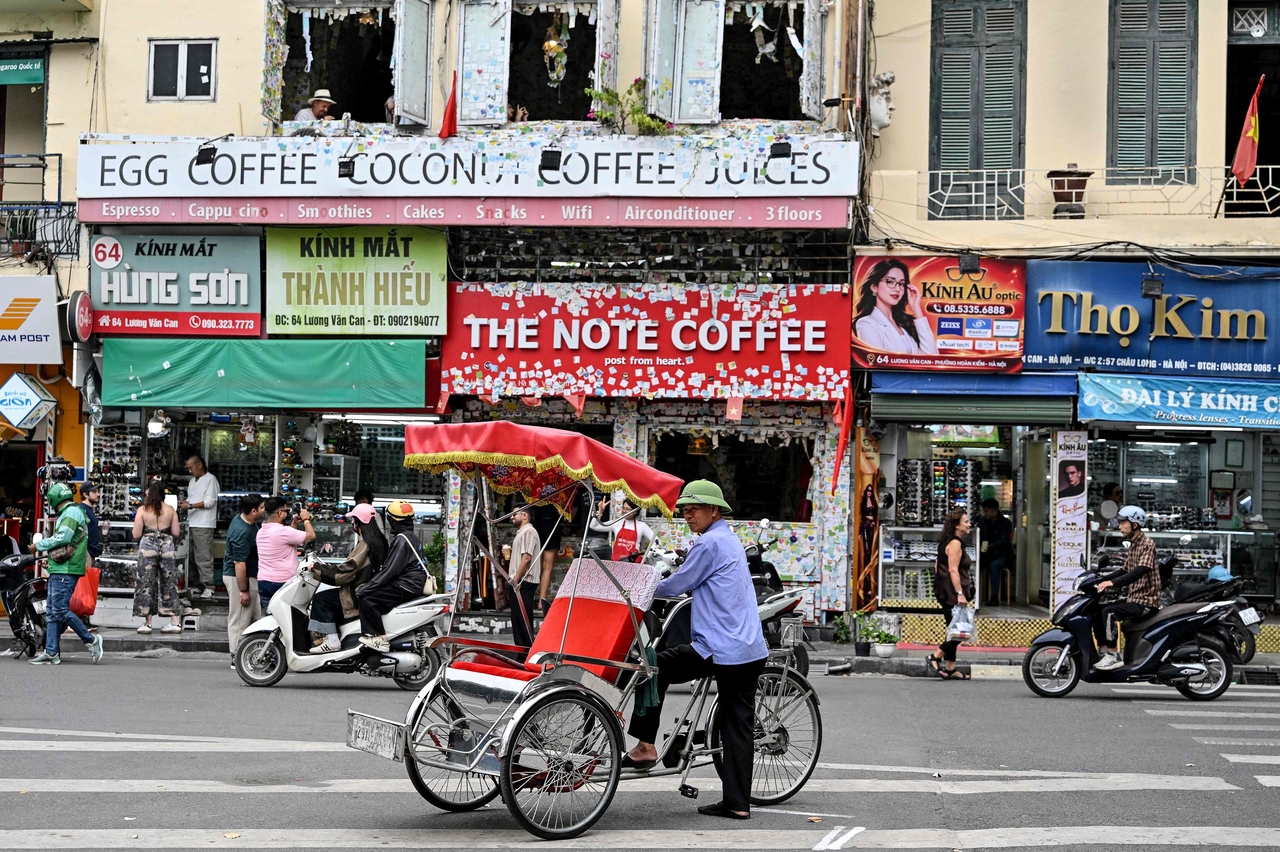
Vietnam is widely seen as one of the countries most vulnerable to the new tariffs. According to the US Census Bureau, Vietnam's trade surplus with the United States in the first nine months of this year reached $191 billion, already surpassing its full-year surplus of $178 billion last year.
Travis Mitchell, executive director of the American Chamber of Commerce in Vietnam, warned that the 35% tariff rate under consideration would "put Vietnam at a competitive disadvantage." He said companies "will have no choice but to consider moving some of their production to other countries, and that process could disrupt supply chains that have been built up over many years."
Frequent changes to US tariff policy have also made it increasingly difficult for companies to plan medium- and long-term business strategies, analysts said. Even after spending heavily to relocate production, companies face the risk that their new host country could itself become a target of fresh US tariffs.
"It's becoming increasingly difficult for businesses to make decisions on pricing, sales outlook, production plans and future investment when they don't even know what tariff rate they'll be facing in the coming months," Mitchell said.
Nov. 28, 2026