
Dongjak unit bought for 1.1b won after selling Incheon, Dongtan now trades in 1.6b won range
37% of income goes to loan repayment — 'I want to pay even more'
'Don't fixate on top-tier neighborhoods from the start — begin somewhere with room to grow'
The Herald Business's subscriber series "How Deputy Manager Kim Bought a Home in Seoul" features candid real estate stories from Korean office workers who have successfully purchased their own homes. Names and certain details in this article have been changed to protect the subject's identity.

"Noryangjin New Town looks exactly like Ahyeon New Town used to. Just imagine this entire area transformed into brand-new high-rise apartments. I think Dongjak still has plenty of room to rise."
In January last year, Deputy Manager Lee and a spouse sold their Incheon apartment and a unit in Dongtan they had held as a gap investment, then used the proceeds to buy Complex A in Dongjak-gu. A reckless decision made four years earlier had taught them that even investment properties should be places you actually want to live in.
▷ Read part two of Deputy Manager Lee's journey into the Han River Belt
Because the couple had chosen the complex in the first place for its rich amenities, their satisfaction with daily life there has been high. "My commute is half what it used to be," Lee said. "I no longer spend my mornings anxious about being late."
Riding Seoul's rising home prices, the couple's net worth has grown substantially. The complex they bought for 1.1 billion won ($819,000) in early last year has seen its value climb more than 500 million won in one year and 10 months, with units now trading in the 1.6 billion won range. A choice made to improve quality of life ended up building wealth as well.
The trend is not limited to their complex. According to the Korea Real Estate Board's weekly apartment price index, Dongjak-gu apartment prices had risen a cumulative 7.19 percent this year as of Nov. 16.
Record-high transaction prices have followed in quick succession. An 84-square-meter unit at Sangdo-dong Raemian 1st in Sangdo-dong, Dongjak-gu, changed hands for 1.18 billion won in January last year, then set a new high on Oct. 23 when it sold for 1.67 billion won.
An 84-square-meter unit at e-Pyeonhansesang Sangdo Nobility in Sangdo-dong fetched a record 2.37 billion won in September, while a 59-square-meter unit at Noryangjin Woosung in Noryangjin-dong hit a record 1.51 billion won in October. Both complexes have risen more than 600 million won since January 2025.
37% of income toward loan principal and interest — 'the lubricant for growing assets'

Buying a home in Seoul reshaped the couple's household balance sheet. After selling their previous properties, they had about 500 million won in hand. They covered the remaining 600 million won needed to purchase Complex A with a mortgage.
About 37 percent of the couple's combined income now goes toward loan principal and interest — a significant share, but well below what Lee had mentally braced for. Since both spouses work, they had always figured they could afford to put roughly one person's monthly salary toward repayment.
Lee compared the interest payments to "lubricant" needed to keep assets in motion — choosing to pay a manageable monthly cost instead of putting money into a savings account, in exchange for seizing an opportunity. "It doesn't feel like a burden — if anything, I want to pay more," Lee said. "Next time, I'll borrow 1 billion won."
The lending environment changed dramatically after the couple made their move. Within just six months of entering Seoul's housing market, the government introduced the June 27 measures, capping mortgage loans for home purchases in the greater metropolitan area at a maximum of 600 million won. The October 15 measures last year went further, applying tiered limits based on home price: properties priced between 1.5 billion won and 2.5 billion won became subject to a maximum loan of 400 million won, while those above 2.5 billion won were capped at 200 million won.
The couple sees a shift in lending conditions as the trigger for their next upgrade. That does not mean they are sitting idle in the meantime — they are diligently preparing so that when an opportunity arrives, they will have more options to choose from.
The two make a well-coordinated team when it comes to building wealth. They once debated fiercely over whether to buy in Mapo-gu or Dongjak-gu, yet day-to-day disagreements are rare. Each has a clearly defined domain: the spouse handles stocks, while Lee takes charge of real estate. Before major decisions, they consult each other but ultimately trust the other's judgment.
"My spouse knows how serious I am about real estate. When I said we needed to break from our original plan and move up sooner, I was told I was right — and we moved immediately. I think we'll keep working this well as a team."
Missing out on the Olympic Park Foreon lottery — 'being a single homeowner lets me move more boldly'
Lee has no intention of adding to the number of properties owned. "Unless the market swings in favor of multi-property owners, it seems like you can invest more aggressively right now when you have just one home to live in," Lee said.
The complex that drove home that lesson is Olympic Park Foreon in Gangdong-gu, a roughly 12,000-unit development built on the site of the redeveloped Dunchon Jugong apartments. In March 2023, 899 units there were released through an unranked subscription lottery — commonly known as "jupjup." Some 41,540 applicants chased what many hoped would be a lottery-like windfall, producing an average competition ratio of 46.2 to 1.
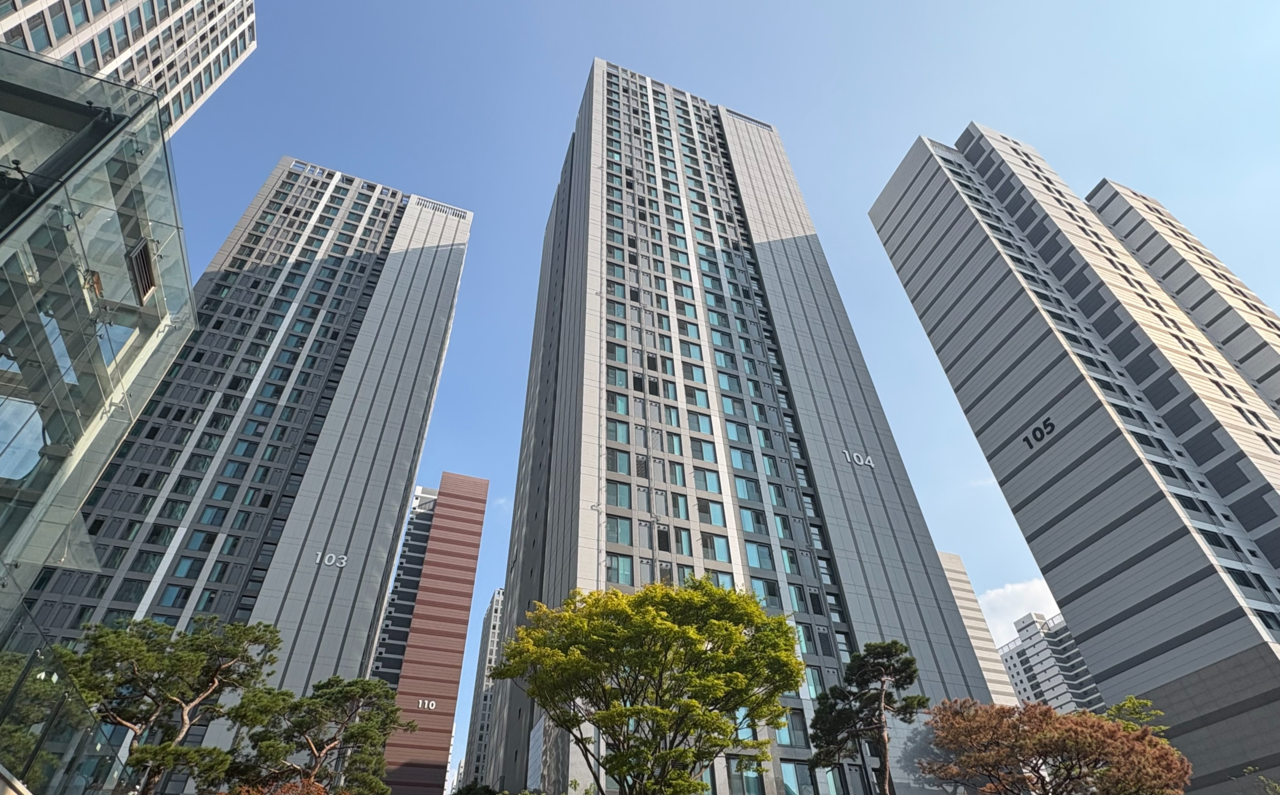
Because the requirement to be without a home or to live in the same district had been lifted at the time, Lee — who held multiple pre-sale rights — was eligible to apply. But as luck would have it, Lee was then wrestling with whether to move into the Incheon apartment as home prices were falling. While a down market opened a door to Seoul for some, Lee was already stretched thin managing earlier investments. With capital tied up across multiple pre-sale contracts, taking on a new one was simply out of reach.
"I remember thinking at the time, 'If I only had one property, I could be moving so much more nimbly.'"
The window for unranked subscription lotteries has since narrowed again. In June, the government restricted eligibility for unranked subscriptions to people who own no home, citing a desire to curb overheating and direct supply to genuine end-users. The residency requirement was left to the discretion of local government heads.
"Now that I only have one home I actually live in, a down market doesn't scare me much," Lee said. "If undersubscribed units come up in the Gangnam area, I'll be in a position to move more aggressively — which I actually think is a good thing."
Lee's advice to working professionals starting out in real estate is that nothing matters more than a steady job that generates consistent income. Lee has also refused to sacrifice everyday life — a routine shared with a spouse and a pet dog. "In the end, people who traded up step by step into homes they genuinely wanted to live in outperformed those who kept adding properties with an investor's mindset," Lee said. "A sustainable daily life has to be the prerequisite."
Now in the Han River Belt, the couple sets sights on Gangnam's 'dragon's tail'
Lee's scouting trips have recently taken Lee to the Gangnam area. Just as before breaking into Seoul, Lee is carefully studying properties that are not yet within reach. Given current income and asset levels, the focus is on complexes with a relatively lower barrier to entry rather than brand-new developments.
Friends and acquaintances seeking real estate advice from Lee have grown noticeably more numerous. "I've seen a lot of people sacrifice too much chasing a higher-tier neighborhood," Lee said.
Not long ago, an acquaintance showed Lee a standalone apartment building in Mapo-gu — no elevator, fewer than 80 units. Even Lee, who once desperately wanted to break into Mapo, shook Lee's head. The point: when you attach too much meaning to neighborhood tier, you lose the ability to properly assess the actual value of the unit you are trying to buy.

Lee advises against fixating on a final destination from the very first purchase. "Rather than insisting on Mapo-gu, Yongsan-gu or Seongdong-gu from the start, it's not a bad idea to begin in Gyeonggi Province in the 500 million to 600 million won range, somewhere with potential for change through improved transport links or development plans," Lee said.
"If you're early in your career and don't yet have enough seed money, it's better to steadily build up financial assets than to rush into a hasty decision," Lee added. The couple is doing exactly that, accumulating funds for their next upgrade through investments including US-listed ETFs.
Not being able to buy right now is no reason to stop studying the market. That, Lee says, is precisely what makes scouting trips worthwhile. Because there is no urgency, real estate agencies become excellent classrooms.
"Online you see a lot of advice about how not to look like a pushover at a real estate agency. But I do the opposite — I lay all my cards on the table. Since I'm not in a rush anyway, my approach is 'please teach me as much as you can' rather than 'I know more than you.'"
Lee makes a habit of peering into real estate agency windows even while walking past on ordinary days — paying less attention to the listings posted on the glass than to the people working inside. When Lee spots an agent still at the desk late in the evening, working busily, the name goes into a notebook. The expectation is that someone that diligent will be just as thorough when it comes time to draw up a contract.
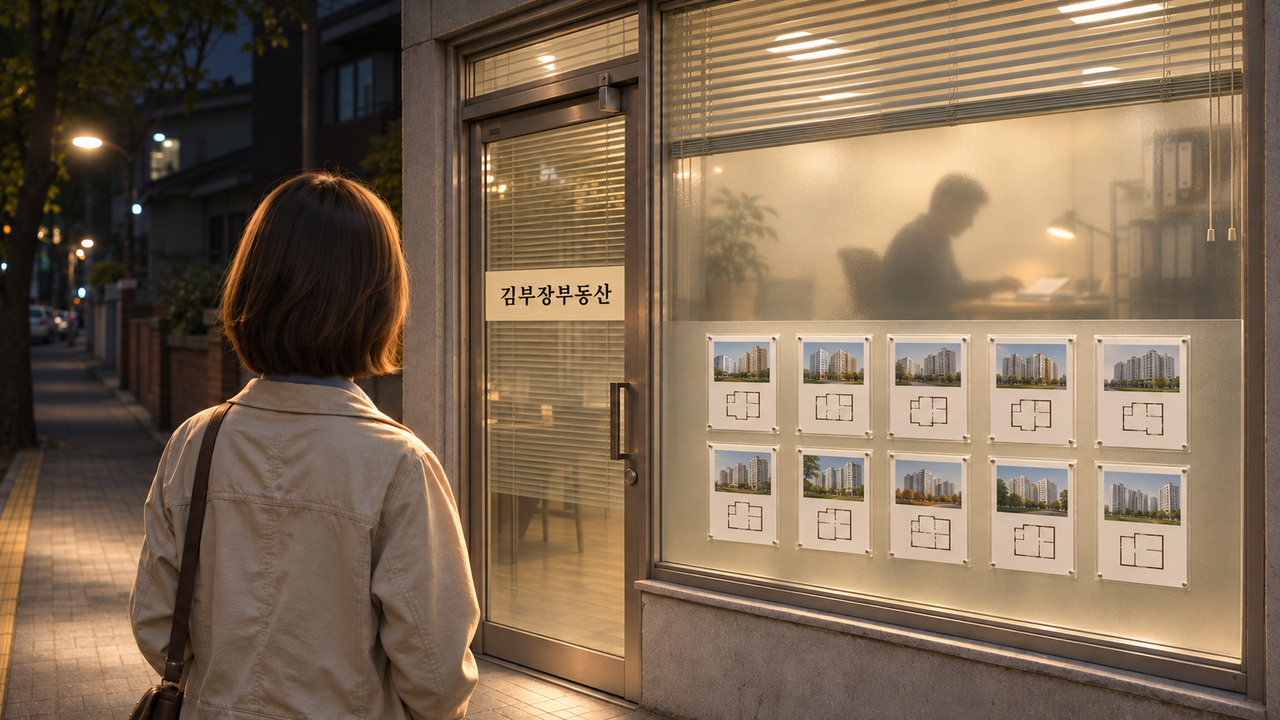
From the very first investment to today, things have rarely gone according to plan. Yet each time, Lee prepared for the next decision. Whether holding multiple pre-sale rights or now as a homeowner in the Han River Belt, that diligence has never wavered.
Six years ago, Lee entered the real estate market with 70 million won — an entire life's savings at the time. After years of trial and error, Lee has secured a home in Seoul. Once a resident of Incheon who made weekend scouting trips to the capital, Lee now lives in Dongjak and studies Gangnam. The message Lee most wants to pass on to those just beginning to take an interest in real estate is clear.
"I missed one opportunity myself and then caught the next one. The cycle keeps turning. If you've done your homework, the next chance will come — so don't let impatience cause you to button up wrong from the start."
shy@heraldcorp.com





