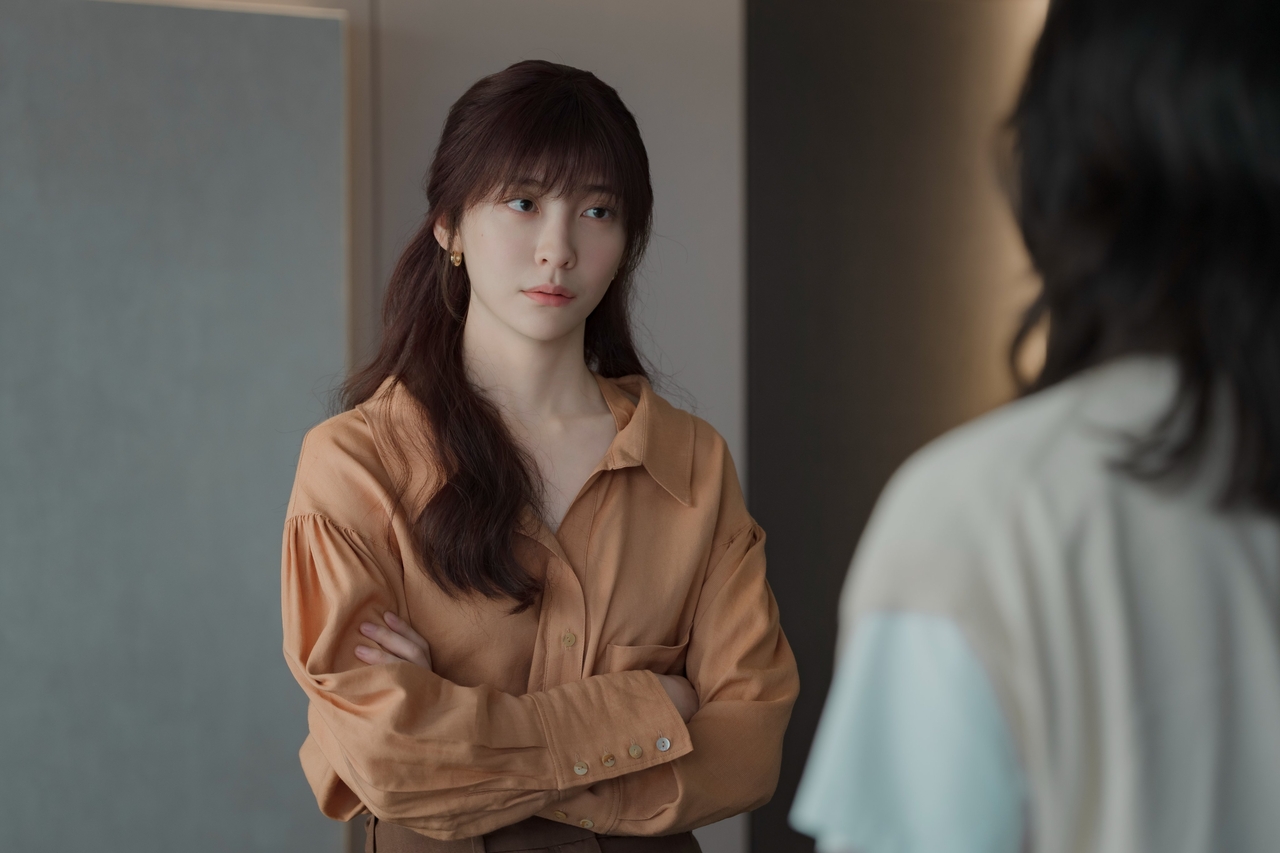
Park Ji-hyun becomes first Korean actress nominated for International Emmy Award
Actress earns best performance nod for Netflix series; Disney+ drama 'Hyper Knife' also advances to finals
Actress Park Ji-hyun has become the first Korean actress nominated for an International Emmy Award.
The International Academy of Television Arts and Sciences announced Friday that Park received a best performance by an actress nomination for the Netflix series "Eunjung and Sangyeon" at the 54th International Emmy Awards.
This year's nominees span 64 entries across 16 categories from 22 countries, with Korean content earning recognition in both the individual performance and miniseries categories.
It is only the third time a Korean national has advanced to the finals for an individual acting award at the International Emmys.
Jang Hyuk became the first Korean actor nominated for best performance by an actor for the KBS 2TV drama "The Slave Hunters" in 2011, followed by the late Lee Sun-kyun, who received a best performance by an actor nomination for the Apple TV+ original series "Dr. Brain" in 2022.
Park's nomination comes four years after Lee's, continuing the lineage of Korean acting nominees at the ceremony — and marking a historic first for a Korean actress.
"Eunjung and Sangyeon," the series behind Park's nomination, follows half a lifetime of two friends — Ryu Eun-jung (played by Kim Go-eun) and Cheon Sang-yeon (played by Park) — who first met in their school days and spent years caught between admiration, jealousy and resentment. The series was directed by Jo Yeong-min, known for the SBS drama "Do You Like Brahms?" and the JTBC drama "Interest of Love," and written by Song Hye-jin.
Park plays Cheon Sang-yeon, a successful film producer who, after receiving a terminal cancer diagnosis, asks her longtime friend Eun-jung to accompany her in an assisted death. Park embodies three decades of her character's life — from a vibrant late adolescence through the bitter estrangements of her 20s and 30s, to a serene resignation in her 40s as she prepares to face the end — conveying each era through deeply expressive eyes and precisely calibrated breath.
Park faces strong competition in the best performance by an actress category: Sheridan Smith for the British series "I Fought the Law," Barbara Mori for the Mexican series "El mundo de Luca" and Mona Mina Leon for the Belgian series "Holy Sh!t."
Korean content's showing at this year's ceremony extends beyond the acting category. "Hyper Knife," a Disney+ original series starring Seol Kyung-gu and Park Eun-bin, also advanced to the finals, earning a nomination in the TV movie/miniseries category.
Park Eun-bin made history in 2022 when she became the first person to bring home an International Emmy for a K-drama, winning the telenovela series award for the KBS 2TV drama "Yeonmo." Four years later, she has once again led one of her starring vehicles to the International Emmy finals.
The 54th International Emmy Awards ceremony will be held Nov. 23 in New York.
Sept. 26, 2026

!['I killed your fiancé' — the painter who saw himself in a forbidden demon [Lee Won-yul's Huam-dong Art Museum — Mikhail Vrubel]](https://wimg.heraldcorp.com/news/cms/2026/09/25/news-p.v1.20260925.9a0b1648e4f74eeba4be6353d0d60a86_T1.png?type=h&h=240)