New album marks three decades of a Zainichi Korean life in music
Featuring the half-moon meditating figure, King Danjong and the Wind Phone
Concerts at National Theater of Korea on Nov. 28-29
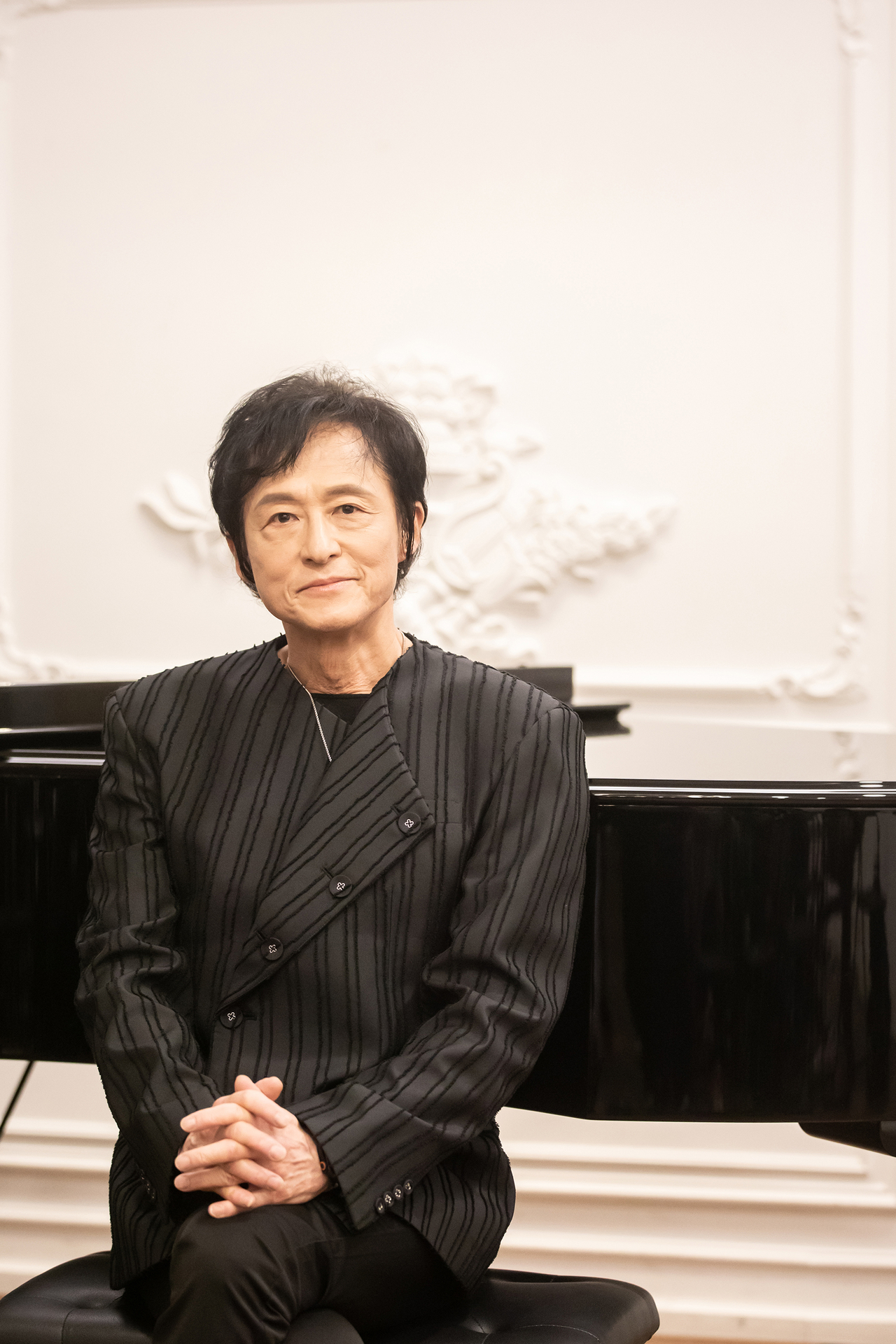
"I may just be the type who keeps running without looking back. Having the 30th anniversary as a milestone made me stop and look back for the first time."
The musician who had run without pause for three decades finally stopped. That musician is composer Yang Bang-ean. It has been 30 years since he released his first solo album, "The Gate of Dreams," on Nov. 4, 1996. In the time since, he expanded his stage from Japan to Korea, made his name with "Frontier!," the theme song for the 2002 Busan Asian Games, and served as music director for the opening and closing ceremonies of the 2018 PyeongChang Winter Olympics. What he has produced at this pause is not an album that rewinds the past — it is his first full-length record in 11 years, titled "NEW HORIZON."
Speaking at a press conference held Wednesday at Audio Guy Studio in Jongno-gu, Seoul, Yang said he did not so much look back on the 30 years as feel them. "It hit me — oh, this is how I've been making music," he said. The word that stayed with him as he took stock of the years was gratitude. Without the people he had collaborated with and made music alongside, he reflected, there would have been no 30th anniversary.
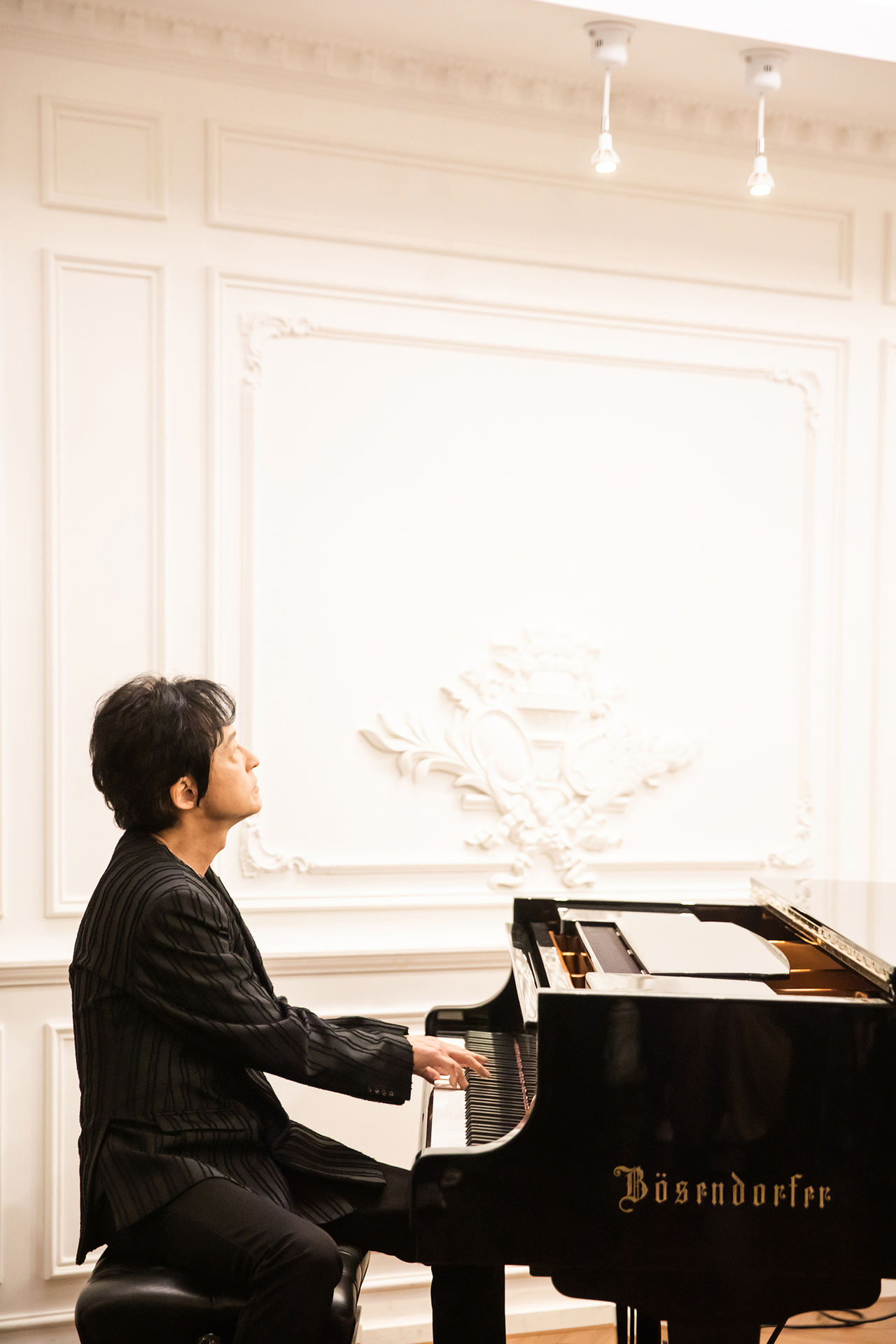
The new album, set for release Nov. 27, contains 12 tracks in all — six new songs drawn from personal memories and emotions, and six pieces written for various cultural and arts projects in recent years. On Nov. 28 and 29, he will hold a 30th-anniversary concert, "UTOPIA-New Horizon," at the Haeoreum Grand Theater of the National Theater of Korea. The show will bring 26 performers to the stage, with Yang's piano at the center, joined by a band, Korean traditional percussion and wind instruments, and an orchestra.
Eleven years of collaboration, then back to the piano
The new album arrives after a full 11 years. His previous record was "Embrace," released in 2015. In the intervening years, Yang served as music director for the 2018 PyeongChang Winter Olympics ceremonies, composed music for the half-moon meditating figure at the National Museum of Korea's "Hall of Contemplation," and contributed to the soundtrack of the game AION2. The long stretch of projects that drew on his full range of abilities left little time for music of his own.
"There were so many opportunities to collaborate on different projects," he said. "But when there were too many of those, I found I couldn't make my own solo music."
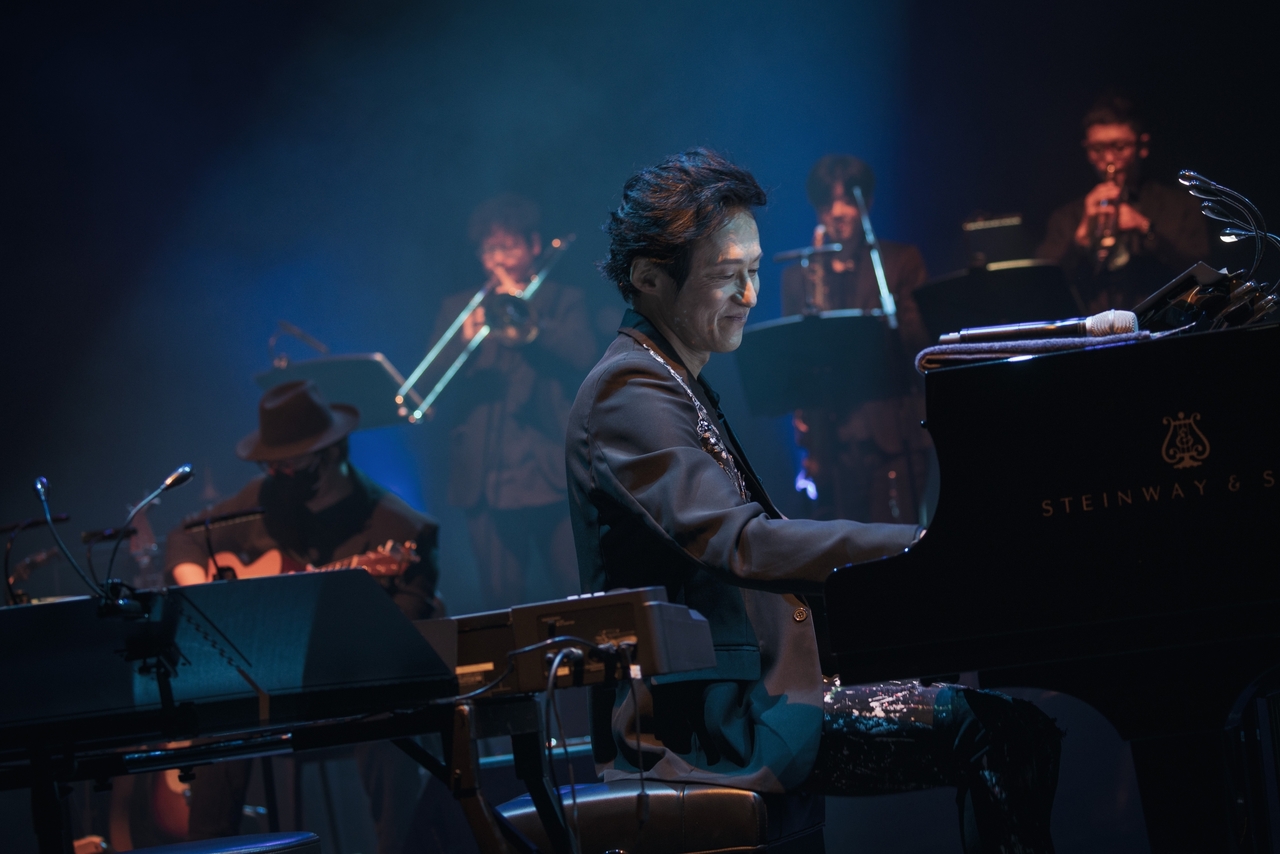
Even so, he never entirely set aside music that could be called solo work during those 11 years. "Works like 'Tea Horse Road' have a deep connection to my solo music," Yang said. "They influenced each other, and my music grew through that." Where his previous album had leaned heavily on the fusion of a band and a symphonic orchestra, this one places the piano at the center. "I wanted to put the piano front and center and reveal a lot of my personal thoughts and inner world," he said.
The new album was born in a studio nestled in the mountains of Japan at an elevation of 1,000 meters — the place where he makes most of his music. When he leaves it, he moves constantly between Korea and the United Kingdom, returning to Korea roughly once a month.
"My roots are Korean and my DNA is Korean. But I was born in Japan, wandered many places, absorbed a great deal, and turned it all into music. It made me think — ah, this is how I've lived."
A second-generation Zainichi Korean born to a father from Jeju and a mother from Sinuiju, Yang set aside a path in medicine to pursue music, moving through Japan and Hong Kong before beginning his activities in Korea in 1999. He does not call himself a nomad, however. That is why he coined the title "NOMADESQUE" for a new track — borrowing the suffix "-esque," meaning "in the manner of," as in Humoresque or Arabesque. "I thought: maybe not a nomad, but perhaps nomadesque," he said.
The track was originally conceived as an instrumental. His longtime musical collaborator Ha Hyun-woo of the band Guckkasten heard it and asked to be part of it, and a voice was added — though there are no lyrics. The two will perform the song together live for the first time at the anniversary concert. Yang named it "the core track of this album."
From the same inner place came "Wind Phone." The piece was inspired by the "telephone of the wind" in Otsuchi, Iwate Prefecture, Japan — an unconnected phone placed in a garden by a resident who lost a cousin in 2010. After the Great East Japan Earthquake of 2011, people began making their way there to speak to those they had lost. "I thought it was a story anyone could have," Yang said. "This time, I really wanted to include it."
'This is Yang Bang-ean'
"Sayu Thoughts" takes its starting point from the half-moon meditating figure. It is a seven-minute work in which jeongga vocals, piri and taepyeongso weave together before percussion joins and the piece swells, ultimately returning to close on the main theme of "Hall of Contemplation." "Rebirth," the theme song for the Danjong Cultural Festival in Yeongwol, Gangwon Province, lifts the sorrow of King Danjong into a vigorous, hopeful melody, with fragments of the Arirang tune woven through. Yang composed the music for "The King's Warden" before seeing the film. "If I had seen it before composing, it might have turned out with a different feel," he said.
Each track was born in a different place. Music critic Lim Hee-yun, who moderated the press conference, said that despite this, "you recognize it instantly as Yang Bang-ean — the way you do with the Beatles or Oasis." Yang replied: "That is the greatest compliment I could receive."
One pillar of what makes Yang sound like Yang is Korean traditional music. He is not, in fact, a trained specialist in it. "I came to Korea in '99, saw traditional instrument performances for the first time and fell in love," he said. "It wasn't that I felt I had to preserve it — I started because I wanted to, because I wanted to try."
Yang has built his music on a Western framework and layered the timbres of Korean traditional instruments over it. Piano, band and orchestra lay the bones; taepyeongso, piri and jeongga vocals give it texture. "Sayu Thoughts" and "Rebirth," both played at the press conference, were made the same way. He does not transplant folk songs wholesale, either. For "Rebirth," rather than inserting Arirang intact, he broke off a fragment of the melody and dissolved it in; for "Echoes for PyeongChang," he let Jeongseon Arirang seep through. From 2013 to 2015 he served as artistic director of the National Theater of Korea's Korean music festival Yeowoorak Festival, and he still appears as a guest on gugak orchestra stages. "If the sound of the taepyeongso makes someone think 'this is a Yang Bang-ean piece,' and traditional instruments are part of what does that — I'd be happy," he said.
The motto he holds for his music is "not difficult — music that reaches the listener directly." He said it is equally important to him that alongside Korean traditional music, he has continued work entirely unrelated to traditional instruments, such as animation and games.
Yang heads to Abbey Road Studios in London on Thursday to record for the new album. There he will record the title track "NEW HORIZON," "NOMADESQUE" and other pieces with a full orchestra — his 13th orchestra recording session in London since he first visited the studio in 1998.
"I probably won't be traveling to Inner Mongolia, the Tea Horse Road or Tibet the way I used to," he said, "but I don't think I'll be staying in one place. I can't see exactly where I'm headed yet, but I can see it in the distance. I'm looking for that place now."
shee@heraldcorp.com