
231. Vasily Pukirev
A shocking canvas of an old man and a young girl
Was it the painter's own story — or a friend's?
A rebuke to the warped customs of an empire
'It tormented countless old generals'
One painting alone left 'a brilliant mark'
Editor's note
Huam-dong Art Museum is a long-form cultural storytelling series built for the boundless digital space — the original destination for art narratives of this kind. Click ■ Subscribe to reporter■ to receive a new art story every weekend. Articles are written as storytelling grounded in historical fact, with a measure of imagination added.
A marriage that could not be more mismatched
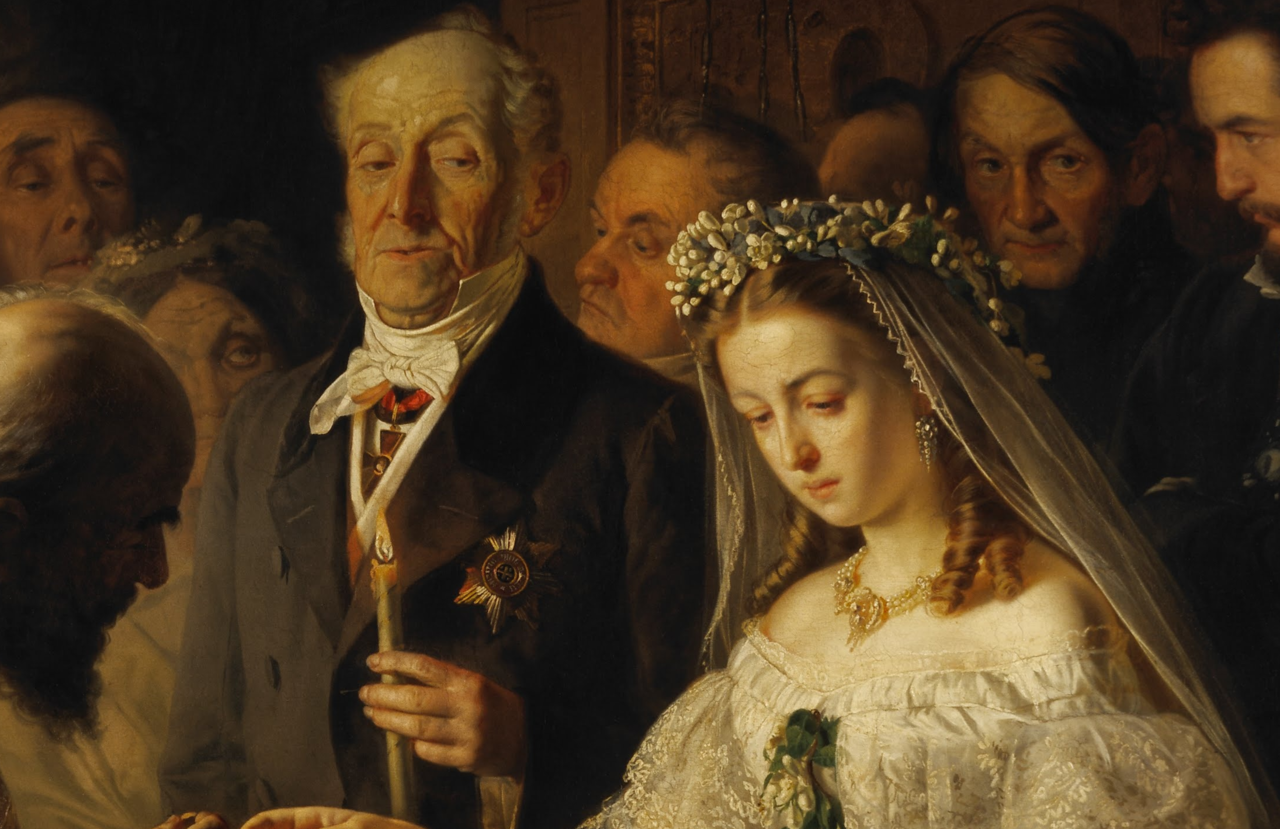
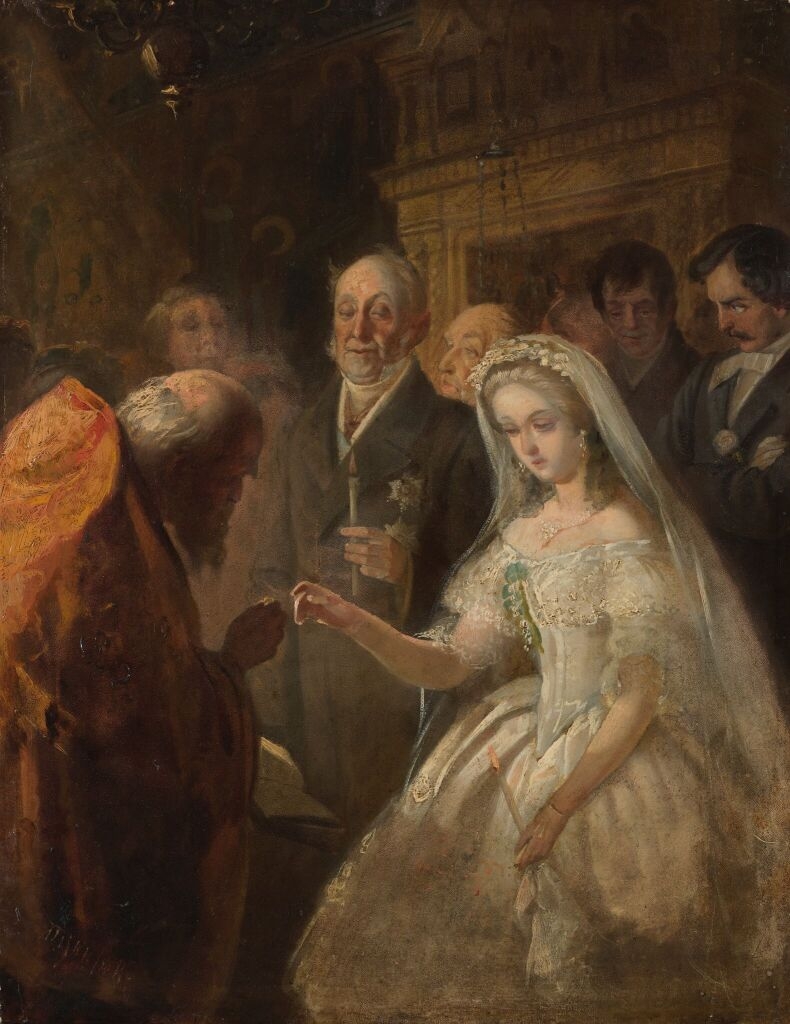
The girl's face says everything.
She is holding back tears. She must have wept freely the night before — Thursday night, alone — because her eyes are swollen and red. Her nose stings. Her lips tremble, and her throat tightens again. Jewels, lace and a snow-white wedding dress surround her, yet her head only sinks lower.
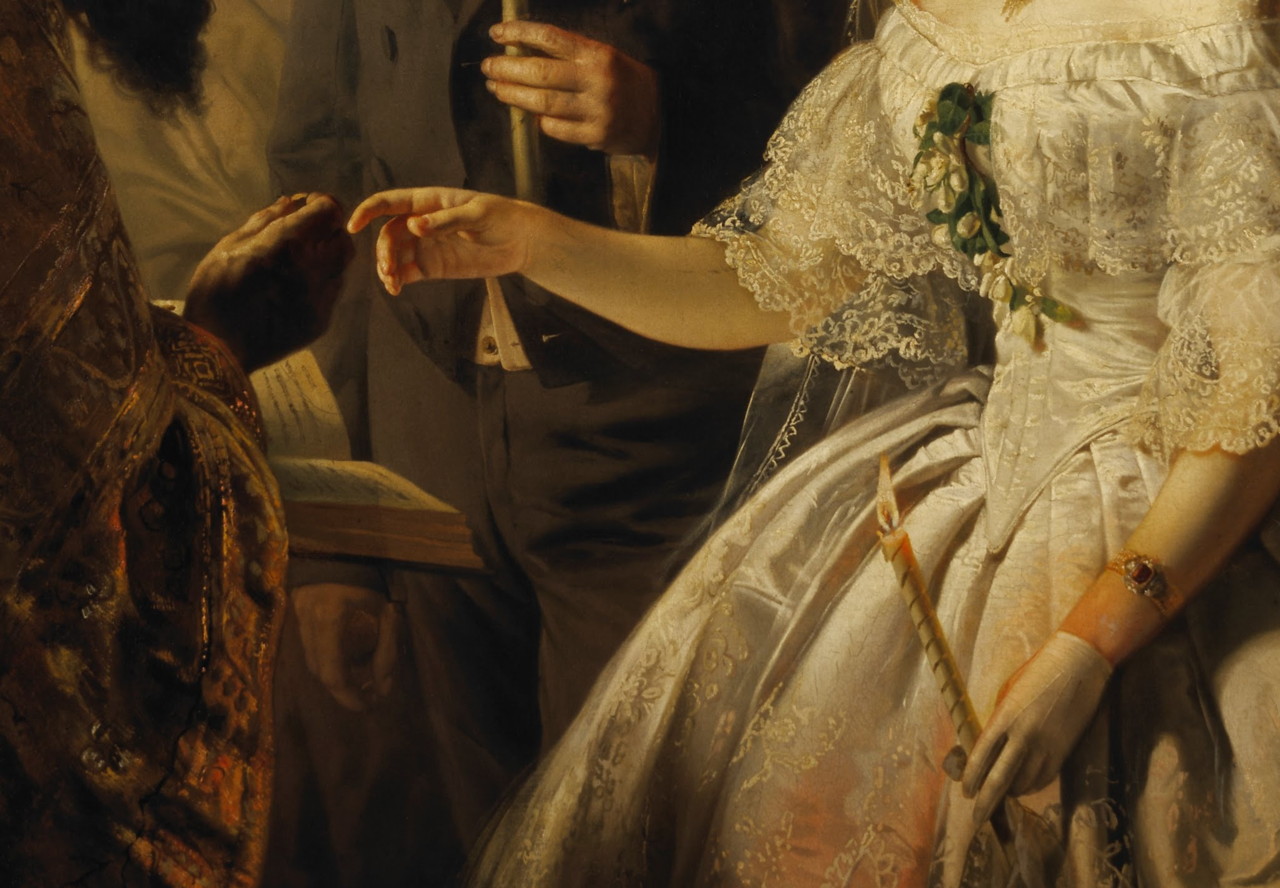
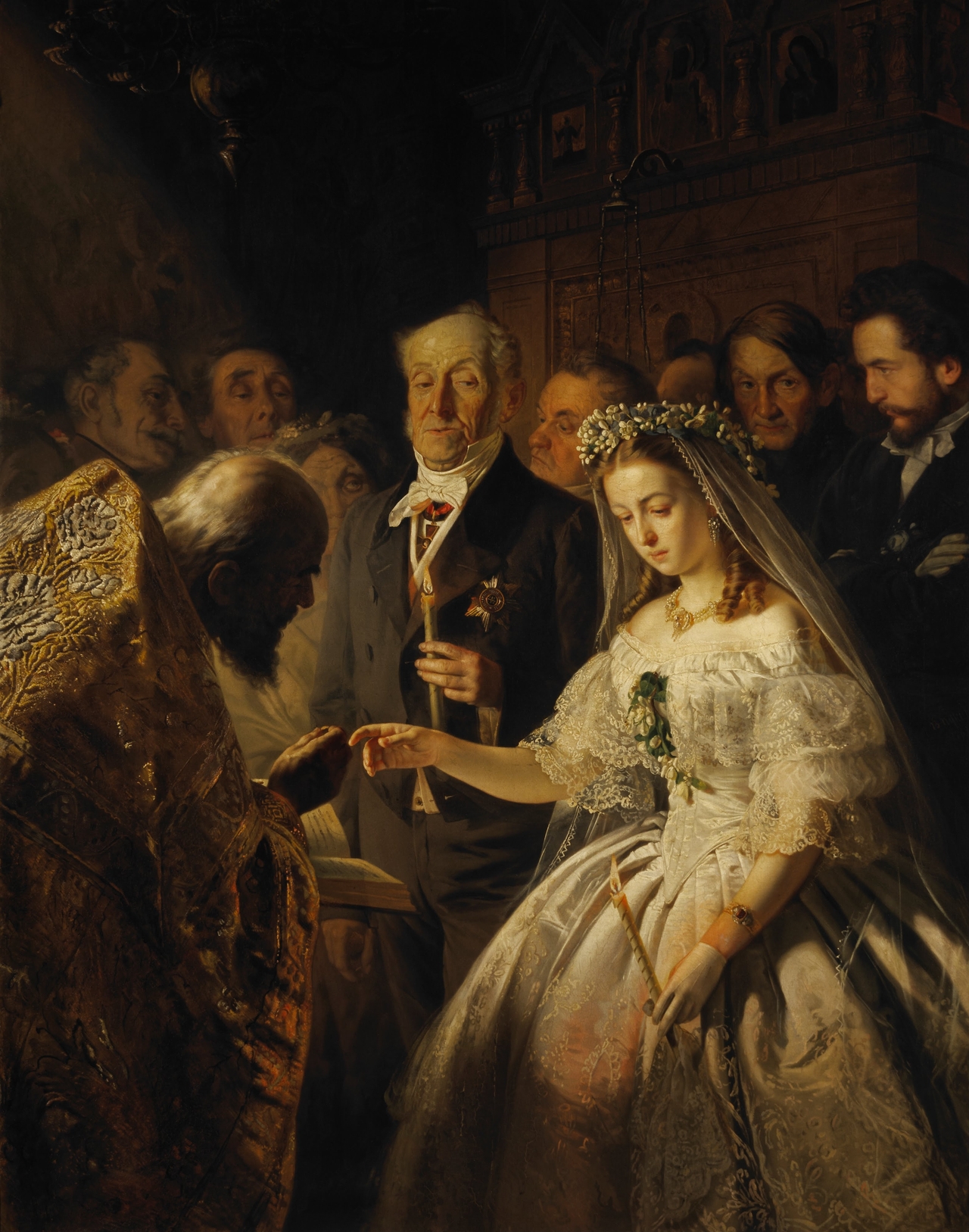
Pinned to her chest is a sprig of lily of the valley.
It is a flower that heralds the start of spring — so welcome in its blooming that its traditional meaning is "happiness regained." Yet here it hangs limp, as though about to fall. The happiness of spring has been inverted. Its symbolism, too, has been turned upside down; one might read it now as hope that has lost its light.
The candle in her left hand tilts forward. Wax drips, falling onto the cloth below and hardening into small, stubborn lumps. Her raised right hand is more heartbreaking still. She parts her fingers, reluctantly. A wedding ring is about to be placed there. And so the age of innocence recedes — a time barely lived, crossing a river from which there is no return.
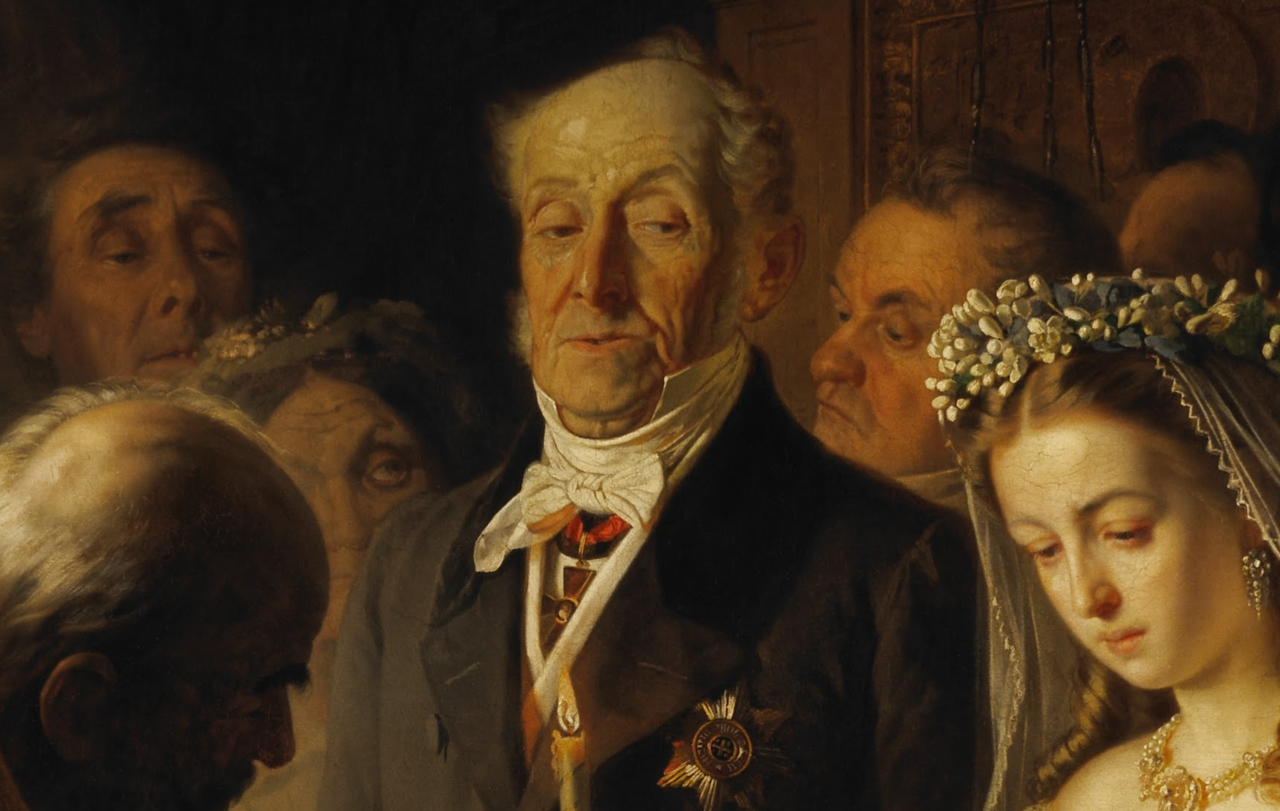
Every face surrounding the girl has hardened. Every face, that is, except one — the groom's.
This is a man marrying someone who could be his granddaughter. He alone is excited. He alone is satisfied. His aged face is flushed. He has already had a drink, and will have another when this is over. His eyes rove. He gazes down at the young bride's face and figure as though appraising them. The corners of his mouth curl upward — he is pleased with himself.
For today he has put on his finest suit. The folds of his neck are hidden beneath a stiffly raised collar. His stooped back has been straightened, in secret, with a corset pulled tight. The blouse ribbon is tied firmly; a polished imperial medal hangs on his chest. Every preparation has been made. And yet none of it — not a single detail — looks distinguished. What emanates from him is nothing but desire and greed. That is what makes the scene more horrifying, and the girl's expression more heartbreaking.
A true story, or an extreme imagining?
An old groom and a young bride. Elation and despair. A restless crowd of wedding guests inside a sacred church.
This is Vasily Pukirev's "An Unequal Marriage," painted in 19th-century Russia. True to the title the painter gave it, nothing here fits together. The canvas holds not a drop of blood, yet it is cruel. Not a blade is in sight, yet it is harrowing. What story lies behind it? The analysis so far is only the beginning.
Above all: is this shocking scene drawn from real life?
Or is it an extreme imagining, painted to expose the social conditions of the time? Anyone who stands before the work will ask that question first. The painting is all the more compelling because it straddles the two answers with uncanny precision — it most likely began with a real event, and at the same time seems to reconstruct that event as an indictment of the Russian Empire's most corrupt customs.
① Was the woman originally the painter's fiancée?
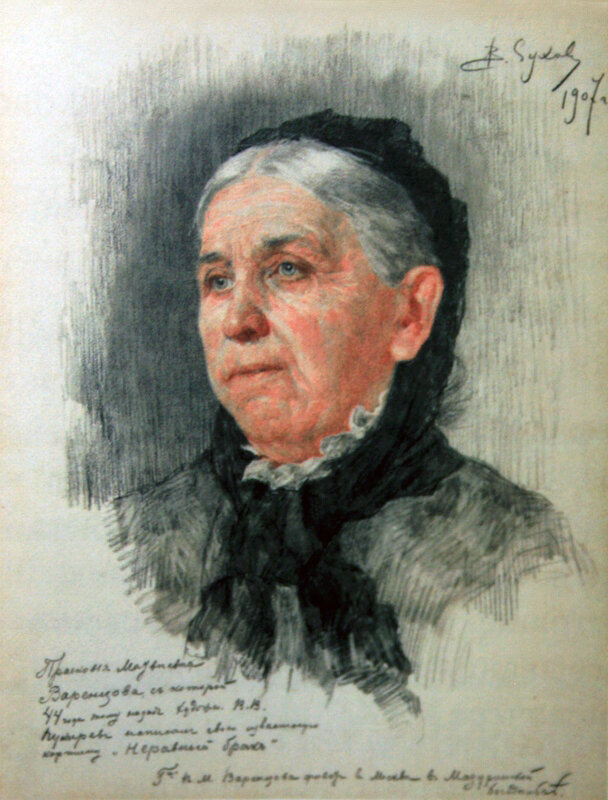
Praskovia Matveyevna Varentsova.
She was the woman who served as the model
when painter Pukirev, 44 years earlier,
painted his famous work "An Unequal Marriage."
— Partial inscription on Vladimir Sukhov's pencil sketch.
An intriguing discovery was made. In 2002, the Tretyakov Gallery acquired a painting by Vladimir Sukhov.
It was a portrait of an elderly woman, her hair heavily streaked with white. Her blue eyes were vacant, as though gazing at a distant mountain. Her nose was red and swollen, as if from drink. The deep lines at the corners of her tightly closed mouth told of a lifetime of hardship. The painting carried an inscription. This woman — aged enough to be called a grandmother — had once been that very "girl."
A painter does not choose just anyone as a model.
Least of all for a work into which deep emotion must be poured. Sergei Gribkov, a painter and longtime friend of Pukirev, is quoted in the book "Moscow and Muscovites" by Vladimir Gilyarovsky as saying: "The bride beside the old and dignified official ( ... ) was (painter) Pukirev's fiancée."
In short, the woman in "An Unequal Marriage" was a real person named Varentsova — and she had originally been the lover not of the medal-wearing old man, but of Pukirev himself, the painter who put her on the canvas.
It was a story that read like legend.
According to this account, Pukirev and his model Varentsova loved each other deeply. They had gone so far as to become engaged, or something close to it. Yet ultimately, they could not be together.
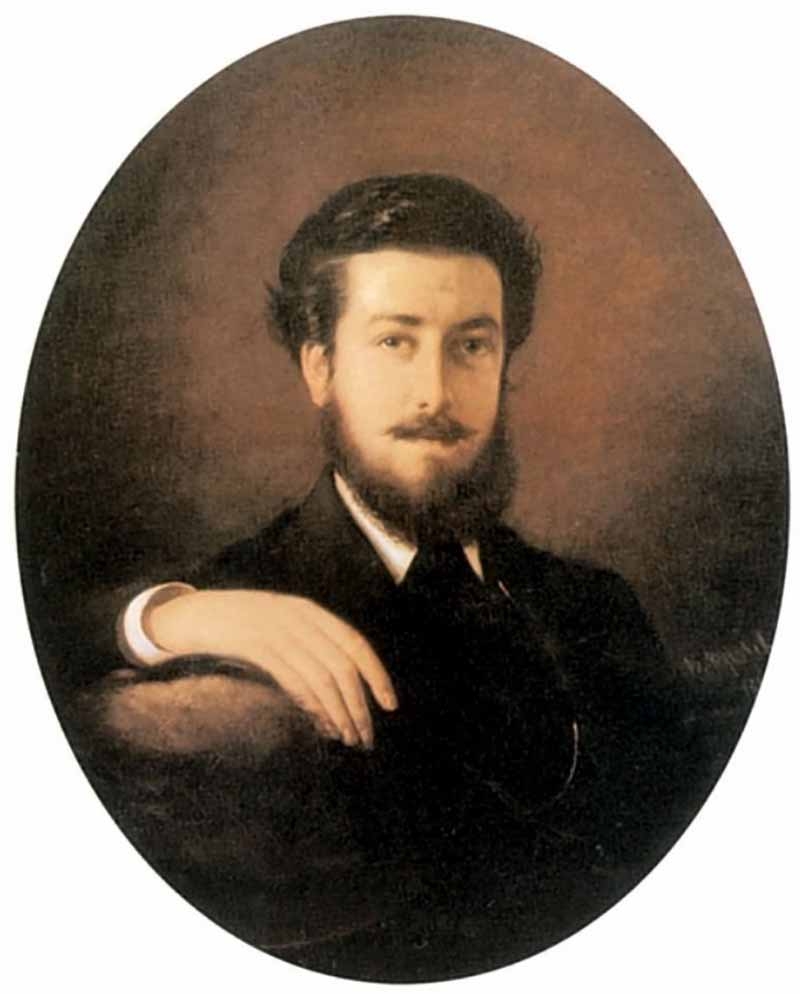
The greatest obstacle was the circumstances of both families.
Pukirev was born in 1832 in Luzhniki, a small village in Russia's Tula region, the son of a peasant.
He had an artistic gift, and luck was with him. He gained entry to the Moscow School of Painting, Sculpture and Architecture, earned his qualification as a public school art teacher at eighteen, and went on to receive the status of "Free Artist." He was able to find lodgings near the school where he worked.
Measured against his starting point, it was a reasonably early success — but set beside the background of established nobility or landed gentry, it was nothing to boast of. Varentsova's parents looked on Pukirev with disfavor, particularly because he was, in effect, of serf origin.
Her parents wanted money. They wanted a better family. Their daughter Varentsova was at her youngest and most radiant right now. The engagement had somehow been impossible to prevent. But marriage — that they were determined to stop. So they found a replacement: in place of Pukirev, a wealthy man who would pay the highest price for their daughter.
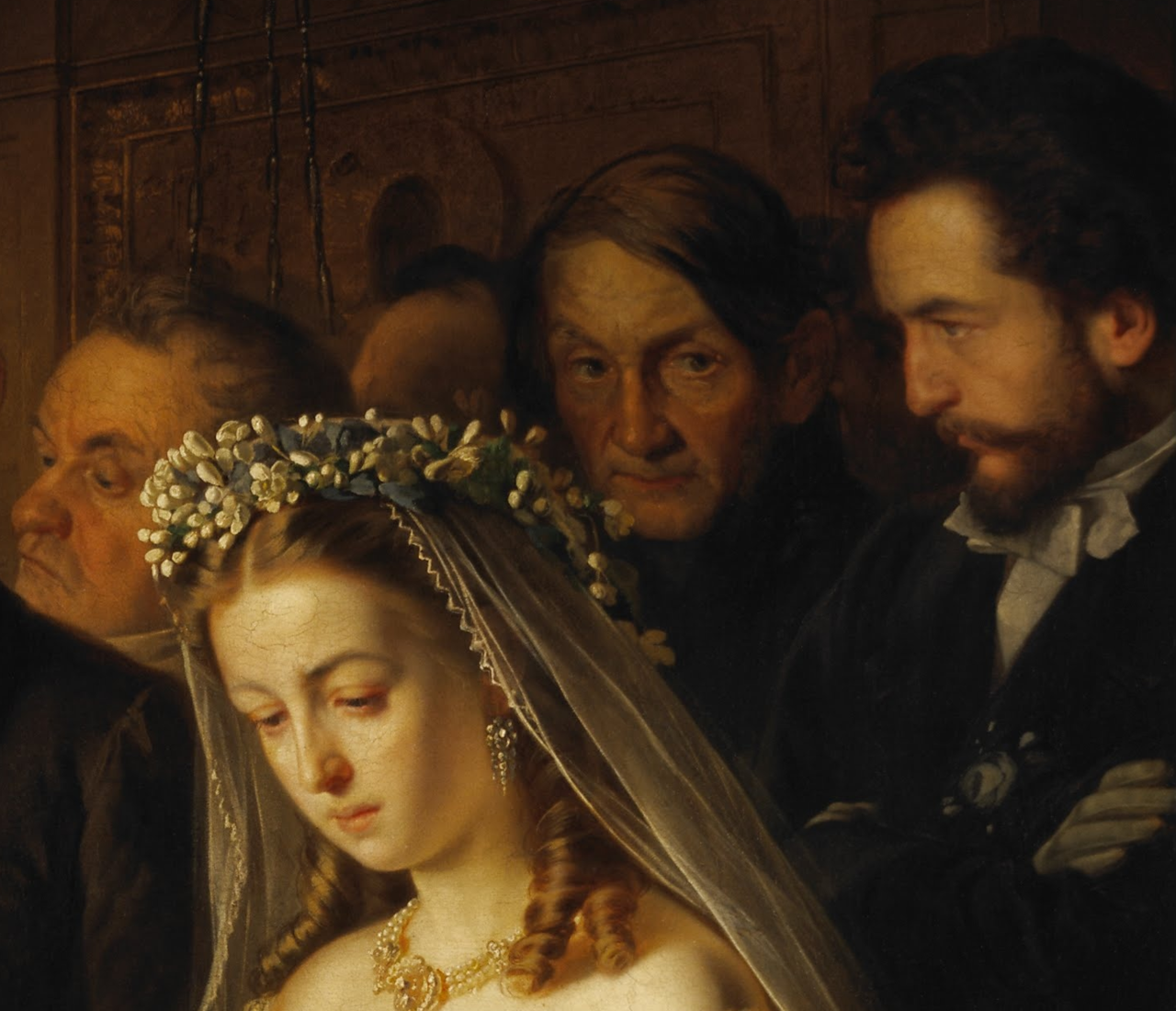
With that in mind, consider the man standing at the far right of "An Unequal Marriage."
His eyes are wide and fierce, almost glaring — and his face bears a resemblance close enough to the figure in Pukirev's self-portrait that the two could reasonably be taken as the same person.
② Was the woman a lover stolen from a friend?
There is also a separate account that places an entirely different person at the center of "An Unequal Marriage" — one compelling enough to be worth recounting here.
A young man named Sergei Varentsov lived in the same era. He was a Moscow merchant dealing in dyes and chemical products. He was in love with a woman named Sofya Nikolayevna Ribnikova, the daughter of a wool factory manager.
Nikolai, a nephew of Sergei Varentsov, later recorded the following in his memoir "Heard, Seen, Thought Over, Experienced": "Sergei had apparently intended to marry that young woman (Sofya). But her parents had other ideas. Despite his age, they decided to give their daughter to a wealthy and distinguished man, Andrei Karzinkin." The plan went through. Sergei was even compelled, by circumstances he could not escape, to attend their wedding.
According to this account, Sergei could not shake his devastation.
Among his closest friends at the time was the painter Pukirev. Sergei sat down with him and poured out the story of his failed love. Not long after, Pukirev produced a painting. That painting, the account holds, was "An Unequal Marriage."
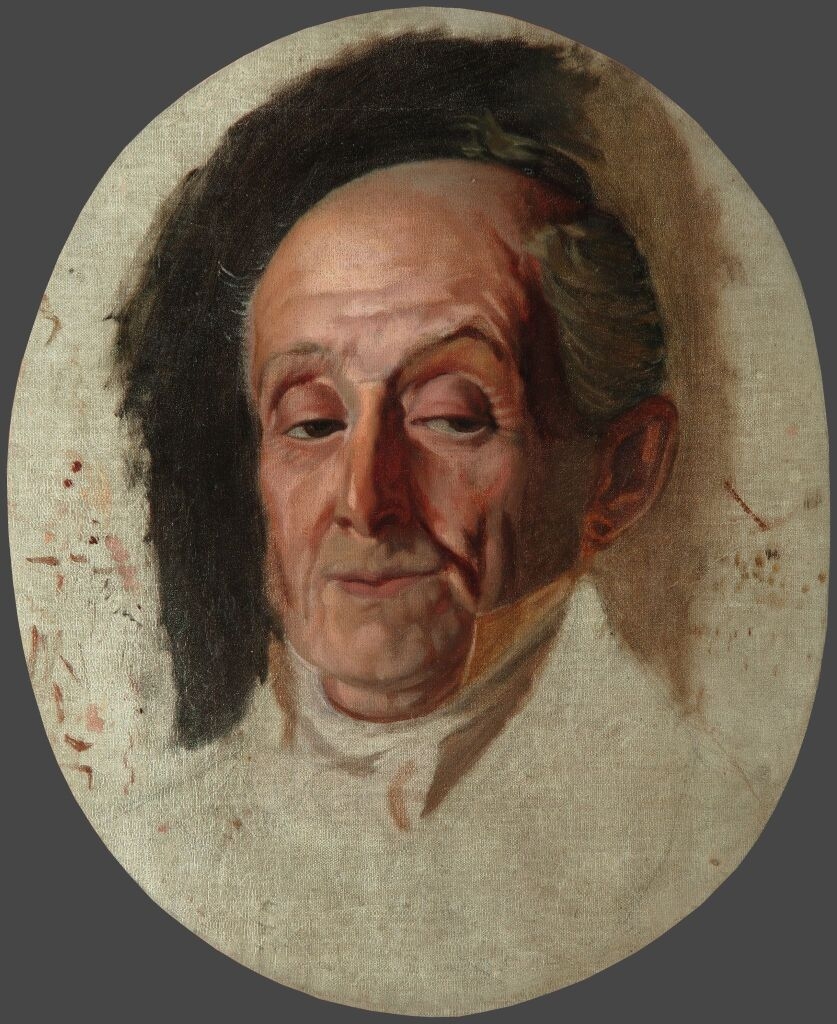
Pukirev painted Karzinkin — who was in reality 37 years old — as a man of about 70, and Sofya, who was 24, as a girl in her late teens. The aim was to heighten the tragedy. Sergei he depicted as the man standing with folded arms, glaring.
Sergei, however, regardless of the painting's artistic merit, was unhappy about being rendered on the canvas — his tragedy had been preserved there like a specimen. He repeatedly asked Pukirev to alter his likeness, and Pukirev eventually agreed to make revisions. In the process, the figure that emerged ended up resembling the painter himself — or so the story goes.
The painting that stopped a 'mismatched' marriage
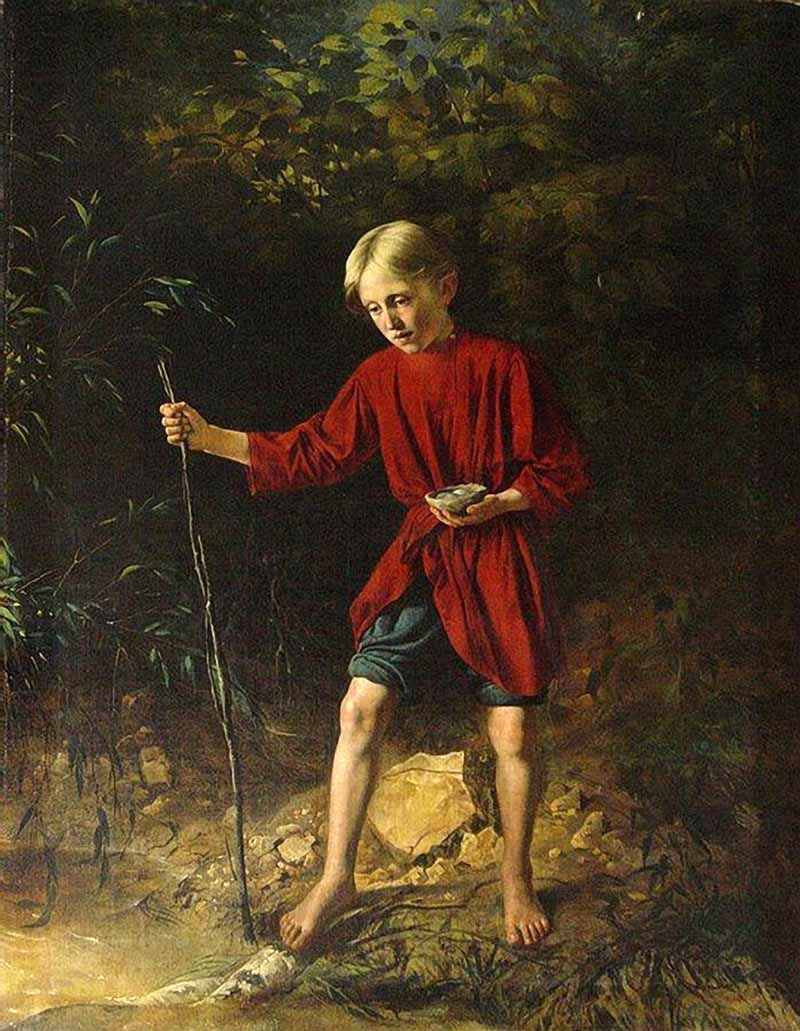
A 2019 paper by Aysel Salamova of the Azerbaijan National Art Museum, titled "Marriage Theme in the Creativity of the Russian Painter V. V. Pukirev," estimates the bride in "An Unequal Marriage" to be "sixteen or seventeen." Taking that together with everything above, the scene might reasonably be read as the wedding of a man nearing 70 and a girl of around 17.
When Pukirev painted "An Unequal Marriage" in 1862, marriages driven not by love but by money, status and mutual interest had taken hold in the Russian Empire as a kind of custom. The empire's legal code at the time set the minimum age for a woman to marry at sixteen. Structurally, as long as a man was under eighty — the upper age limit for marriage — he could take a teenage bride under the banner of "mutual consent."
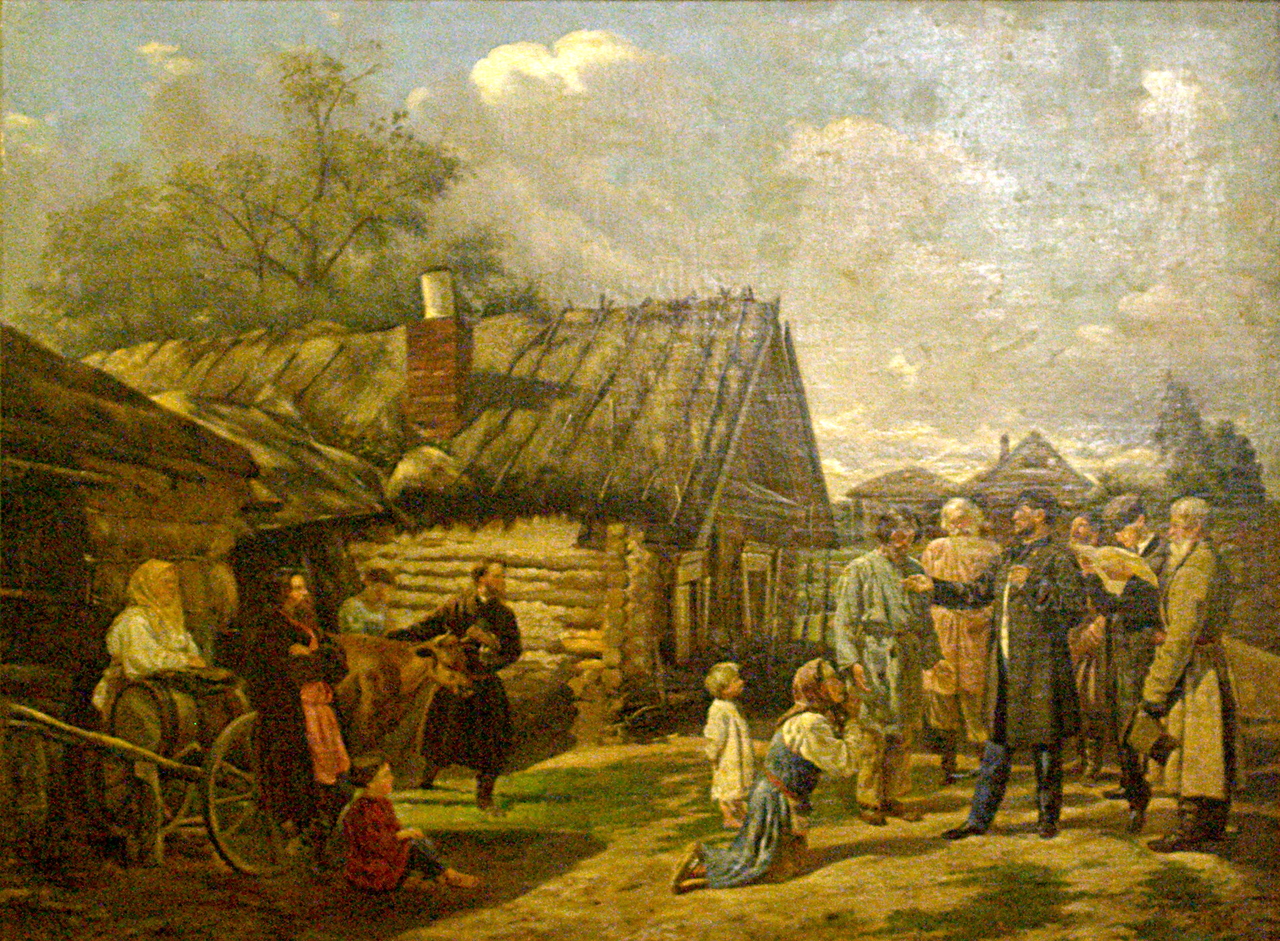
Even so, a basic sense of decency should have prevented such extreme cases. Had the social norm — that marriage has no place between an elderly man and a teenager — been properly established, there would have been nothing to condemn. Yet among certain ruined aristocrats and newly wealthy merchants of the time, there appears to have been a current of opinion that saw no need to observe it.
The Tretyakov Gallery adds its own commentary on the painting.
Age gaps between bride and groom were often very large.
Wealthy merchant families sought marriage alliances to gain social standing,
while financially ruined noble families sought them ( ... )
to restore their fiscal position.
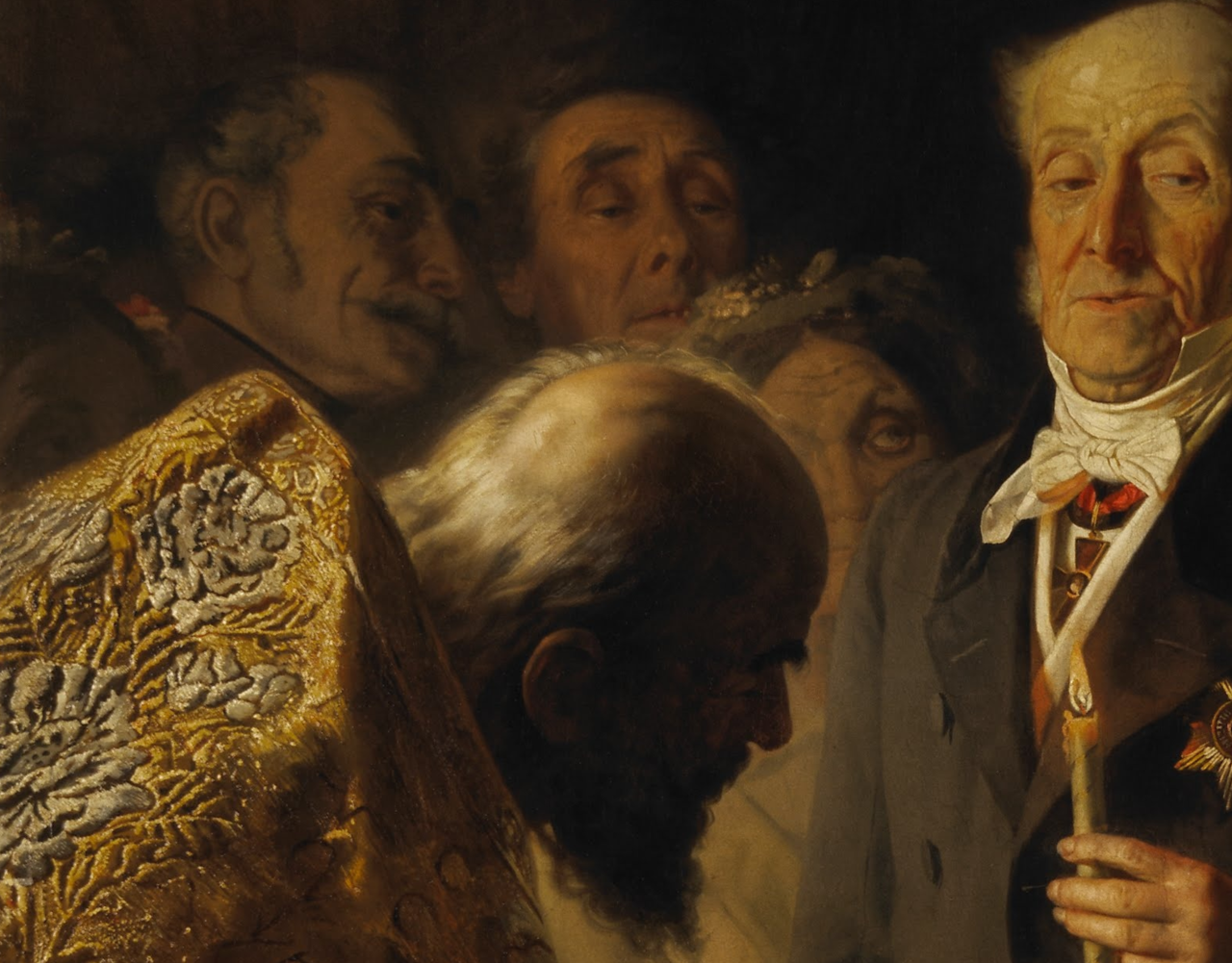
Pukirev's "An Unequal Marriage" seems to deliver a rebuke to those very people.
Having examined the groom, the bride and the most conspicuous figure behind them, we can now turn to the remaining characters. Two older women also appear on the canvas — two of them. One stands between the groom and the priest; the other is barely visible at the far left, behind the priest. Both wear floral wreaths similar to the bride's. The one whose face is more clearly visible also has a white cloth draped around her.
They glare at the groom with undisguised contempt, as though expressing their revulsion with every ounce of feeling they have. It is worth noting that wedding guests would not ordinarily stand pressed right up against the officiating priest. That is why some have interpreted both women as the groom's deceased former wives.
The male guests, who appear to be the groom's acquaintances, wear sour expressions. They steal glances at the bride with something like envy, and wrinkle their noses with what seems like jealousy. Every one of them is pitiful and graceless.
Whatever those who arranged this marriage for money and status may think, anyone with a conscience can only see the whole affair, from beginning to end, as exactly what the title says — an unequal marriage. That, perhaps, is the message Pukirev embedded in the canvas.
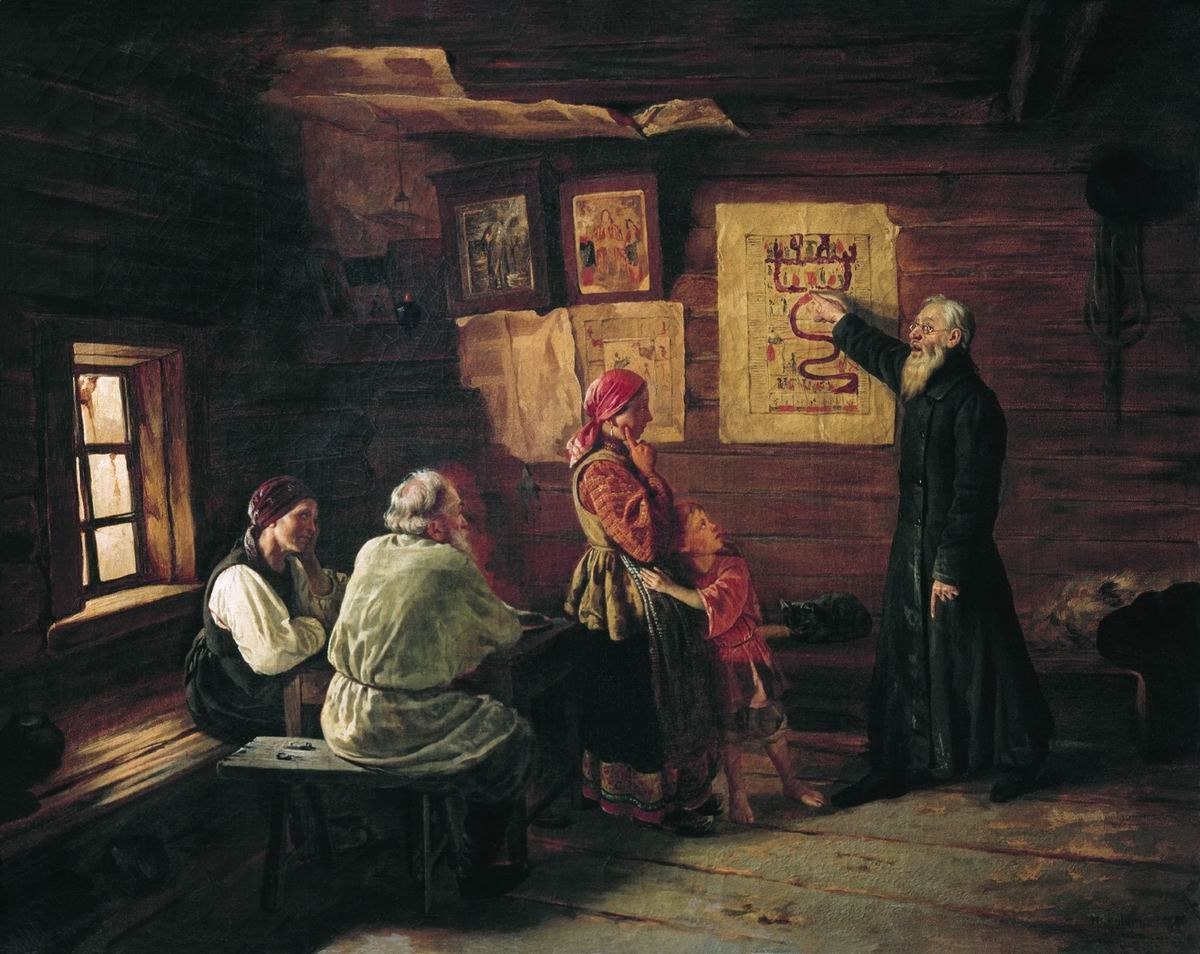
The painting had power.
It could stir a reaction. The painter Ilya Repin later wrote: "This painting tormented countless old generals. N. I. Kostomarov abandoned his plan to marry a young woman." The Tretyakov Gallery adds: "The painting actually caused one or more marriages between men and women of vastly different ages and circumstances to be called off."
He satirized the age through marriage again — but to lesser effect
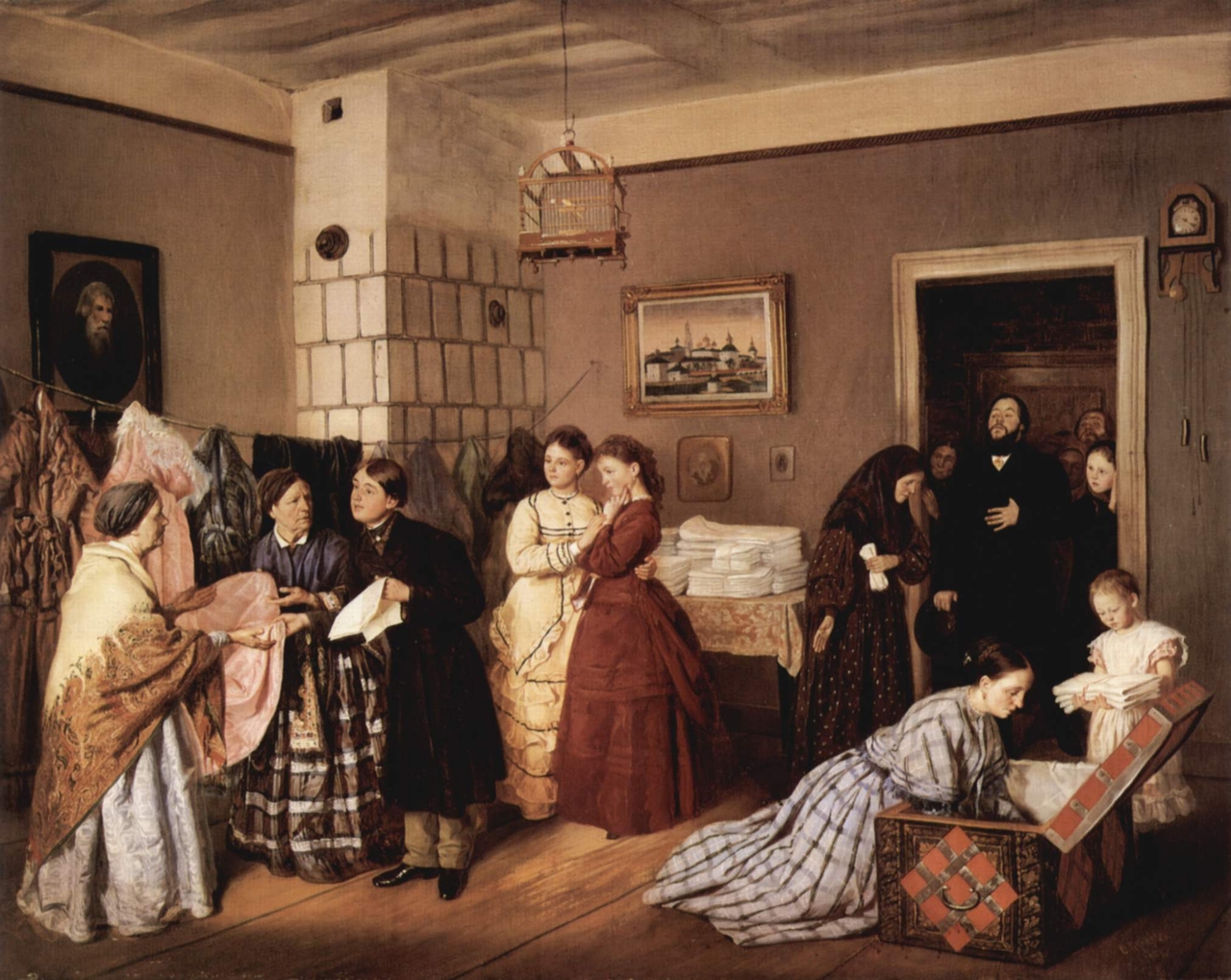
An elderly woman who appears to be the bride's mother holds up a pale pink dress. A maidservant packs items one by one into a heavy trunk.
A young man who seems to have come on the groom's behalf scrutinizes everything. The paper in his hand is likely filled with a list of the dowry items the groom's side is to receive once the marriage is concluded. A man in a sharp suit stands at the entrance wearing an arrogant expression — he, too, is presumably a watchman sent by the groom's family.
What both families care about is not the couple's walk down the aisle, but the money and goods that will change hands before and after it.
A birdcage hangs from the ceiling — perhaps a hint at the fate of the bride, who has herself become an object of transaction. This is Pukirev's "Receiving a Dowry According to a Merchant Family's Inventory."
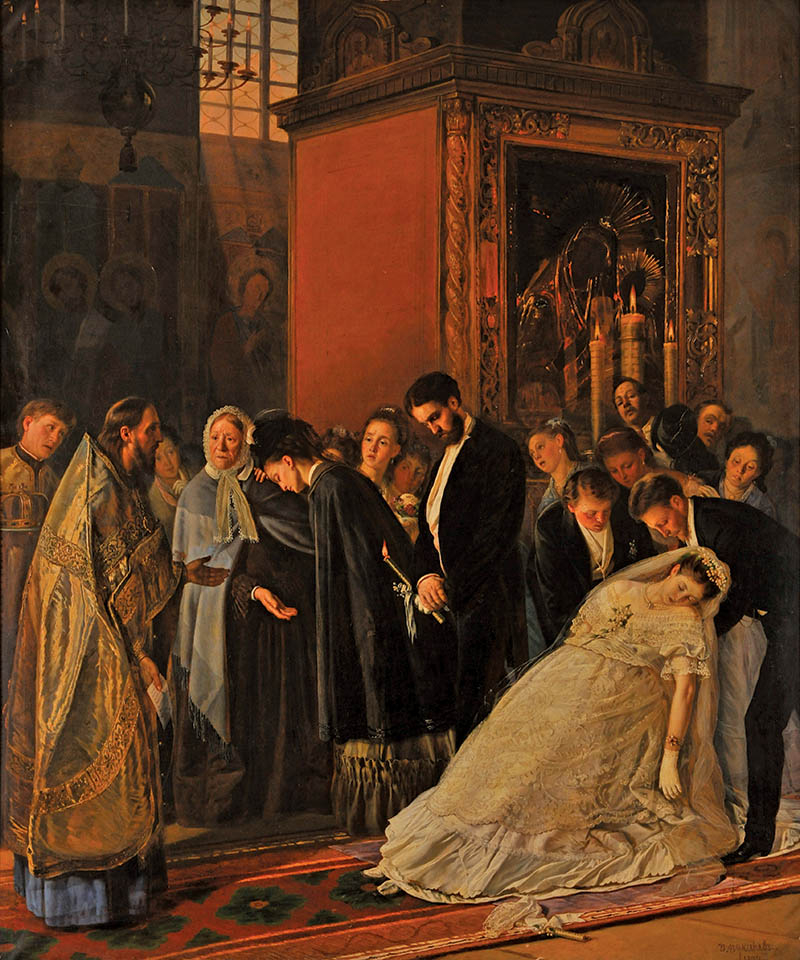
Then there is "The Interrupted Wedding."
A bride already wearing her floral wreath has collapsed — fainted from shock. The cause is a woman in black who has appeared without warning. She snatches the candle from the bride's hand and, with perfect composure, greets the priest and the assembled guests. She is about to speak: "I am the wife of this swindler who is getting married today. I am here to expose the bigamy he has been concealing from all of you." The groom bows his head, frozen — caught at last. The guests, gathered at such effort, cannot hide their bewilderment. Their shock, of course, cannot match that of the bride lying unconscious on the floor.
Pukirev received an honorary professorship from the Imperial Academy of Arts in St. Petersburg.
It came in the immediate wake of "An Unequal Marriage's" success. He was 31 years old at the time, in 1863. Around that period he also visited several art museums abroad, made possible by the patronage of organizations including the Moscow Society of Art Lovers. Pukirev continued afterward to paint scenes of distorted wedding ceremonies, among them the ambitious "Receiving a Dowry According to a Merchant Family's Inventory" and "The Interrupted Wedding."
Neither work attracted the attention he had hoped for. Some critics reportedly found them unnatural, or said they felt like awkwardly contrived social dramas — a roundabout way of saying the painter had tried too hard.
No hit ever matched the first
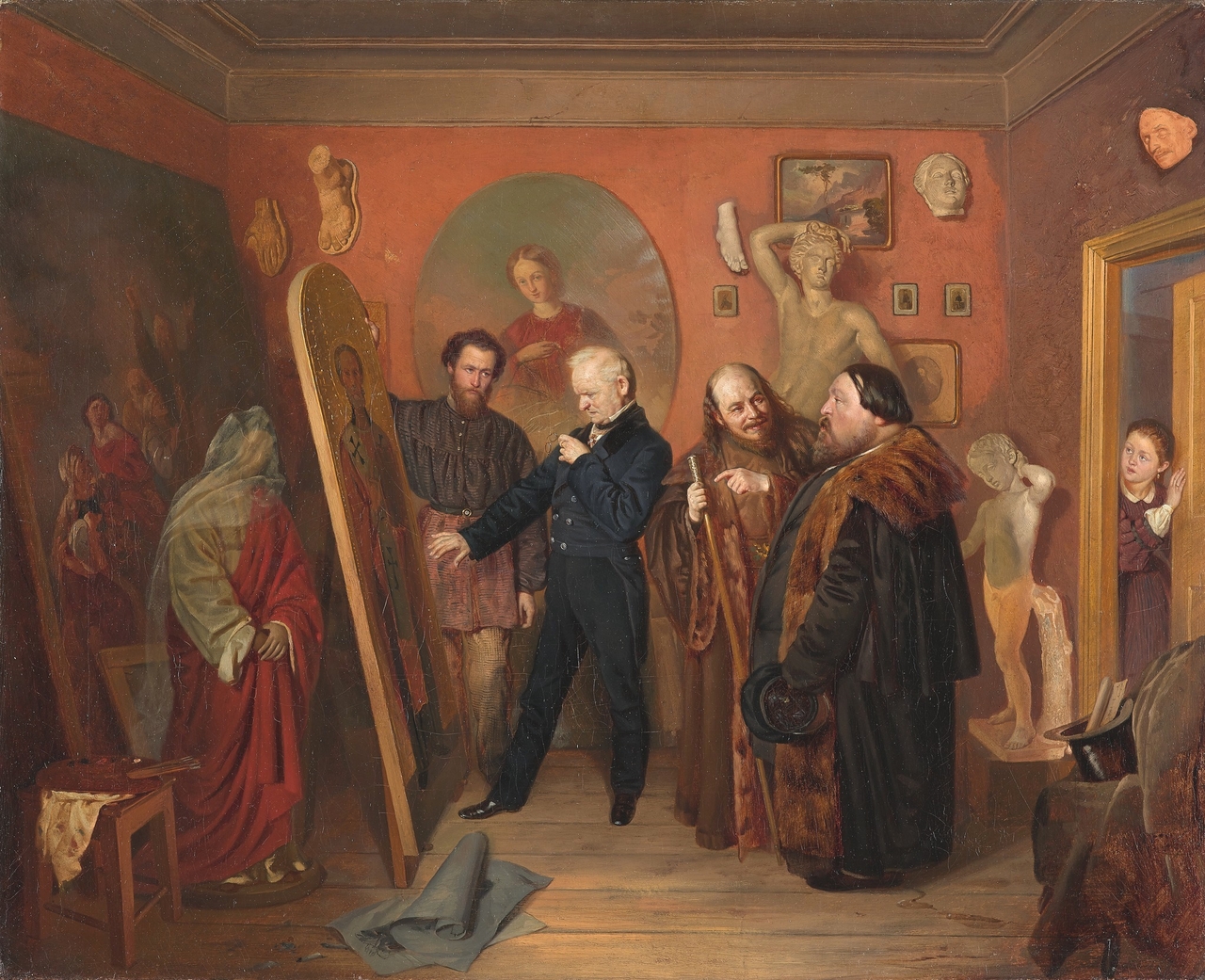
To state the conclusion plainly: Pukirev never again produced a sensation to rival "An Unequal Marriage" for the rest of his life.
He kept working. In 1869 he co-wrote an art textbook, "A Drawing Manual," with a colleague — a volume used in every state school across the country until the Russian Revolution of 1917. He painted genre scenes and religious works, and produced illustrations for the literary works of Nikolai Gogol and Ivan Turgenev. But nothing came together. The public seemed to have forgotten how to respond.
At some point, Pukirev found himself regarded as a painter past his prime.
He also had to endure the label of an artist famous for a single work produced in his youth. He left his teaching post in 1873 due to illness — described as a condition in which blood kept rushing to his head. At least the help of former colleagues at his old school meant he could receive a small pension. But that was all.
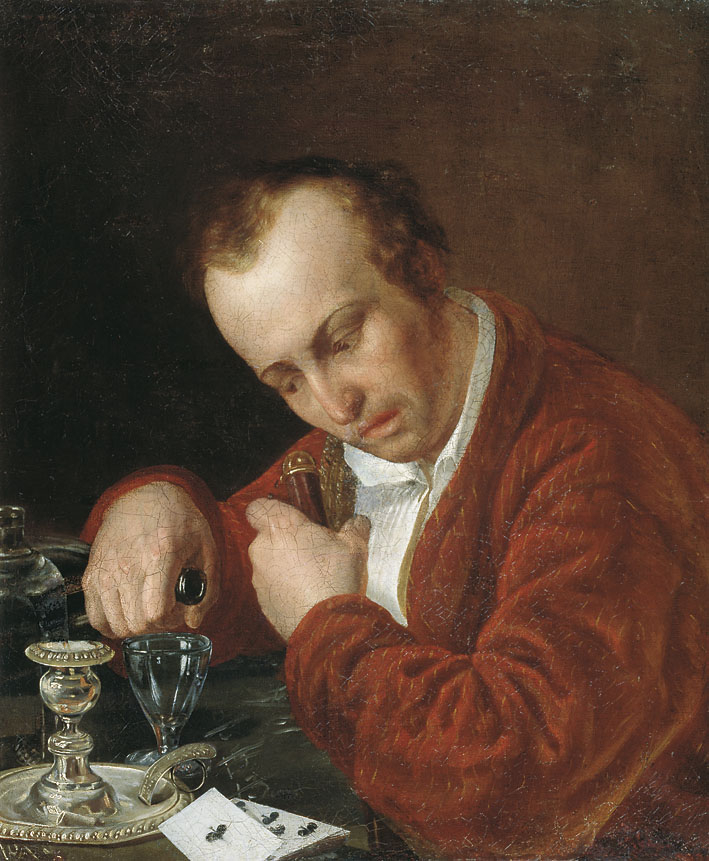
His final years were spent in poverty.
He and his paintings faded slowly from memory. In June 1890, he died in Moscow. He was 58.
Only one newspaper is said to have reported his death. Even that article was so brief it was easily passed over. "He left a brief but brilliant mark on the history of Russian art." The words were written by art historian Andrei Somov.
'Till death do us part'
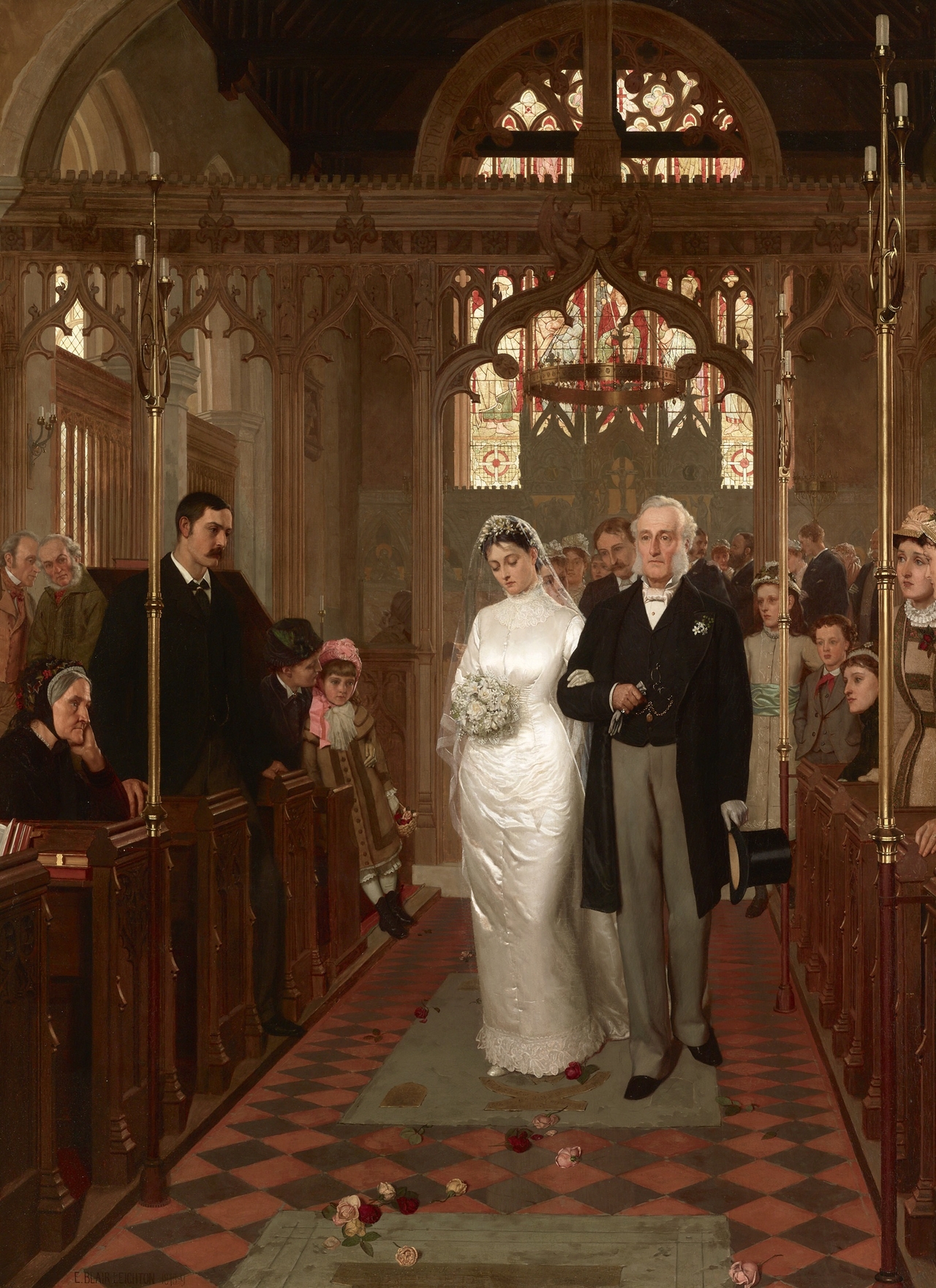
One final painting deserves mention — a work by the British painter Edmund Blair Leighton.
A groom who is plainly old enough to be a grandfather walks arm in arm with a young bride. No one rejoices. The guests either glare at the groom or gaze at the bride with pity. The man on the left, his face hollow and vacant, seems to carry a long story of his own.
Leighton is said to have been deeply struck by Pukirev's "An Unequal Marriage" before beginning this work. The original title is believed to have been "L.S.D." — derived from the Latin abbreviation for pounds, shillings and pence. The title by which the painting is known today is different: "Till Death Do Us Part." And yes — that is the only way out for the girl in "An Unequal Marriage," and for the girl in this painting too. It is the one and only path. Which is why the phrase reads as anything but romantic. It reads, instead, with a coldness that is almost chilling.
Human beings are, at times, cruel beyond bearing. And other human beings are, at times, sorrowful beyond words.
References
Salamova Aysel, Marriage Theme in the Creativity of the Russian Painter V. V. Pukirev
Vladimir Gilyarovsky, Moscow and Muscovites, Moskovsky Rabochy
Nikolai Varentsov, Heard, Seen, Thought Over, Experienced, New Literary Review
Tretyakov Gallery
A note from the reporter
"Tonight, you are the only visitor in this museum."
Thanks to readers' warm support, a new book from the Huam-dong Art Museum series is being published at the end of this year.
It is a revised and expanded edition of the first book, "One Night at the Museum," reimagined as an immersive nonfiction read.
The concept and structure have been entirely reworked, and dozens of pages of new content have been added throughout. I bow my head in gratitude to the readers who have always given their support to new endeavors. Thank you.
yul@heraldcorp.com





