Nation's first traditional wooden hanok police substation opens in Seochon
Joseon-era palace relics unearthed during construction
5.2 billion won project completed after eight years
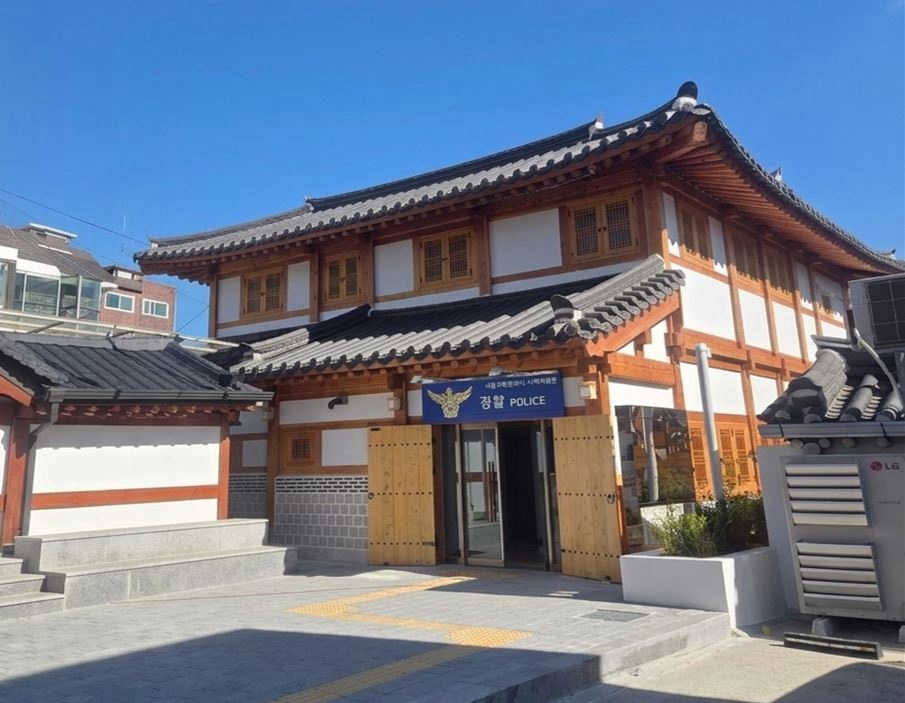
A police substation featuring the tiled roof and wooden columns of traditional hanok architecture has opened in Seochon, Jongno-gu, Seoul. It is the nation's first police facility built entirely in the traditional wooden hanok style, designed to reflect the area's historical and cultural character. The building's distinctive appearance blends with the surrounding hanok streetscape, drawing foreign tourists who stop to take photographs and establishing it as a new landmark in Seochon.
The Seoul Metropolitan Police Agency announced Friday that it had completed the relocation and new construction of the Sajik substation, part of the Jongno Police Station. The new building, in Pilun-dong, Jongno-gu, covers a total floor area of 232 square meters across two above-ground floors and is staffed by 22 officers. The project cost 5.2 billion won ($3.87 million) in total, comprising 3.6 billion won for land acquisition and 1.4 billion won in construction costs.
The original Sajik substation had occupied a building completed in 1992 inside Sajik Park. The structure had deteriorated with age, and its total floor area fell short of half the standard size required for a police facility. The Cultural Heritage Administration's project to restore the Sajikdan altar to its original form prompted the relocation and new construction.
Because the new site falls within the hanok-designated zone west of Gyeongbokgung, traditional wooden construction methods were applied so the building would harmonize with its surroundings. After purchasing the land in 2018, the Seoul Metropolitan Government and Jongno-gu conducted architectural consultations, and construction began in January 2024. Work was completed in August this year.
The path to completion was far from smooth. The project required a separate review process for traditional hanok construction, and during a cultural heritage survey, artifacts including fragments of blue roof tiles linked to Ingyeonggung — a mid-Joseon-era palace — were unearthed, triggering an on-site preservation order.
"We had to revise the architectural drawings multiple times during the review by hanok specialists," a Seoul Metropolitan Police Agency official said. "After the cultural heritage excavation led to an on-site preservation order, the project faced considerable difficulties."
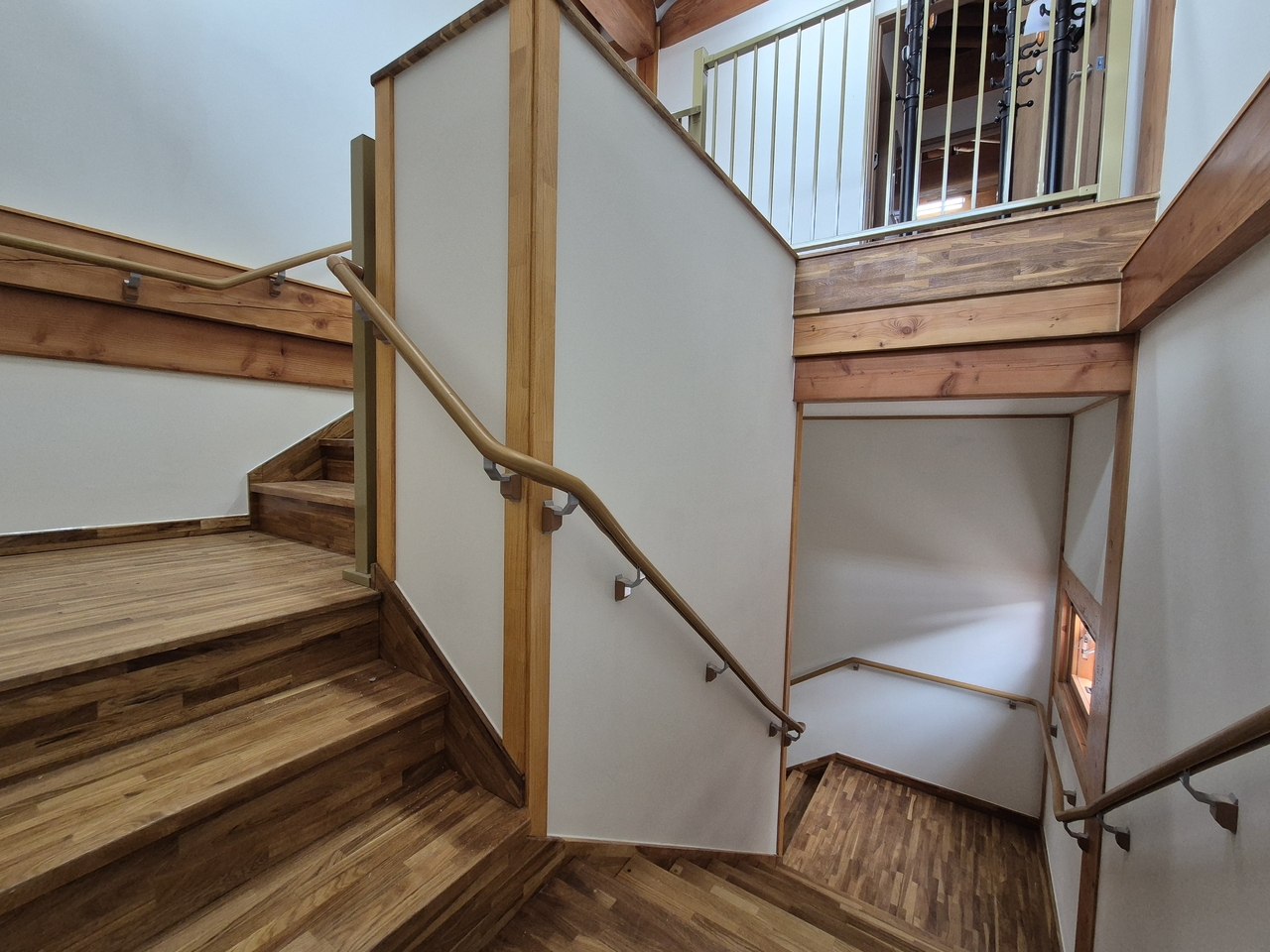
The first floor of the new building houses a public service counter, a meeting room and an accessible restroom. The exterior connects naturally with the surrounding alleyways in an open design that makes it easy for residents and visitors to enter. The second floor contains rest areas for officers, the substation chief's office and an inner courtyard open to the sky.
High construction costs mean that similar traditional hanok police substations are unlikely to be built elsewhere. The Sajik substation itself required multiple rounds of budget increases after construction costs exceeded the original allocation.
"Construction ended up costing more than the initial budget, and we had to go through the budget approval process several times before we could complete the work," the official said. "Realistically, it would be difficult to build another hanok police facility elsewhere because of the cost."
The official added that foreign tourists had recently been spotted taking photographs around the substation. "It seems like it will carry symbolic value as a local landmark," the official said.
jookapooka@heraldcorp.com