Union profit-sharing demands eat into investment funds
'Yellow Envelope Act' lowers strike threshold, complicates damage claims
Subcontractor unions flood parent firms with bargaining demands
Hyundai Motor faces first ruling on employer status; group-wide labor action looms
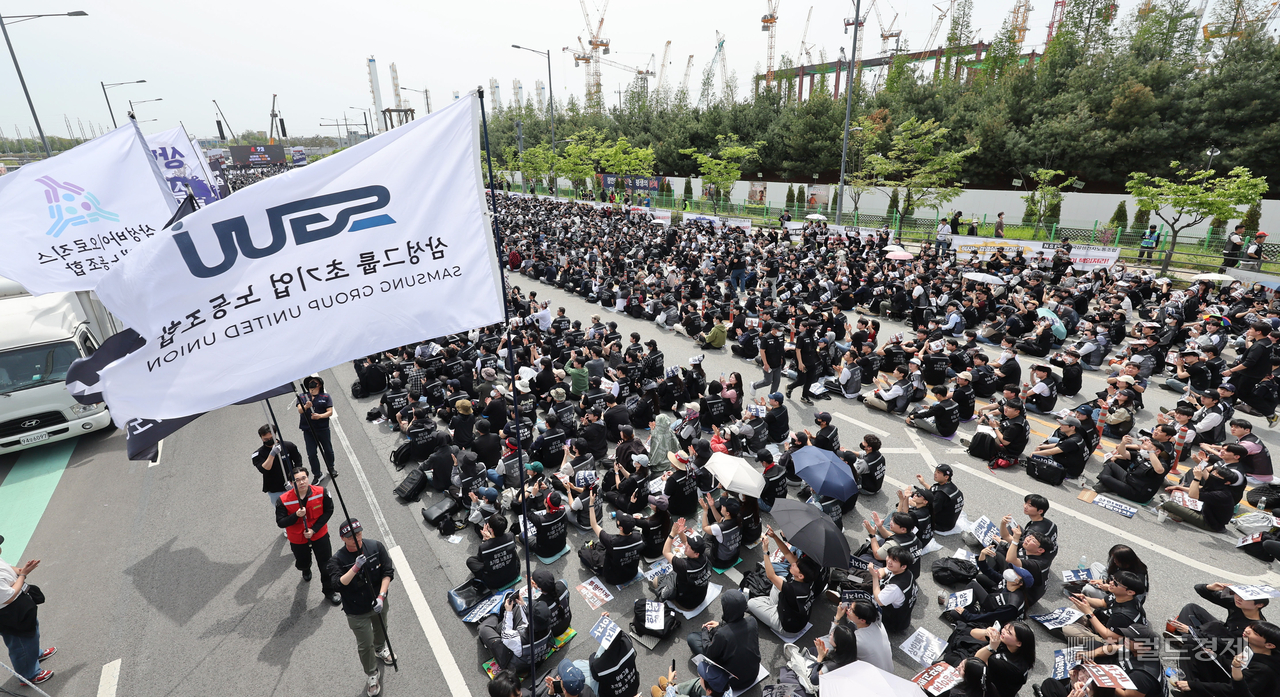
A growing push by labor unions to claim a fixed percentage of corporate operating profit as bonuses — the so-called "N percent of operating profit" demand — is spreading across South Korean industries, fueling concern among business leaders that funds needed for the country's future are being eroded. Critics warn that preemptively distributing operating profit earmarked for employment and research and development could undermine not just individual companies but national competitiveness.
The Korea Employers Federation released a report Monday titled "Lessons from Toyota's Labor-Management Relations," warning that domestic unions are increasingly focused on short-term profit distribution rather than long-term survival and investment. "Excessive union demands for profit sharing could seriously erode the resources essential for R&D and future technology investment during a period of major industrial transformation," the federation said.
Demands that companies pay out a set percentage of operating profit or net profit as bonuses have spread well beyond the semiconductor sector. After SK Hynix's union secured a bonus equivalent to 10 percent of operating profit last year, Samsung Electronics' union this year demanded 15 percent. Since then, similar demands have appeared in wage negotiations across the automotive, shipbuilding, telecommunications and IT industries.
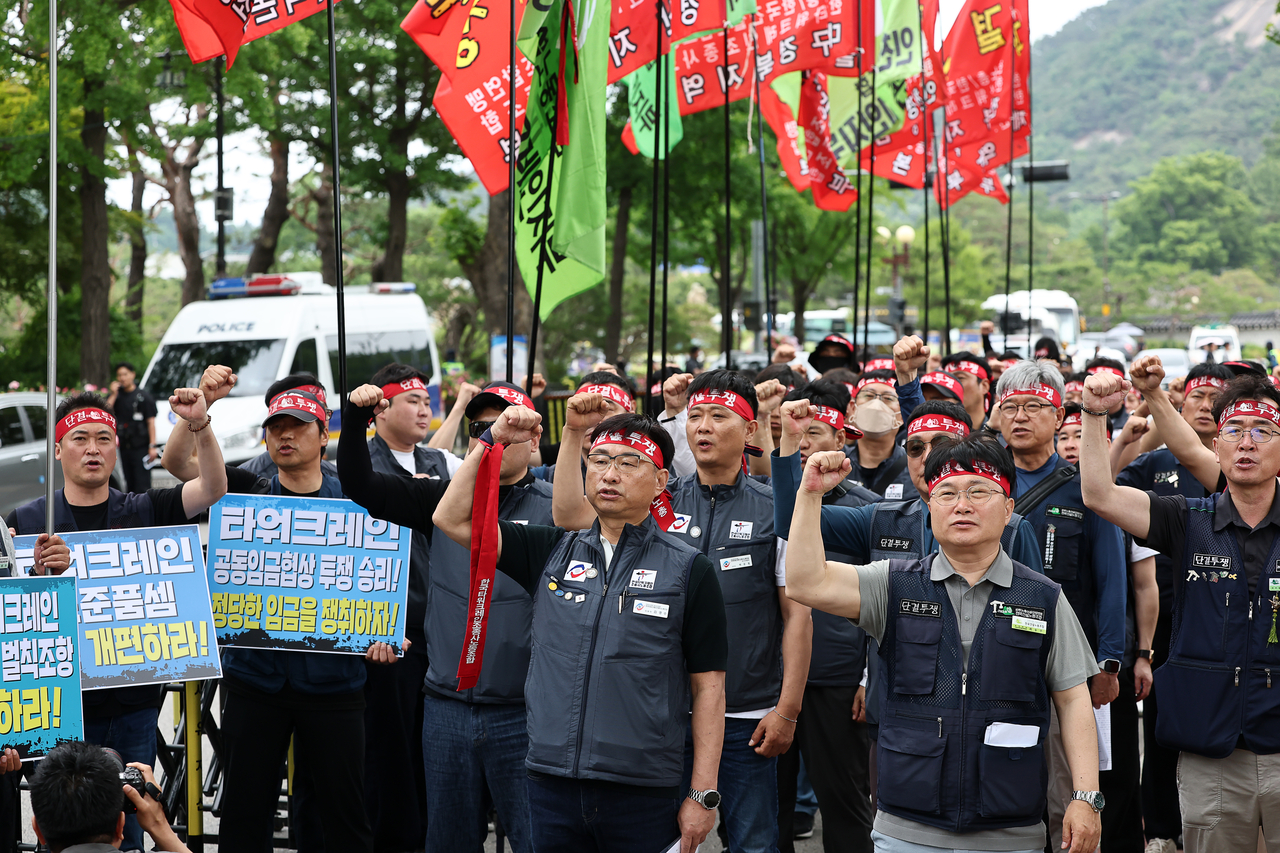
The amended Labor Union Act — commonly known as the Yellow Envelope Act — has lowered the threshold for strikes, and large-scale collective action is increasingly being used as leverage to win the "N percent" bonus demands. Under the law, companies seeking damages from strike activity must prove the degree of fault and scope of liability for each individual union member, making actual claims difficult to pursue. Analysts say unions' sense of strike effectiveness has grown further after the government directly intervened to mediate during a threatened general strike at Samsung Electronics.
Kakao is among the most prominent examples, as the tech giant faces its first-ever strike. The Kakao union announced Monday that it plans to hold a four-hour partial strike on June 10, with plans to escalate depending on how subsequent negotiations unfold. The union signaled its intent to strike this month after a second mediation session at the Gyeonggi Province Regional Labor Relations Commission broke down May 27. The union is demanding a bonus equivalent to 13 to 14 percent of operating profit, a level the company says it cannot afford.
The surge in bargaining demands from subcontractor unions targeting their parent companies since the Yellow Envelope Act took effect is also destabilizing labor relations. According to the Ministry of Employment and Labor, in the first month after the law came into force, 1,011 subcontractor unions filed bargaining demands against 372 parent-company workplaces, involving approximately 146,000 union members.
Disputes between labor and management over the scope of employer status and bargaining subjects are multiplying as unions press for negotiations regardless of whether employer status has been formally recognized. Cases are also increasing in which subcontractors, following the lead of large conglomerate unions that have put profit-sharing on the bargaining table, are making similar demands directly against parent companies.
The Korea Employers Federation said some subcontractor unions are occupying workplaces and taking other forceful measures to pressure parent companies into bargaining. It also warned that the Korean Confederation of Trade Unions has announced a general strike for July 15, along with large-scale rallies by affiliated organizations, raising the prospect of further labor unrest.
Excessive strikes and adversarial labor relations are also weighing on foreign investment. The European Chamber of Commerce in Korea and the American Chamber of Commerce in Korea both raised concerns last year that the Yellow Envelope Act could prompt foreign companies to exit the Korean market.
South Korea's labor relations also score poorly in international competitiveness rankings. In the IMD's 2025 World Competitiveness Yearbook, South Korea ranked 27th overall among 69 countries but placed 53rd in the labor market category. In a survey of business executives worldwide, only 5.3 percent cited "effective labor-management relations" as an attractive feature of the Korean economy — the lowest score among all factors measured.
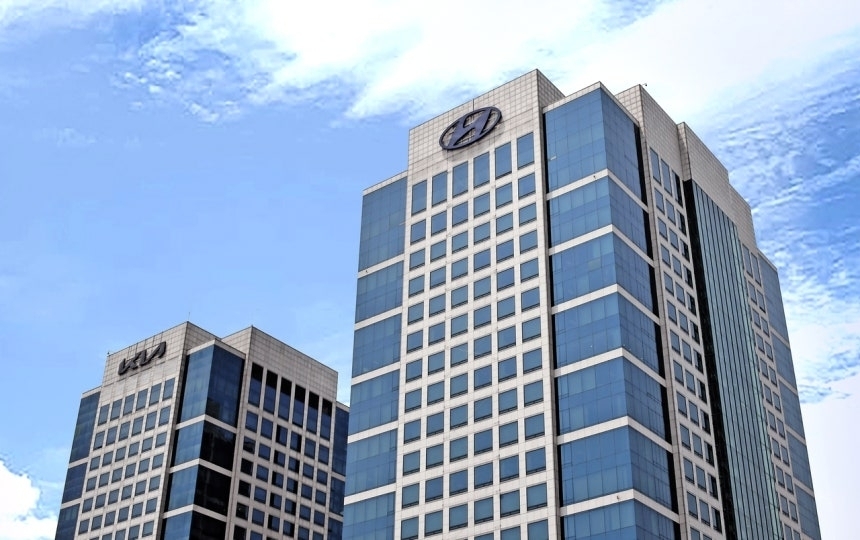
Meanwhile, business and labor circles are watching a hearing held Monday at the Ulsan Regional Labor Relations Commission on Hyundai Motor's application to correct a public notice of bargaining demands. The session will determine whether Hyundai Motor must engage in collective bargaining with subcontracted workers — including cafeteria staff and security personnel — and marks the first formal ruling on the automaker's employer status. As South Korea's largest automaker with more than 8,500 in-house and external partner companies, the ruling's implications are expected to ripple beyond the auto industry to the broader manufacturing sector.
Unions across Hyundai Motor Group affiliates are set to hold their first joint strategy meeting on June 8, signaling the start of a coordinated group-wide labor campaign. The joint effort involves 38 unions within the group spanning finished vehicles, parts, steel and logistics, with a combined membership of 87,452.
"It appears that the Hyundai Motor Group unions are looking to use the joint campaign as momentum, following Samsung Electronics' cross-company union success in winning the 'N percent bonus,'" a business community official said. "After SK Hynix and Samsung Electronics, Hyundai Motor Group will become the next barometer for labor-management conflict going forward."
eyre@heraldcorp.com