Industry-low attrition and top-tier pay undercut union's case for hardship
Union demands 14.3% wage hike, 30 million won bonus as talks stall
Second strike looms even as workers show no sign of leaving
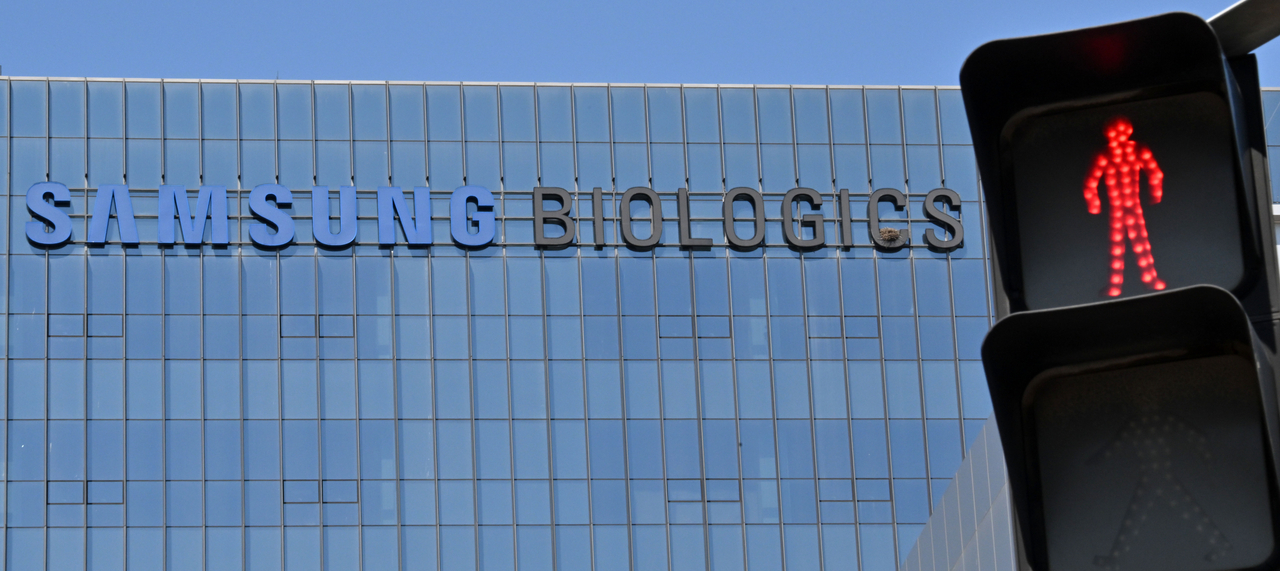
The Samsung Biologics union has been escalating its campaign — pressing ahead with a work-to-rule drive after an initial strike — yet objective indicators of the company's employment stability and compensation consistently rank at the top of the industry.
Critics say the union is waging a fight without a credible cause, given that both its compensation structure and job security have been verified as best-in-class by hard data.
According to an ESG report published on the Samsung Biologics website on May 29, the company's total turnover rate stood at 1.9 percent in 2025. The figure has fallen for four consecutive years — from 4.5 percent in 2021 to 4.0 percent in 2022, 3.4 percent in 2023 and 2.7 percent in 2024 — dropping below 2 percent for the first time last year.
The pharmaceutical and biotech sector is generally considered one of the more fluid labor markets, given strong demand for specialists in research and development, production, quality control and regulatory affairs. Most major pharma and biotech firms post turnover rates in the double digits.
Against that backdrop, Samsung Biologics' 1.9 percent rate is not merely unusual — some say it is in a class of its own. The figure is comparable to SK Hynix's sub-2-percent turnover, which has drawn wide attention in the job market, and analysts say it demonstrates a remarkable level of employment stability.
Industry observers interpret the low attrition as a sign that employees see no better alternative in the market. In fact, turnover at major domestic pharma and biotech companies is generally understood to hover around 10 percent.
Particularly notable is that Samsung Biologics achieved this while expanding its workforce aggressively. Headcount grew 47.7 percent, from 3,693 in 2021 to 5,455 last year. Companies in rapid-growth phases typically see turnover rise as new hires flood in and the organization expands. Samsung Biologics, however, managed to scale up quickly while keeping attrition among existing staff to a minimum, some say.
Behind the strikingly low turnover lies a compensation structure that ranks among the most generous in the industry.
According to Samsung Biologics' annual business report filed with the Financial Supervisory Service's DART system, average employee pay reached 114 million won ($82,600) in 2025. That represents a roughly 44 percent jump from 79 million won in 2021 — a surge achieved in just four years, implying an average annual wage increase of nearly 10 percent. The pace of growth far outstrips that of comparable companies over the same period.
Samsung Biologics also has a notably young workforce, with an average employee age of around 30. Experts say that when compensation is assessed against seniority and rank, the pay workers in their 20s and 30s actually take home places the company not just at the top of the biotech sector but among the highest-paying large employers across the entire Korean corporate landscape.
Despite these industry-leading figures on both attrition and pay, the union has pressed on with its campaign, failing to win broad sympathy either within the industry or among the general public. The union launched a partial strike involving some 60 workers from April 28 to April 30, followed by a full walkout of roughly 2,800 workers from May 1 through May 5. Since May 6, members have been refusing overtime and holiday work as part of a work-to-rule campaign.
With labor-management talks shifting from government-mediated dialogue to direct negotiations, the union has left open the possibility of a second strike. Critics say that framing the dispute around "poor working conditions" — while employees themselves demonstrate through their own choices that they see no better option elsewhere — and holding up a biopharmaceutical production line central to global supply chains amounts to excessive collective self-interest.
The stakes extend beyond the company itself. Samsung Biologics is a contract development and manufacturing organization, or CDMO, that produces biopharmaceuticals on behalf of global multinational pharmaceutical companies. Any delay in its production schedule risks disrupting the timely supply of medicines to patients around the world, critics note.
"A turnover rate of 1.9 percent is itself proof that employees see no better alternative to their current conditions," an industry official said. "With both pay and job security confirmed to be at the top of the industry, a campaign that also demands a say in management decisions will find it very hard to win sympathy from the market or the public."
The union has called for a 14.3 percent wage increase, an excess profit-sharing bonus equivalent to 20 percent of operating profit, and the abolition of a cap on performance bonuses. It has also reportedly demanded advance notice of executive appointments and reassignments, union co-decision rights through a labor-management council on profit sharing, hiring and workforce deployment, and union review and approval of any mergers and acquisitions through a joint employment stability committee. On top of those demands, the union is separately seeking a one-time encouragement bonus of 30 million won ($21,700) per employee.
Management, by contrast, has offered a 6.2 percent wage increase, an encouragement bonus equivalent to 200 percent of base salary, and a profit-sharing bonus equal to either 10 percent of operating profit or 20 percent of economic value added. The company has said it cannot accept the union's demands for prior consent on hiring, personnel decisions and acquisitions, arguing those demands would encroach on management's exclusive prerogatives.
silverpaper@heraldcorp.com