Prosecutors' office to be abolished in October, replaced by new investigative and indictment agencies; key questions over supplementary investigative powers remain unresolved; legal experts warn of blind spots in criminal justice
By Choi Eui-jong, The Herald Business
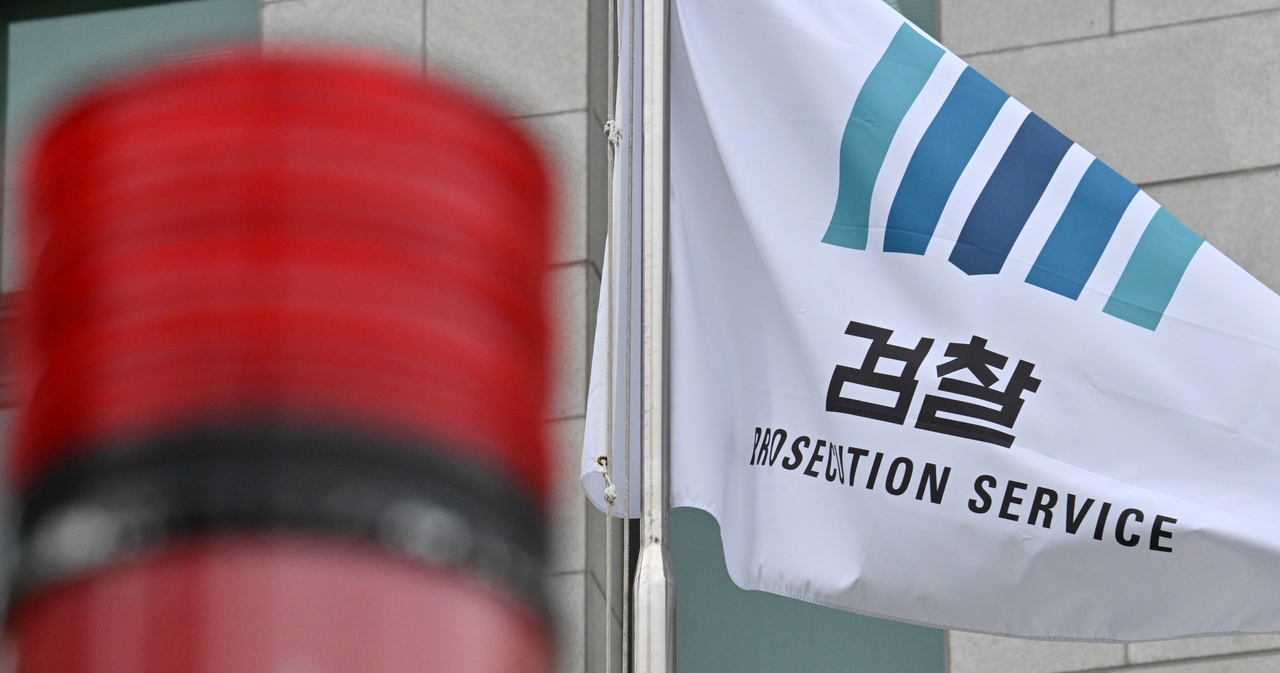
The prosecutors' office is set to be abolished — the ultimate outcome of the sweeping prosecutorial reform the ruling camp has pushed through since the Lee Jae Myung administration took office. Founded in 1948, the institution will close after 78 years, giving way to two new agencies built on the principle of separating investigation from indictment: the Serious Crimes Investigation Agency and the Public Prosecution Service. The powers of the incoming agencies — including whether prosecutors will retain supplementary investigative authority — remain unsettled, keeping the reform debate alive. Concerns have also been raised about potential blind spots in criminal justice procedures once the prosecutors' office disappears.
The bills establishing the Serious Crimes Investigation Agency and the Public Prosecution Service each passed the National Assembly floor in March, according to legal circles, with both agencies set to launch in October — the former under the Ministry of Interior and Safety and the latter under the Ministry of Justice. The prosecutors' office will effectively take down its sign just over a year after the Lee Jae Myung administration came to power. The abolition and the creation of the two replacement bodies were driven by the ruling Democratic Party of Korea and the government.
Under the new criminal justice system, prosecutors' statutory duties will narrow. Under the current Prosecutors' Office Act, those duties cover criminal investigation and matters necessary for filing and maintaining charges. Under the new Public Prosecution Service Act, they will cover only matters necessary for filing and maintaining charges. However, because the Constitution refers to "warrants issued by a judge upon a prosecutor's request," the duty to handle matters necessary for warrant applications has been retained.
Legal observers say some initial confusion is inevitable as an entirely new criminal justice system takes effect. Citizens will immediately face a basic question: whether to file a complaint or accusation with the police or with the Serious Crimes Investigation Agency. The agency's jurisdiction covers six categories — corruption, economic crimes, defense procurement, narcotics, insurrection and foreign relations offenses, and cybercrime — while police handle the vast majority of cases. Some analysts warn this division could spark inter-agency competition over high-profile investigations.
Many details of criminal procedure remain unresolved. When the Serious Crimes Investigation Agency or police conclude that a suspect's charges are substantiated and refer a case, the Public Prosecution Service will decide whether to indict. The sticking point is what happens when an investigative agency decides the charges are not substantiated and declines to refer the case, yet further investigation is still needed.
Article 197-2 of the current Code of Criminal Procedure allows prosecutors to demand supplementary investigation from judicial police officers in two situations: when necessary to decide whether to indict a referred case or to maintain a prosecution, and when necessary to decide whether to request a warrant applied for by a judicial police officer. Article 245-8 of the same code further allows prosecutors to request re-investigation in writing when a judicial police officer's decision not to refer a case is unlawful or improper.
The ruling camp argues that prosecutors should be stripped not only of the right to conduct direct supplementary investigations but also of the authority to demand supplementary investigation from police and other agencies. The legal community, however, worries that eliminating a prosecutor's opportunity to review a no-referral decision would foreclose the chance to uncover the substantive truth. Even under the current system, prosecutorial supplementary investigations have resolved a significant number of cases involving victims who are women, children, the elderly or people with disabilities. The scope and limits of prosecutors' supplementary investigative authority are expected to become the central issue in any revision of the Code of Criminal Procedure.
Critics have also flagged the removal from the Public Prosecution Service Act of provisions allowing prosecutors to direct investigations by special judicial police officers — including those at the Korea Intellectual Property Office and the Ministry of Food and Drug Safety. The concern is whether special judicial police officers, who often lack specialized expertise, can handle investigations entirely on their own. Some special judicial police officers have already called for prosecutors' investigative direction authority to be restored.
There are also calls to revive the "full-case referral" system abolished under the 2021 police-prosecution power-sharing reform — a mechanism that required primary investigative agencies to forward all investigated cases to the prosecution. Proponents argue it would honor the principle of separating investigation from indictment while allowing the Public Prosecution Service to review every investigative decision and correct errors. Critics, however, warn it could overwhelm the new agency with an unmanageable caseload.
Some observers also worry that 78 years of accumulated investigative expertise within the prosecution will simply go to waste. Prosecutors have long handled specialized investigations into corporate unfair trade practices under the Korea Fair Trade Commission's exclusive referral authority, introduced when the Fair Trade Act was enacted in 1980. Experienced prosecutors with deep sectoral expertise cannot be compelled to join the Serious Crimes Investigation Agency, and even if some do transfer, the dissolution of the institution is expected to weaken investigative capacity regardless.
Inside the prosecutors' office, the mood ahead of abolition is one of resignation. The internal postings under real names and waves of mass resignations that once accompanied past rounds of prosecutorial reform are nowhere to be seen this time. "The public dislikes the prosecution — what can you do," one senior prosecutor said with a self-deprecating shrug.
bell@heraldcorp.com