![Kim Nam-gil as Prince Suyang and Park Bo-gum as Prince Anpyeong in "Mongyudowondo," set for release in the second half of this year. [Plus M Entertainment]](https://wimg.heraldcorp.com/news/cms/2026/06/02/news-p.v1.20260601.d403f31b759f49faa498d1c2648fde41_P1.png)
Films set during the reign of the young King Danjong keep coming. The box-office hit "The King's Warden" captured the injustice suffered by Danjong (played by Lee Hong-wi), and now another film covering the same turbulent era is on its way.
"Mongyudowondo," which tells the story of princes Suyang and Anpyeong, has wrapped filming and is scheduled to open in the second half of this year. A separate film, "Salsaengbu," set against the backdrop of Prince Suyang's 1453 coup, is targeting a production start in the second half of this year and is currently in the casting stage.
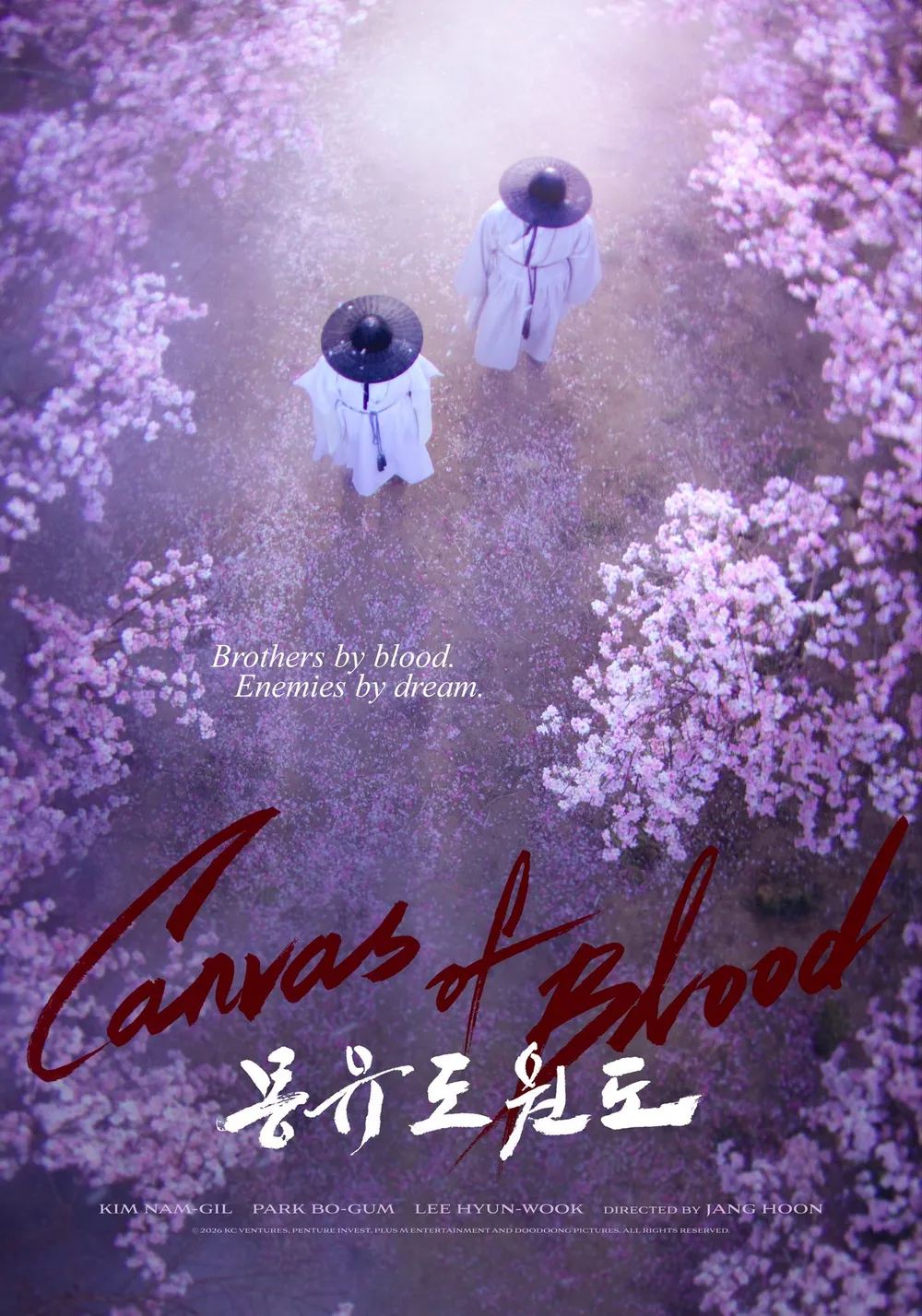
Directed by Jang Hoon, "Mongyudowondo" centers on two brothers — Suyang and Anpyeong, sons of King Sejong born just one year apart — who take radically different paths after the painting "Mongyudowondo" is completed. The contrast makes for compelling drama: Suyang kills his younger brothers and a nephew to seize the throne, while Anpyeong is forced to drink poison on his brother's orders at 36, leaving no heirs. The cast includes Kim Nam-gil as Prince Suyang, Park Bo-gum as Prince Anpyeong, Lee Hyeon-uk as the painter An Gyeon, and Kim Byung-chul as Han Myeong-hoe.
The film is expected to bring Prince Anpyeong's grievances naturally to the surface, following on the injustice already associated with Danjong. These events from more than 500 years ago keep being revisited because, while Suyang — later King Sejo — may have won in his own time, the longer arc of history arguably makes Danjong and Anpyeong the true victors.
Why does the era of the Gyeyujeongnan keep drawing filmmakers?
"Mongyudowondo" is set slightly earlier than "The King's Warden." Where "The King's Warden" dealt with the aftermath of the tragedy, "Mongyudowondo" is better positioned to show how that tragedy was conceived.
Just as "The King's Warden" drove crowds of tourists to Cheongnyeongpo in Yeongwol and Jangneung, Danjong's royal tomb, a successful "Mongyudowondo" could draw visitors to the Mugyejeongsa site in Buam-dong, Jongno-gu, and the former site of Damdamjeong pavilion along the Han River.
In 1447, Prince Anpyeong Yi Yong recounted a dream in which he wandered through a paradise and encountered courtiers, then asked the painter An Gyeon to render it on paper. An Gyeon completed the ink-wash painting in just three days.
Anpyeong's original residence was Suseong Palace, nestled beneath Inwangsan in Okin-dong near Suseong Valley. It was there that he summoned An Gyeon and described his dream. The residence was also known as Bihaedang — a name given by his father, King Sejong, meaning "serve the king without idleness."
Three years after the painting was completed, in September 1450, Anpyeong found a spot outside Changuimun — the northern gate of the capital — in the Buam-dong area that reminded him of the paradise in his dream. He built a pavilion there and named it Mugyejeongsa, planting many peach trees around it. To this day, the characters "Mugyedong," believed to be in Anpyeong's own hand, are carved into a large boulder on the site.
Mugyejeongsa alone was not large enough to gather all the seonbi — the scholar-gentlemen — known for their poetry and prose. So Anpyeong built a second pavilion, Damdamjeong, on a riverside hill near what is now the Mapo Bridge expressway, where he enjoyed composing verse with poets and scholars. The location offered a breathtaking view of the Han River. The character "dam," meaning clear water, pure or unadorned, made it a perfect setting for leisurely artistic pursuits.
When Anpyeong was exiled to Ganghwa Island and executed following the Gyeyujeongnan coup of 1453, the first-merit subject Sin Suk-ju took over Damdamjeong. It was later used mainly by Sin and King Sejo. Today, only a stone marker noting the site of Damdamjeong remains, to the right of the entrance to Byeoksan Villa. After Anpyeong's death, Mugyejeongsa in Buam-dong was also destroyed; only the site survives. Near the entrance to the Mugyejeongsa grounds stands the former home of Hyeon Jin-geon, the author of short stories including "Bincheo."
Anpyeong was celebrated as a master of poetry, calligraphy and painting — earning the title "samjeol," or triple genius — and was the foremost cultural figure of his day. His calligraphic skill was renowned even in Ming dynasty China, where collectors traveled to see his work in the style of Zhao Mengfu. As the leading tastemaker of his era, Anpyeong likely stirred something like envy in his older brother Suyang. The constant gathering of admirers around Anpyeong must have grown increasingly unsettling for Suyang, who harbored political ambitions.
Did Suyang envy Anpyeong, the era's cultural celebrity?
During his 32-year reign, King Sejong involved his eldest son Munjong and his second and third sons, Suyang and Anpyeong, broadly in state affairs. Crown Prince Munjong served as regent on Sejong's behalf for four years and nine months from 1445 to 1450, gaining hands-on governing experience. The consecutive three-year mourning periods following the death of his mother, Queen Soheon, in 1446 and his father, King Sejong, in 1450 took a severe toll on his health — which may explain why his reign lasted only two years and two months. Had Munjong lived even ten more years, the tragedy of the Gyeyujeongnan might never have occurred.
Munjong, too, actively included Suyang and Anpyeong in state deliberations. After Munjong, when the 12-year-old Danjong ascended the throne, Anpyeong likely served as a more reassuring royal presence than Suyang. The powerful officials Munjong had asked to support the young king — Chief State Councillor Kim Jong-seo, Hwangbo In, Nam Ji, and scholars of the Hall of Worthies — were all closer to Anpyeong than to Suyang.
Suyang's inner circle was limited to Han Myeong-hoe, Gwon Ram and Han Hwak — men who had not passed the civil service examinations. Apart from Gwon Ram, they were not known for literary talent. Han Hwak was a relative by marriage to both the Joseon royal family and the Ming imperial court. But Suyang cultivated the commanders of the royal guard — the equivalent of today's presidential security service or capital garrison officers. When staging a coup, that mattered far more.
The 32 years of Sejong's reign were the golden age of Joseon's cultural and intellectual renaissance, producing hangul and a series of scientific inventions. In that environment, Anpyeong — the era's supreme cultural celebrity — had every opportunity to flourish. Yet almost none of his work in poetry, calligraphy and painting survives. After seizing power following the Gyeyujeongnan, Suyang systematically destroyed everything associated with Anpyeong.
Did Suyang read Anpyeong's ambitions in the painting?
The one surviving work is the painting "Mongyudowondo" itself, which An Gyeon completed after Anpyeong described the figures he had met in his dream — but it is held not in Korea, but at the Central Library of Tenri University in Japan.
The painting is believed to have been looted by Japanese general Shimazu Yoshihiro, who led the Satsuma forces during the Imjin War. In the film "Noryang," Shimazu Yoshihiro (played by Baek Yoon-sik) rescues Konishi Yukinaga from Suncheon and retreats to Japan — and he took far more than the painting. He also abducted many Joseon potters, including Shim Dang-gil and Park Pyeong-ui of the Shim Su-gwan family, renowned for their fine ceramics. The Shimazu clan remains the ruling family of Kagoshima, formerly the Satsuma domain, to this day. From a Korean perspective, Shimazu is a reviled enemy commander; from a Japanese one, he is credited with revitalizing Japan's then-underdeveloped ceramics industry. At the time, ceramics were as strategically important as the semiconductor industry is today.
China sold vast quantities of tea to Britain, where black tea outranked coffee as a mark of refinement. The upper classes held afternoon tea parties to stave off hunger before dinner. Britain had little to sell China in return — mainly cotton — leaving it with a chronic trade deficit. The solution was to sell Indian opium to Qing dynasty China. Greater tea consumption also meant greater demand for tea sets, which in turn drove the development of the ceramics industry.
Anpyeong vs. Suyang in "Mongyudowondo"
The painting "Mongyudowondo" depicts the paradise Anpyeong visited in his dream alongside figures including Park Paeng-nyeon, Sin Suk-ju and Choe Hang. The left side of the scroll represents the real world; the right portrays the dreamlike paradise, with jagged cliffs, peach blossoms, a waterfall and an empty boat evoking its otherworldly atmosphere.
Three years after the painting was finished, Anpyeong personally inscribed the title and a postscript, then showed the work to 23 leading literary figures and artists of the day — among them Kim Jong-seo, Jeong In-ji, Park Paeng-nyeon, Choe Hang, Sin Suk-ju and Seong Sam-mun — and asked each to compose a poem of praise. Those poems were preserved in a long handscroll format, which accounts for the painting's considerable horizontal length. What Anpyeong intended as a work of art evoking an ideal world was almost certainly read by Suyang as a politically charged statement — though the painting may simply have been a painting, even if Anpyeong concealed ambitions within its imagined paradise.
Suyang, however, was in no position to view it as merely art. The character description provided by the film's distributor, Plus M Entertainment, reflects precisely this tension.
Kim Nam-gil plays Suyang as a man consumed by the desire for the throne, who scrutinizes the painting "Mongyudowondo" for signs of his younger brother's ambitions and grows progressively more anxious and ruthless. Kim is expected to portray the full range of Suyang's inner life — from the moment he recognizes his own ambition to the torment of suspicion and dread directed at Anpyeong.
Park Bo-gum's Anpyeong is a lover of beauty and an avid collector of art — a poet, calligrapher and painter celebrated as Joseon's prince of elegant leisure. Park portrays a man who longed to bring the beautiful paradise of his dream into the real world.
Lee Hyeon-uk plays An Gyeon, the painter who created "Mongyudowondo" and Anpyeong's artistic companion. Rather than focusing on the brothers' rivalry over the throne, the film trains its lens on the collision between ideals and reality, and between art and power.
Most of the 23 people who contributed poems to "Mongyudowondo" — with a few exceptions, including Sin Suk-ju — were later implicated in the Gyeyujeongnan or the movement to restore Danjong and lost their lives. What is remarkable is that An Gyeon, who painted the work, escaped the purge and lived on, despite the fact that Anpyeong had been his principal patron.
According to one account, An Gyeon was expelled from Anpyeong's household after stealing a prized ink stick the prince treasured — and it was precisely that disgrace that kept him out of harm's way when the Gyeyujeongnan struck.
An Gyeon was from Seosan in South Chungcheong Province, and the An Gyeon Memorial Hall stands in Jigok-myeon, Seosan. The version of "Mongyudowondo" on display there is a reproduction acquired when Seosan forged a sister-city relationship with Tenri, Japan, but it is said to be of exceptionally high quality.
wp@heraldcorp.com