District has held Seoul's largest population for 18 consecutive years since 2008; election officials printed ballots for only 50 percent of registered voters, raising prospect of legal challenges
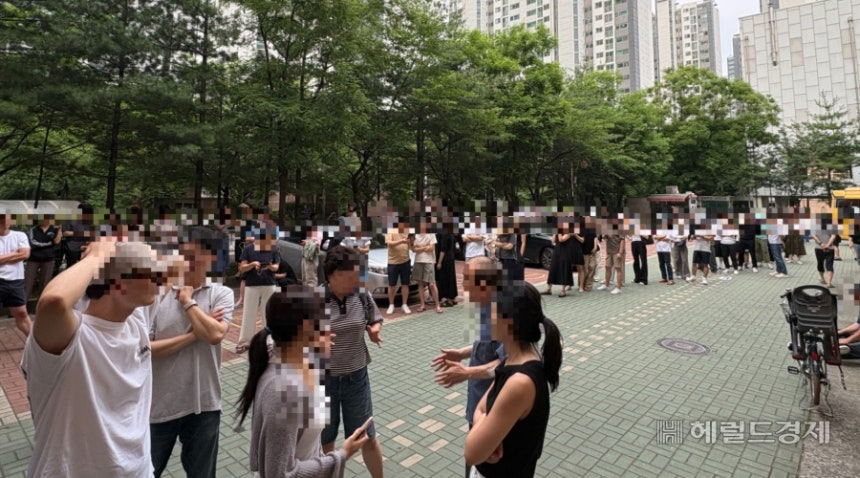
Residents of Songpa-gu — Seoul's most populous district with the largest number of registered voters — were effectively denied their right to vote Wednesday after polling stations ran out of ballots in an unprecedented breakdown. Election officials declared voting closed at around 11:50 p.m., but two ballot boxes in the district ultimately never reached the counting booths. The People Power Party was scathing. "This isn't the 19th century — how can this even happen?" a party official said.
According to the National Election Commission on Thursday, Songpa-gu has a registered population of 651,469 and an electorate of 565,368 — both the highest among Seoul's 25 autonomous districts. The district has held the top spot in Seoul for population size for 18 consecutive years since the residential registration statistics system was established in 2008.
An internal survey by the PPP's Seoul chapter found that as of 6 p.m. Wednesday, ballot shortages had occurred at 12 polling stations across the city: Polling Station No. 4 in Munjeong 1-dong, No. 2 in Munjeong 2-dong, No. 6 in Jamsil 2-dong, No. 2 in Jamsil 7-dong, No. 5 in Jamsil 4-dong, No. 3 and No. 7 in Garak 2-dong, and No. 5 in Wirye-dong — all in Songpa-gu — as well as No. 4 in Cheongdam-dong and No. 2 in Gaepo 2-dong in Gangnam-gu, No. 6 in Guui 3-dong in Gwangjin-gu, and No. 7 in Noryangjin 1-dong in Dongjak-gu. Because many of the affected stations are in areas considered conservative strongholds, the incident has fueled opposition claims of election fraud.
An NEC official said the shortage stemmed from the sheer number of polling stations in Songpa-gu — 146 in total — with voter turnout at some stations exceeding projections. The official acknowledged that election authorities had printed ballots equivalent to only 50 percent of the total registered electorate.
The NEC apologized, saying it "recognizes the gravity of the situation" and would investigate the cause and take steps to prevent a recurrence. Observers say the incident is likely to end up in court. Under current election law, not only parties and candidates but also ordinary voters may challenge the validity of an election result.
A precedent exists in Germany, where serious irregularities — including ballot shortages and the distribution of incorrect ballots — were discovered during the Sept. 26, 2021 Berlin state election. Legal challenges ultimately voided the result and forced a re-run, which changed both the outcome of the mayoral race and the seat allocations of multiple parties in the legislature.
The Berlin Constitutional Court ruled that voters had no way of knowing when polling stations would reopen and that it was impossible to determine how many had simply gone home. "In some constituencies, a difference of just 100 votes would have been enough to alter the distribution of seats," the court said.
youknow@heraldcorp.com