
Oh Se-hoon wins razor-thin race, returns as Seoul mayor
Welfare programs including 'Seoul Safe Postpartum Care Center' and 'Seoul Kids' Hearty Meal' expected to continue
Democratic Party sweeps Seoul City Council, posing governance challenge
"Will attend Cabinet meetings … and push through citizens' five mandates"
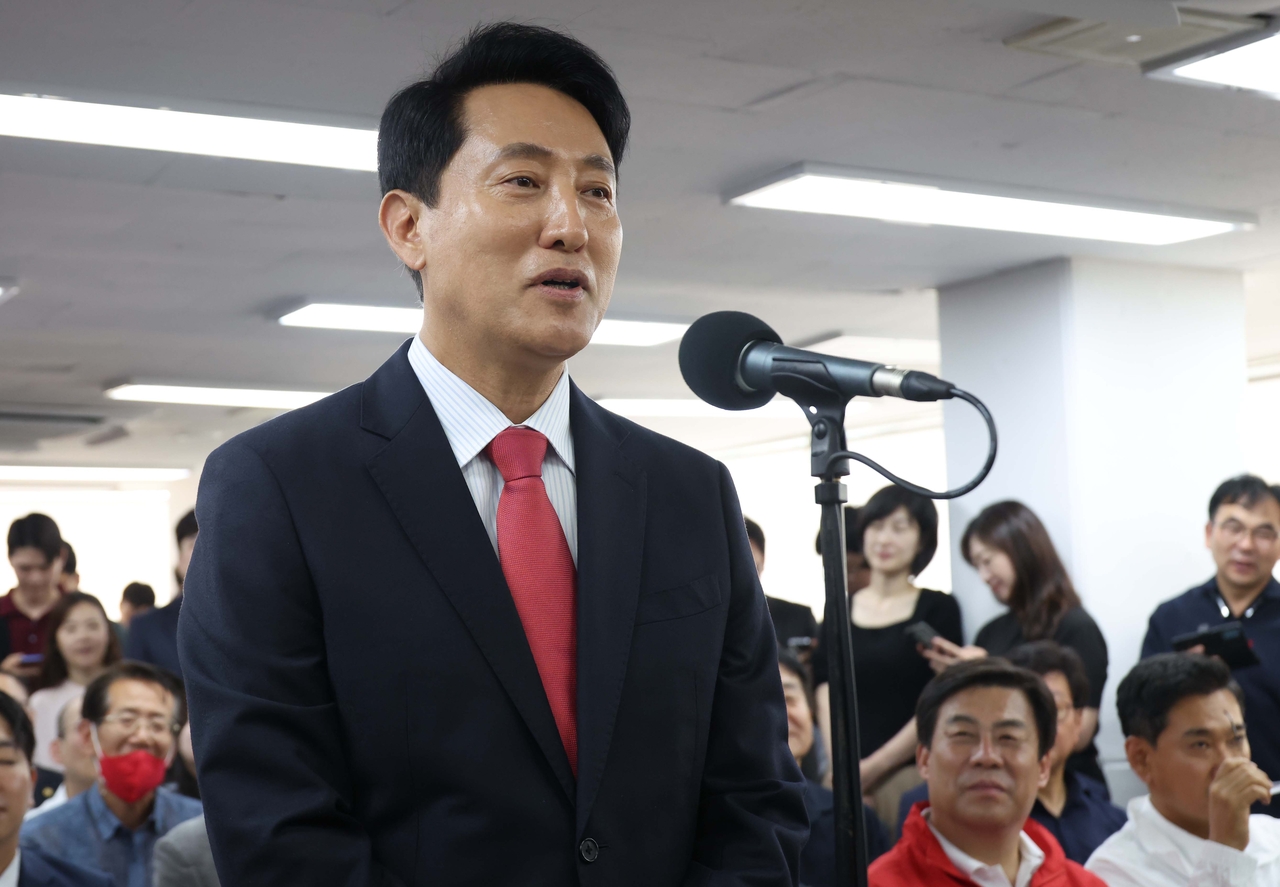
Oh Se-hoon of the People Power Party won the Seoul mayoral race in the 9th nationwide simultaneous local elections, with vote counting stretching into Thursday morning in an extremely tight contest against Democratic Party of Korea candidate Jeong Won-oh. With Oh returning to City Hall, the welfare programs he championed are expected to continue at full pace in his new term.
However, the Seoul Metropolitan Council — which will both check and support his administration — presents a new challenge. Unlike the previous term, the Democratic Party swept the council elections by a wide margin, leaving Oh with the task of governing alongside a hostile legislature. Oh said he would attend Cabinet meetings upon returning to office and speak frankly to President Lee Jae-myung on issues including real estate policy, making his next moves a subject of close attention.
During the campaign, Oh pledged a "lifecycle-tailored care system" covering children, parents and the elderly. He said he would introduce the nation's first public-private partnership postpartum care center — the "Seoul Safe Postpartum Care Center" — and expand elementary school childcare facilities to 130 locations. He also said the "Seoul Kids' Hearty Meal" program would launch a pilot "school-vacation lunch camp" starting this summer. His platform also included expanding eligibility for "Seoul Learn," an educational ladder program, to students in the bottom 70 percent of the income bracket from elementary through high school, and providing 800,000 won to 1.1 million won per month for two years to help vulnerable groups build financial independence.
While Oh held Seoul for the People Power Party in this election, the balance of power in the Seoul Metropolitan Council flipped dramatically. The Democratic Party is set to claim more than two-thirds of the council's seats, effectively stripping Oh of any practical veto power. Governing alongside the council will therefore be a major preoccupation throughout his new term. Oh previously clashed with the council in 2017 over free school meals and an ordinance revision.
According to the National Election Commission, the 12th Seoul Metropolitan Council will have 118 seats — six more than the 11th Council's 112. Of those, 103 are constituency seats and 15 are proportional representation seats.
In the 11th Council, the People Power Party held 76 seats (70 constituency, 6 proportional) against the Democratic Party's 36 (31 constituency, 5 proportional), giving the PPP more than twice as many seats.
The 12th Council produced the opposite result. The Democratic Party won 83 seats to the People Power Party's 35 — a near-exact reversal of the previous term. Notably, the PPP failed to secure even one-third of the seats, a significant burden for Oh heading into his new term.
The dynamics of city governance are expected to shift accordingly. Because the People Power Party held the majority in the 11th Council, Oh had been able to run the city with relatively few constraints. With the Democratic Party's landslide in the 12th Council, his administration now faces considerably stronger legislative pushback.
Oh said during the campaign that if re-elected he would attend Cabinet meetings. Whether he will use those sessions to speak directly to President Lee Jae-myung on pressing issues such as real estate remains to be seen. On the campaign trail, Oh said: "If you grant me the honor of serving as Seoul mayor once more, I will present the five mandates of Seoul citizens before the president and see them through."
The five mandates he outlined cover real estate and the broader economy. On real estate, they are: normalizing conditions for redevelopment and reconstruction projects by lifting loan regulations on relocation costs and removing restrictions on the transfer of union member status; revitalizing private rental housing supply to ease the jeonse and monthly rent crisis; and establishing safeguards against real estate tax shocks. On economic deregulation and democratic recovery, the remaining two mandates call for easing regulations on the greater Seoul metropolitan area and blocking the withdrawal of indictments.
ikson@heraldcorp.com





