Triple-layer coating prevents dehydration; applications seen in cell culture and soft robotics
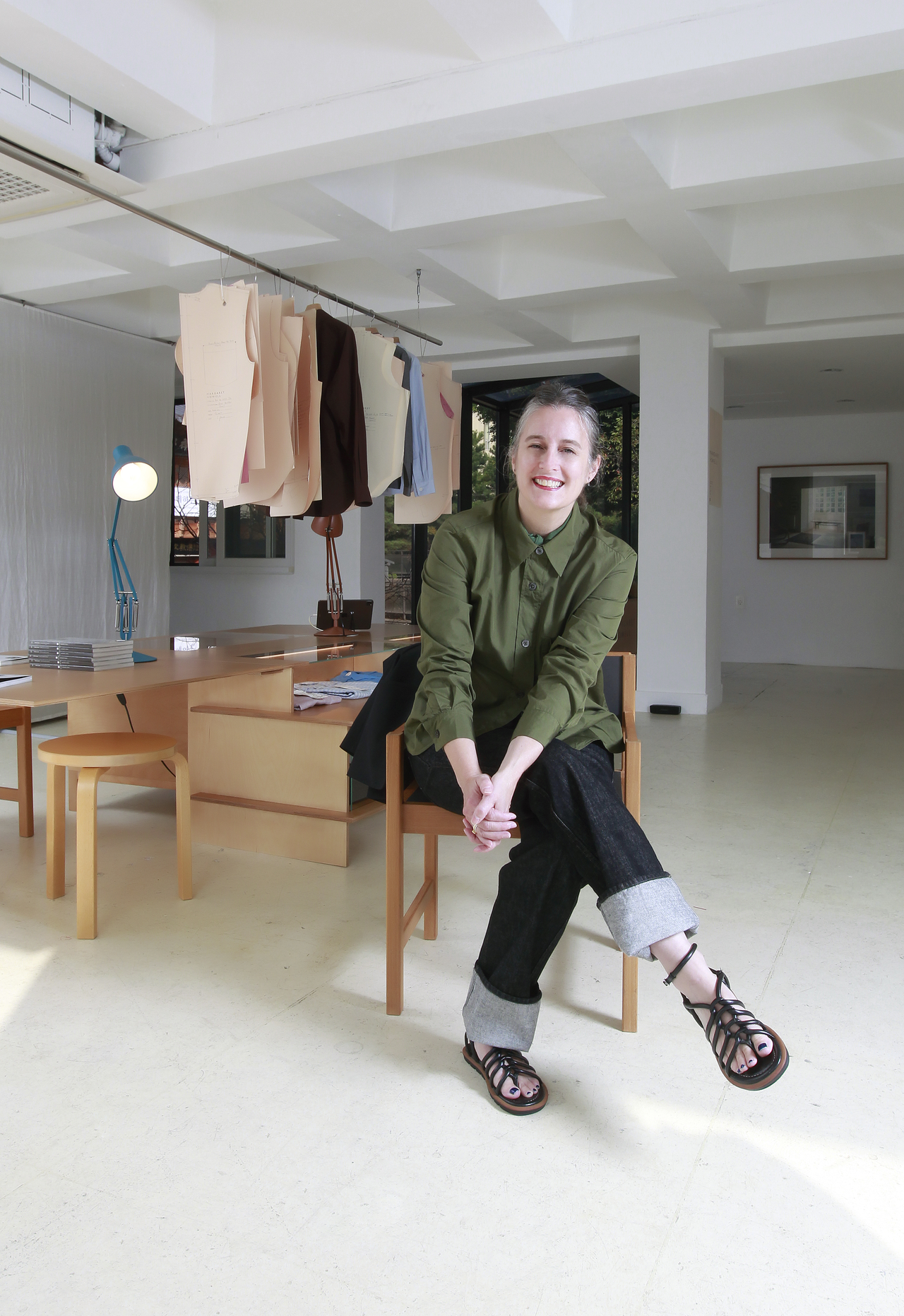
![From left: Chung-Ang University professor Woo Sang-hyuk, postdoctoral researcher Kim Hyun-jin and Gachon University professor Ko Jong-kuk. [Chung-Ang University]](https://wimg.heraldcorp.com/news/cms/2026/06/04/news-p.v1.20260604.56f6a8d2ece2413090dfbbab69cc8825_P1.png)
A research team at Chung-Ang University has developed a new encapsulation technology that addresses a key weakness of hydrogels — their tendency to dry out and lose functionality.
Chung-Ang University announced Thursday that a team led by Professor Woo Sang-hyuk of the Department of Chemical Engineering developed the technology jointly with a team led by Professor Ko Jong-kuk of Gachon University and a team from Osaka Institute of Science and Technology in Japan. The collaboration produced a method for forming a triple-layer protective coating on the surface of hydrogels.
Hydrogels are materials that retain large amounts of water, giving them properties similar to human tissue. Their longstanding limitation, however, is that exposure to air causes rapid moisture evaporation, leading to drying and performance loss. To address this, the research team drew on the concept of a "liquid marble" — a technique in which a liquid droplet is wrapped in hydrophobic particles.
The structure first forms a particle layer on the hydrogel surface, then covers it with a thin oil layer, and wraps the outside in a second particle layer. The team named this structure the "Multi-Layered Marble," or MLM. The design stably forms a water-repelling shell around the water-retaining hydrogel — much like the hard rind of a fruit encasing its moist flesh.
In experiments, hydrogels coated with the MLM structure retained more than 90 percent of their moisture after being left in open air for over a week — a significant improvement over conventional hydrogels, which dry out rapidly under the same conditions.
The technology also proved effective in cell culture experiments. Cells cultivated inside the MLM structure maintained high survival rates without dehydration. The coating also features a self-healing function: even when punctured to inject or extract material, it recovered to its original state within seconds.
"This research presents a universal platform for resolving interfacial instability between hydrogels and hydrophobic materials," Professor Woo said. "It has the potential to be extended to a wide range of fields, including soft robotics, drug delivery and biotech storage systems."
The findings were published in the international journal Nature Communications.
newday@heraldcorp.com