Lee Won-taek's win in North Jeolla offers relief, but failure to retake Seoul and losses in five by-elections leave scars; Kim Young-rok vows to oust Jung from party leadership
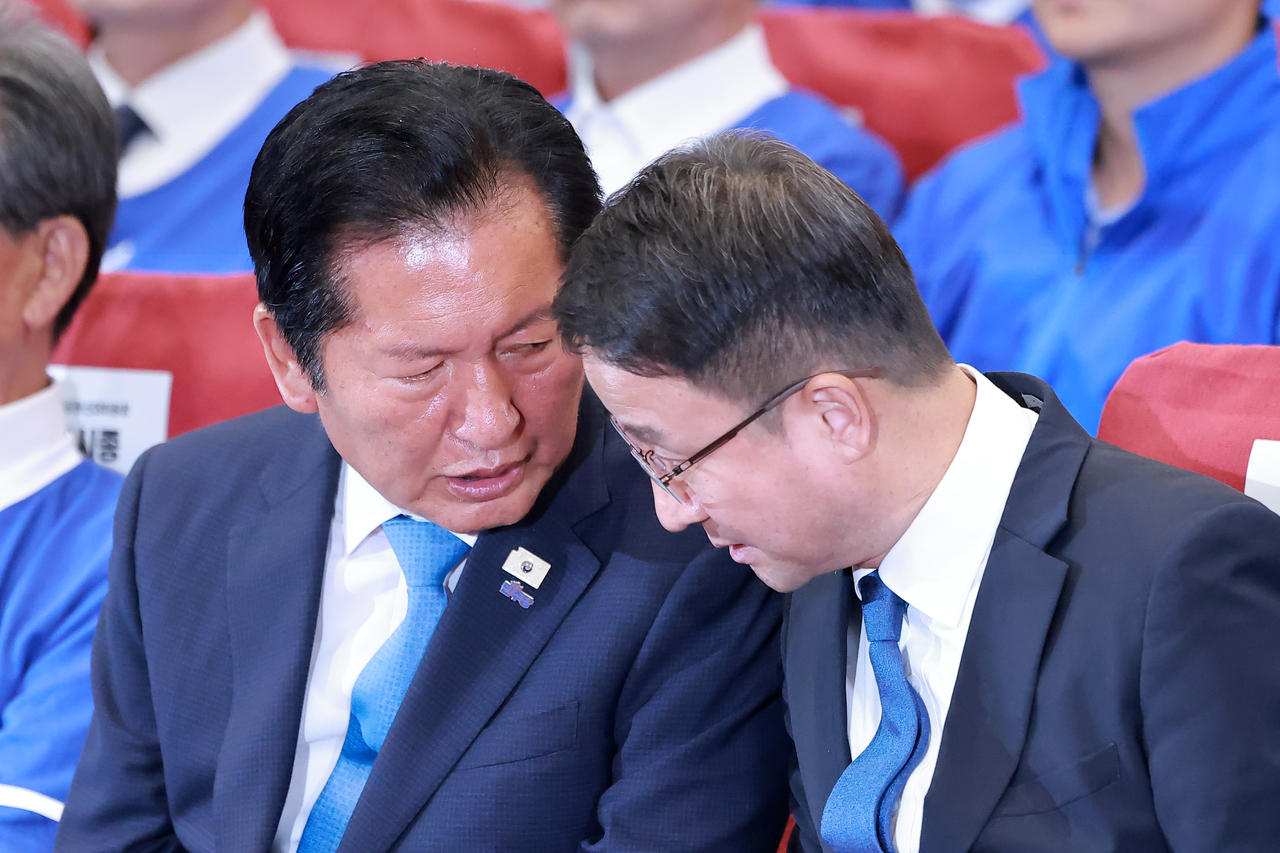
Attention is turning to the political future of Democratic Party of Korea Chairman Jung Chung-rae, who served as overall campaign chief for the party's June 3 local elections.
The party made significant gains — reclaiming most regional governorships from the opposition — but analysts say the failure to win Seoul, the most prized contest of all, leaves a blemish on the results. Combined with a disappointing showing in National Assembly by-elections, Jung's bid to extend his tenure as party leader is expected to face headwinds.
Jung held a press conference at the National Assembly on Thursday morning, saying he was "deeply grateful to the people who delivered a great victory for the Democratic Party across the country," but adding, "it is painful that we could not retake Seoul."
Many observers had tied the prospects of Jung's reelection — his term runs through August — directly to the party's performance in the local elections.
Toward the end of the campaign, claims surfaced frequently that Jung's political fate hinged on the outcome of the North Jeolla gubernatorial race.
Kim Kwan-young, a former Democratic Party member expelled over allegations of cash distribution who ran as an independent, had framed the contest as "Kim Kwan-young versus Jung Chung-rae" and was running neck-and-neck with Democratic Party candidate Lee Won-taek in many polls.
In the final stretch, floor leader Han Byung-do and other party leaders invested considerable effort in securing North Jeolla votes. Lee ultimately won the governorship by a comfortable margin. The Democratic Party also won 11 of the remaining 15 regional governorship races, claiming a numerical landslide overall.
Still, the loss of Seoul and other races to the People Power Party left Jung's camp with a lingering sense of unease. A ruling-party official criticized the party leadership, saying, "The biggest setback for us in this election was the 'withdrawal of charges' issue — it particularly disrupted the momentum of our candidates in Seoul and parts of Yeongnam." The official added: "Did the party really need to introduce the fabricated-indictment special prosecutor act right before the election? The leadership's responsibility here cannot be dismissed."
The National Assembly by-election results have also drawn criticism as "somewhat disappointing." Of the 14 seats contested, 13 had been Democratic Party constituencies until just before the vote. The party ended up ceding Busan Buk-gap, Ulsan Nam-gap, Gyeonggi Province's Pyeongtaek-eul and South Chungcheong's Gongju-Buyeo-Cheongyang to the People Power Party, on top of Daegu Dalseong, which the party had not held to begin with.
Within the Democratic Party, the narrow defeats in Busan Buk-gap — where Ha Jung-woo ran — and Pyeongtaek-eul — where Kim Yong-nam ran — are seen as particularly painful, as both were multilateral races. In Busan Buk-gap, critics say Jung handed independent winner Han Dong-hoon an opening early on by sparking the "oppa controversy." In Pyeongtaek-eul, the party is blamed for failing to manage an overheated intra-camp rivalry, effectively handing People Power Party winner Yoo Eui-dong a victory by default.
Open opposition to Jung within the party has also begun to surface. South Jeolla Province Governor Kim Young-rok, who had voiced strong objections during the final primary for the Democratic Party's special Gwangju-South Jeolla mayoral candidate, posted on Facebook immediately after polls closed Wednesday, declaring, "From this moment, I will devote everything I have to removing him from the party chairmanship."
"For Jung, who must now move straight into a leadership race the moment the election is over, these local and by-election results will not be entirely satisfying," a Democratic Party lawmaker said.
sunpine@heraldcorp.com