Annual implementation plan reviewed with 17 ministries and agencies
Rural service standards to be improved; working committee to meet twice yearly
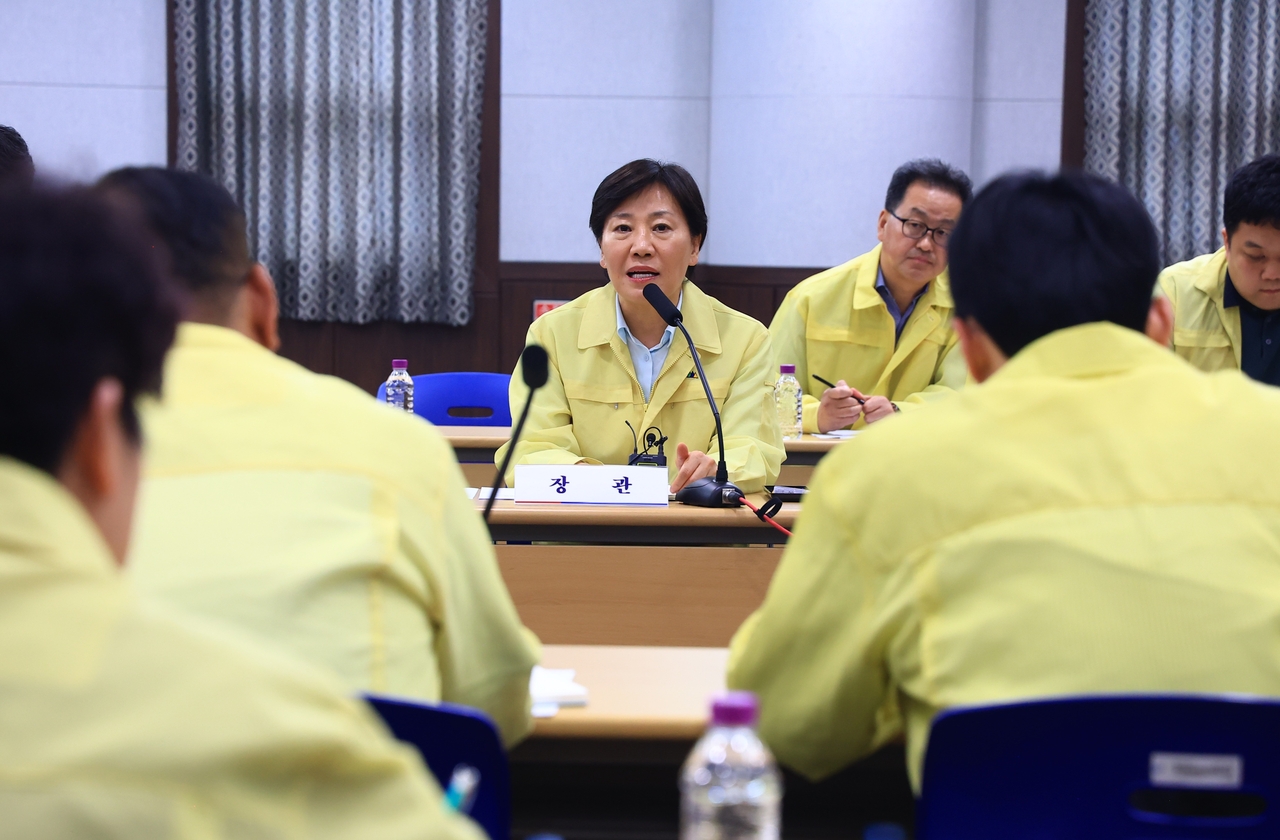
The government reviewed its 2026 implementation plan for improving quality of life in rural and fishing communities — covering the development of rural stay-type mixed-use complexes, the operation of mobile medical clinic buses and the strengthening of regional public hospitals — and agreed to deepen pan-government cooperation.
The Ministry of Agriculture, Food and Rural Affairs said Thursday that Minister Song Mi-ryung chaired a working committee meeting of the Committee for Improving the Quality of Life of Farmers and Fishers and Rural and Fishing Community Development at the Government Sejong Complex, where officials discussed the policy direction for improving rural quality of life.
The meeting marked a shift from the committee's previous written-consultation format to an in-person session. Representatives from 10 ministries and agencies — including the Ministry of Oceans and Fisheries, the Ministry of Education and the Ministry of Climate, Environment and Energy — as well as farmers' organizations, the National Agricultural Cooperative Federation, the National Federation of Fisheries Cooperatives and outside experts attended.
The committee reviewed five agenda items: annual progress and forward plans under the Fifth Basic Plan for Improving Rural and Fishing Community Quality of Life (2025–2029), results of a rural service standards inspection, findings from a rural impact assessment, and proposals to improve committee operations.
A review of the 2025 implementation plan found that most tasks had proceeded as scheduled, though experts flagged a need to strengthen some measures to improve policy effectiveness. The government plans to finalize which tasks require revision after deliberation by the full committee, then have the relevant ministries draw up improvement measures.
The working committee also reviewed the 2026 quality-of-life implementation plan, which 17 ministries and agencies will carry out in line with the Fifth Basic Plan and national policy priorities.
Key projects include support for rural convergence industries, development of rural stay-type mixed-use complexes, operation of mobile medical clinic buses and mobile markets, reinforcement of facilities and staffing at regional hub public hospitals and local healthcare institutions, support for removing slate roofs, expansion of sewage systems and LPG supply chains, and expansion of the "Culture Day" program.
On the rural service standards inspection results, the committee analyzed the causes behind items that fell short of targets and discussed remedies. The government said it will pursue phased improvements to meet all targets by 2029.
Through the rural impact assessment, the committee reviewed improvement directions for two issues: narrowing the urban-rural gap in housing welfare for older residents, and minimizing food deserts. This year's assessment topics were the expansion of child-care services and support for starting fishing-village community businesses and village enterprises.
The Ministry of Agriculture, Food and Rural Affairs said it will hold the working committee twice a year and revitalize subcommittee operations to strengthen the quality-of-life committee's policy coordination role.
"Rural and fishing communities are at a critical juncture where they must create new opportunities for development amid changing conditions," Minister Song said. "We will work to ensure that voices from the field are faithfully reflected in policy through the quality-of-life committee, and to deliver policy outcomes that residents can actually feel."
adastra@heraldcorp.com