Weekday ridership after midnight dropped at nearly three times the overall rate between 2019 and 2025, with Gangnam Station recording a roughly 46 percent decline, as remote work and earlier commutes reshape how Seoulites move through the city.
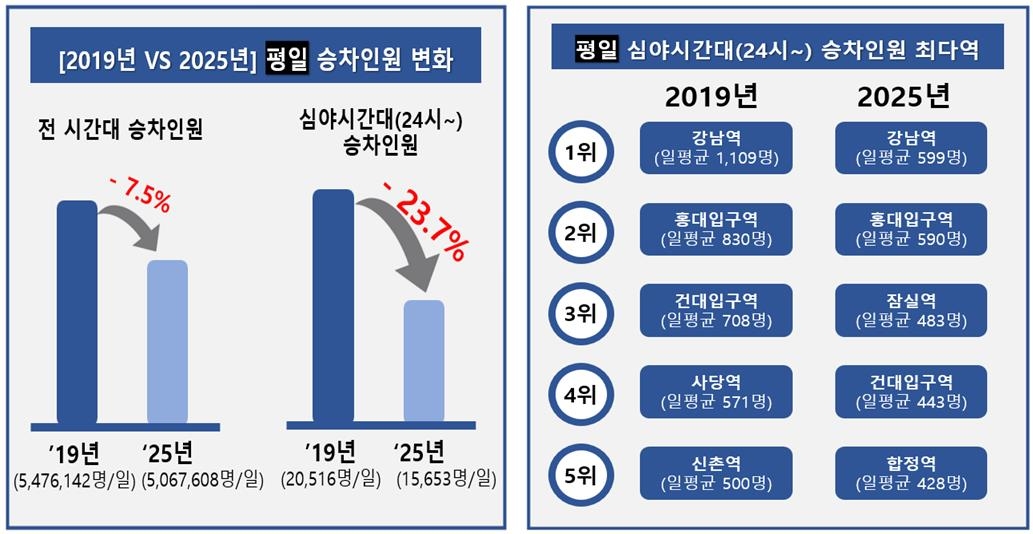
Late-night subway ridership in Seoul has fallen sharply as company dinners and after-work drinking gatherings become less common.
Seoul Metro said an analysis of subway usage patterns before and after the COVID-19 pandemic showed that ridership after midnight declined far more steeply than overall ridership.
Average weekday ridership on the Seoul subway stood at roughly 5.476 million in 2019, before the pandemic, but slipped to about 5.067 million in 2025 — a 7.5 percent drop. Ridership after midnight fell far more sharply over the same period, declining 23.7 percent from a daily average of 20,516 to 15,653 — roughly three times the overall rate of decline.

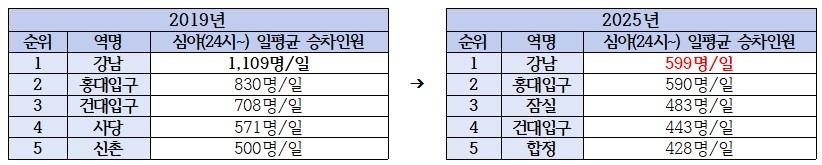
Stations in major commercial and entertainment districts still account for the bulk of late-night boardings. The top five stations for weekday ridership after midnight in 2025 were Gangnam (599 passengers), Hongik University (590), Jamsil (483), Konkuk University (443) and Hapjeong (428). However, Gangnam Station's late-night ridership fell about 46 percent compared with 2019, confirming that even the busiest commercial hubs have seen a significant drop in late-night travel demand.
Seoul Metro attributed the shift to lifestyle changes following the pandemic. Where late-night movement was once driven largely by company dinners, drinking gatherings and other nighttime socializing, the spread of remote work and a growing culture of leaving the office early have pushed daily travel toward more routine, daytime-centered trips.
The trend also reflects a broader social shift, particularly among younger generations, toward what is being called "sober life" — a lifestyle centered on avoiding intoxication. The decline in after-midnight ridership mirrors the wider contraction of late-night drinking and socializing culture.
Seoul Metro said it plans to continue monitoring shifts in travel demand and daily movement patterns to improve crowd management by time of day and tailor its transport services accordingly.
"Citizens' travel patterns since COVID-19 have become more regular and centered on everyday routines," said Ma Hae-geun, head of Seoul Metro's operations division. "We plan to keep strengthening our services with both operational efficiency and safety in mind, in step with changing transport demand."
seouldream01@heraldcorp.com