Progressive Party elects 7 provincial, 34 local assembly members; chief cites late, fragmented coalition-building as key failure
By Joo So-hyun, The Herald Business
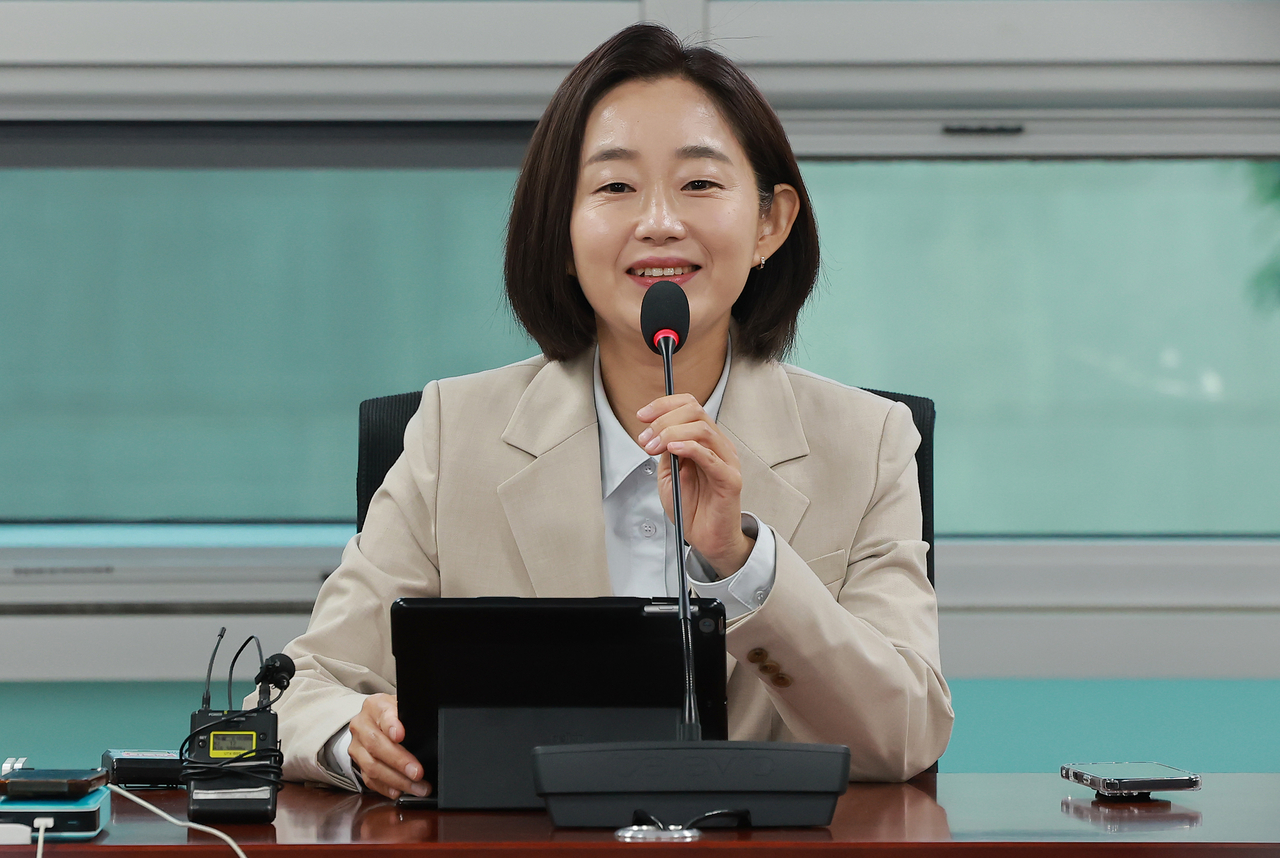
Kim Jae-yeon, standing chair of the Progressive Party, lost the National Assembly by-election in Pyeongtaek's second district in Gyeonggi Province. She said Friday that she had already seen trouble coming when Cho Kuk, leader of the Rebuilding Korea Party, announced his candidacy in mid-April. "At that moment, I judged that a red flag had already been raised for the entire progressive electoral alliance," she said.
On races where the party had unified with the Democratic Party of Korea — including the South Gyeongsang Province governorship — but still fell short, she said the results showed that "the power of progressive unity was not fully realized, delivering painful outcomes before the public."
Speaking at a press briefing at the National Assembly members' office building on Friday, Kim said the Progressive Party had produced seven provincial assembly members and 34 local assembly members across eight metropolitan cities and provinces nationwide. She credited the results to "candidates and party members who sweated for a long time to deliver community-rooted grassroots politics, showing the public the Progressive Party's sincerity and capability."
"The defeats of candidates we had hoped to see win are disappointing," she added, "but I am grateful to the public for producing twice as many winners as four years ago."
On the electoral alliance with the Democratic Party in Busan, Ulsan and South Gyeongsang Province, Kim said that "after many twists and turns, more than 30 Progressive Party candidates withdrew to create one-on-one matchups against the insurrection forces, helping secure victories including the Ulsan mayoral race." Still, she said she deeply regretted that the alliance had not moved "faster, broader and more aggressively" to firmly establish the anti-insurrection electoral framework.
On why the party lost the Ulsan Dong-gu district chief and Busan Yeonje-gu district chief races to People Power Party candidates despite unification efforts, Kim said the problem was a failure to achieve true one-on-one matchups. She added that candidates had withdrawn individually at the last minute, or unification primaries had been held on rushed schedules, leaving voters without enough time to understand the electoral message.
Directing criticism at the Democratic Party, Kim said party-to-party negotiations on the alliance were not concluded until May 15. "Before that, there were many requests at the local level from those who wanted an electoral alliance, but the Democratic Party and other parties did not take them up," she said. "It is deeply regrettable that the overall alliance was pursued far too late."
On the Pyeongtaek by-election specifically, Kim said she had concluded after May that building an electoral alliance was no longer feasible, given the "fierce negative attacks" exchanged between the Rebuilding Korea Party and Democratic Party candidates. The race ended as a five-way contest among Kim, Cho, Democratic Party candidate Kim Yong-nam, People Power Party candidate Yoo Eui-dong and Hwang Kyo-ahn of the Freedom and Innovation Party — with Yoo winning. The prevailing assessment is that the split in the progressive vote handed Yoo the seat.
Democratic Party leader Jung Chung-rae had on Thursday expressed gratitude to the Progressive Party for the electoral alliance and raised the idea of introducing a runoff voting system. Kim said she hoped "trustworthy measures will be pursued," but noted that runoff voting for general elections had not been discussed in depth. "I am not sure whether he was referring to the 2028 general election — we have not had a deep conversation about it," she said.
Kim also said the continued prevalence of two-seat electoral districts had made it "very difficult for minor parties to carve out space." She said the Democratic Party itself would likely be doing considerable soul-searching over the large number of People Power Party ward council members elected in Seoul, and called for ongoing discussions on "increasing diversity and proportionality" in the electoral system.
Asked about post-election alliances, Kim said her position was unchanged: the Progressive Party and the four reform-progressive parties must maintain their alliance "as long as the insurrection forces continue to exist." Given the political difficulties expected ahead, she said "a more responsible policy alliance and political alliance will be necessary."
Kim drew a clear distinction between alliance and merger. "Some people take the word 'alliance' to mean something close to party-to-party integration," she said. "The merger discussions between the Democratic Party and the Rebuilding Korea Party are a concept of integration, not alliance." Her remarks came amid speculation that Jung's comment that "alliances make us bigger" was a signal toward resuming merger talks with the Rebuilding Korea Party.
Asked about strategy for drawing in women in their 20s and 30s as a support base, Kim said building a progressive role for women and youth had been a key strategic priority for the party and must be expanded. "The Progressive Party will take on the role of a more forward-looking progressive party that can embrace the demands and political aspirations of people in their 20s and 30s that the Democratic Party cannot accommodate," she said.
addressh@heraldcorp.com