Demand set to deepen as LG Electronics shifts more R&D staff to the district
'Magok is undervalued compared to Dongtan, where the same size already tops 2 billion won'
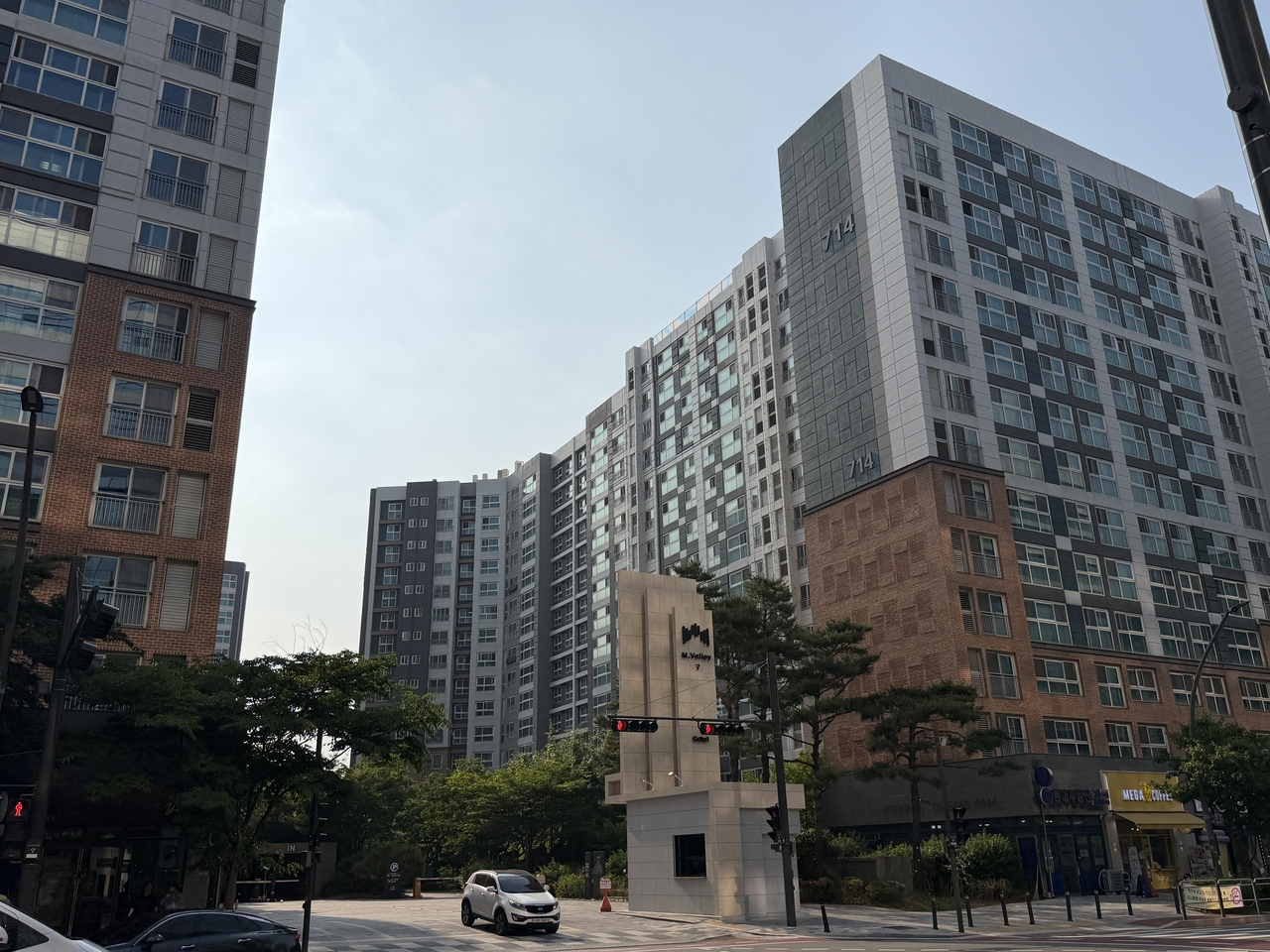
Real live-work proximity means walking to the office, not riding a shuttle. In that sense, Magok has a genuine live-work premium.
Apartment prices in Magok-dong, Gangseo-gu, Seoul are climbing sharply. Record-high transactions are piling up as demand from workers seeking to live near their offices builds around LG Science Park, home to R&D staff from LG Electronics, LG Display, LG Chem and other major LG Group affiliates.
According to the Ministry of Land, Infrastructure and Transport's actual transaction price disclosure system, a 114-square-meter unit at Magok M-Valley Complex 7 in Magok-dong, Gangseo-gu changed hands May 2 for 2.38 billion won (about $1,720,000), a new record for the building. An 84-square-meter unit in the same complex sold for 1.96 billion won on April 27. The 84-square-meter floor plan, widely known as the standard "national size," is now approaching the 2-billion-won mark.
Nearby complexes also logged record sales. An 84-square-meter unit at Magok M-Valley Complex 6 set a new high on May 23, selling for 1.765 billion won on the second floor. A 114-square-meter unit in the same complex traded at 2.1 billion won on April 25, also a record.
On the ground, agents say the concentration of LG Group R&D personnel in Magok is the key force lifting housing demand. A representative at a local real estate agency in Magok-dong said a significant number of LG employees had recently shifted their commute to Magok from other research campuses and worksites across the greater metropolitan area, including Paju and Sanbon. "At first they commuted long distances from where they already lived and waited to see how things would go," the agent said. "But with one to two hours each way, many ultimately decided that since they would have to buy in Seoul anyway, they might as well find something close by in Magok."
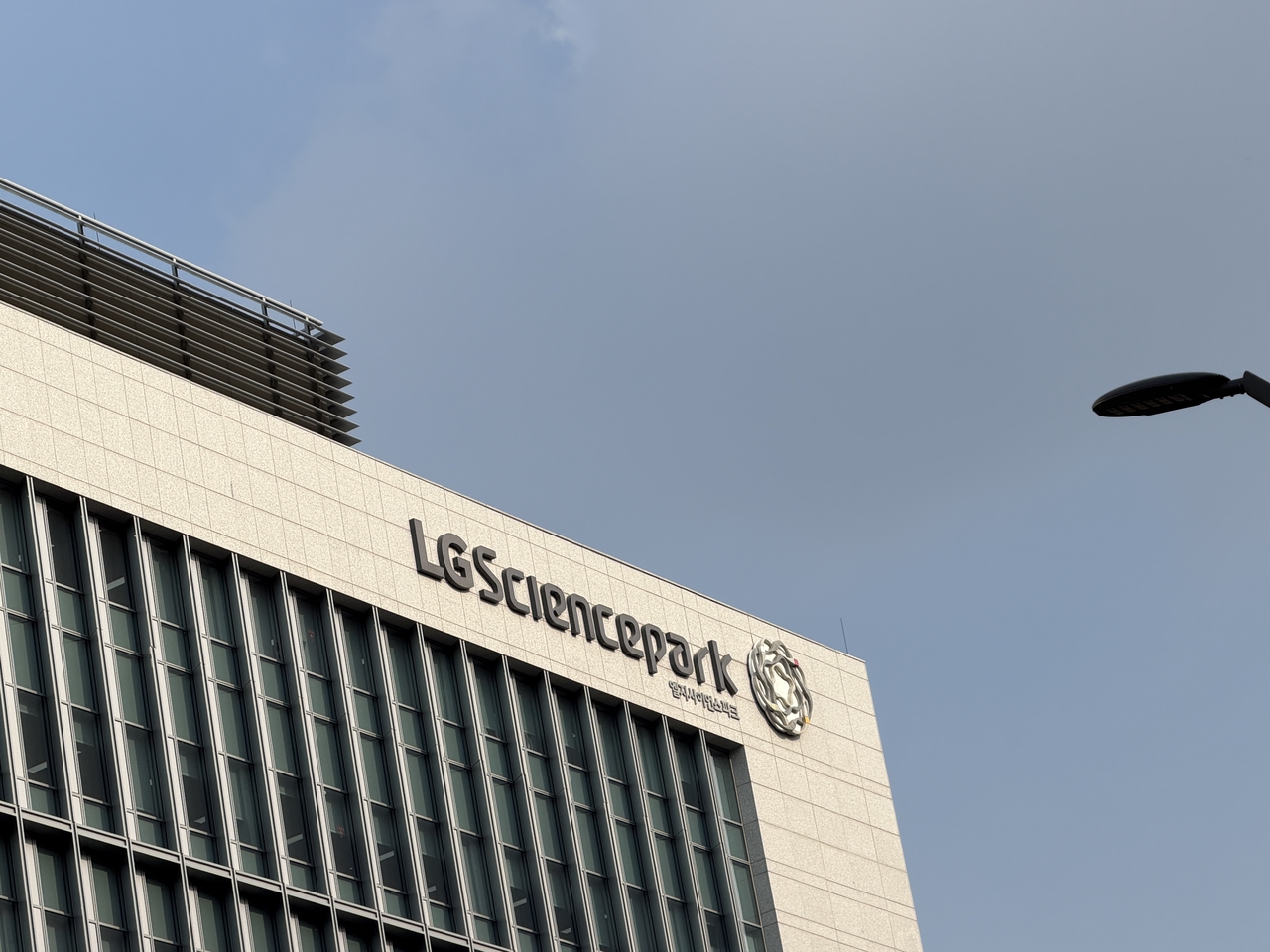
LG Group began consolidating its R&D workforce in Magok in 2018 when LG Science Park opened, pulling researchers scattered across Anyang, Ansan and other parts of the greater metropolitan area into a single hub. The company invested a total of 4 trillion won to build a research campus spanning roughly 170,000 square meters of land with a combined floor area of approximately 1.11 million square meters. Staff from LG Electronics, LG Display, LG Innotek, LG Chem, LG Household, LG Uplus and LG CNS all moved in.
Last year, LG Electronics relocated roughly 2,000 researchers from its R&D campuses in Seocho, Yangjae and Gasan to newly built research buildings at LG Science Park, cementing Magok's status as LG's primary domestic R&D base. Combined with staff already at the science park, a large share of LG Electronics' domestic R&D workforce is now based in Magok.
Beyond LG, major companies including Kolon, DL E&C, S-Oil and Osstem Implant have also set up operations in the Magok area. The tight integration of commercial and residential zones is widely cited as the core factor underpinning home prices there.
The head of another real estate agency in Magok-dong drew a contrast with other tech-driven housing markets. "In Dongtan, Giheung and Yeongton, people talk about how prices rose on shuttle-bus demand from Samsung Electronics and SK Hynix workers," the agent said. "Magok is different — the offices are right next to the apartment complexes. Residents walk to work, so units closest to the workplace command a bit more."
The agent added that the mixed-use structure of Magok — where office and residential zones sit side by side — has fueled expectations that the district could eventually resemble Yeouido. "Having your workplace right next door is a bigger premium for end-users than people might think," the agent said.
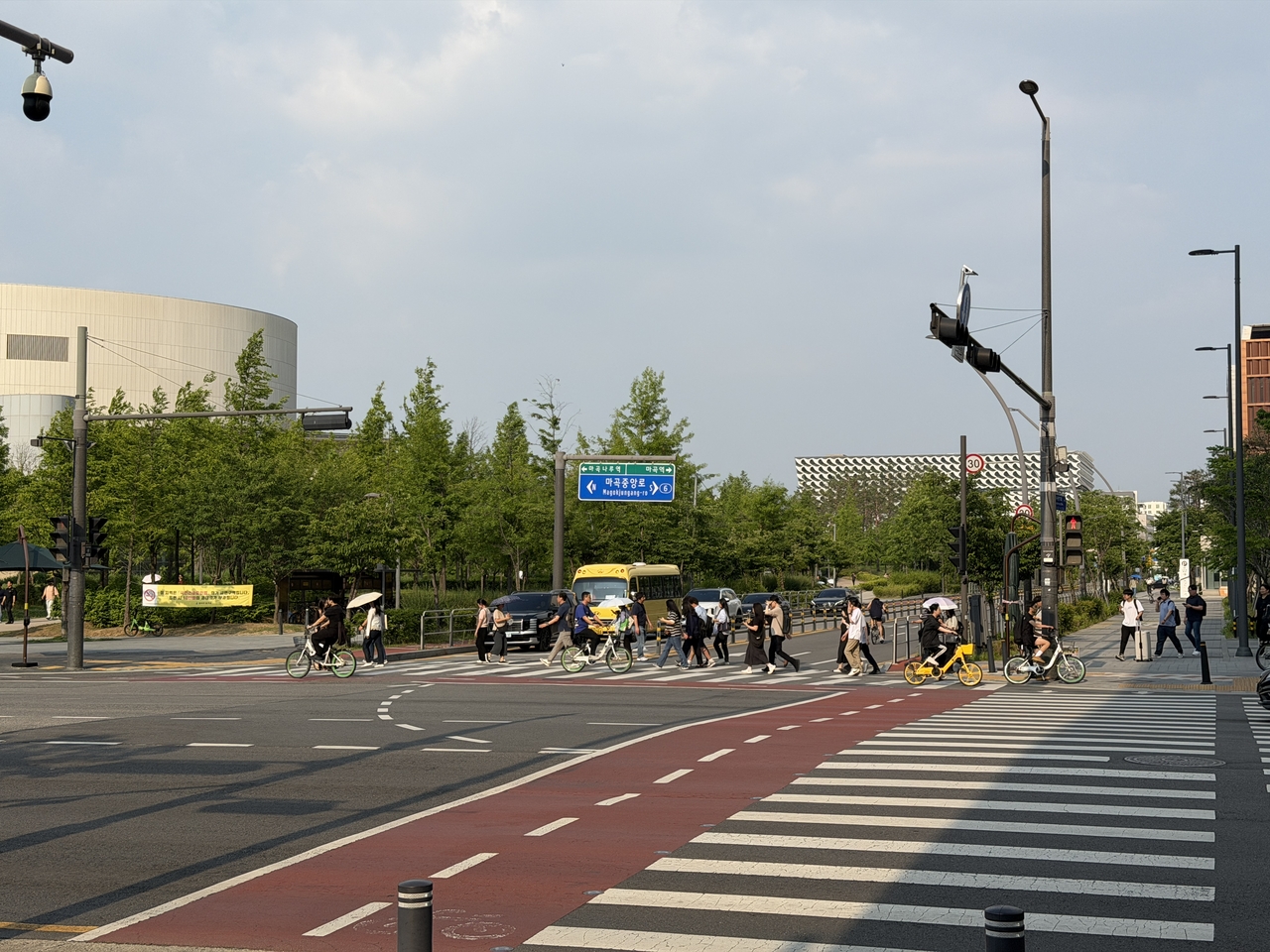
The price gains are also visible in official data. According to the Korea Real Estate Board's weekly apartment price trend report for the first week of June, released Thursday, apartment prices in Gangseo-gu — which includes Magok-dong — have risen a cumulative 6.21 percent so far this year. That is the second-highest gain among Seoul's 25 autonomous districts, trailing only Seongbuk-gu at 6.65 percent.
However, signs of a pause after the recent sharp run-up are emerging. According to Naver Real Estate, only one resale listing for an 84-square-meter unit at Magok M-Valley Complex 7 is currently on the market, with an asking price of 2.2 billion won.
The Magok-dong agent said transaction volume dropped sharply after May 9, when a temporary exemption from the heavy capital gains tax surcharge on multi-home owners expired. "Trading was quite active before that deadline, but now sellers are listing at inflated asking prices and there simply are not many units available, making it hard for buyers to commit," the agent said.
Kim In-man, director of the Kim In-man Real Estate Economic Research Institute, said Magok still looks undervalued against comparable markets. "Given that the standard 84-square-meter unit in Dongtan has already crossed the 2-billion-won mark, Magok still has room to catch up," Kim said. "If Dongtan benefits from the GTX-A line, Magok sits at the intersection of three transit lines — subway lines 5 and 9 and the Airport Railroad — making it a triple transit-oriented area. It is also Seoul's last large-scale planned residential development site, which makes it arguably the superior option."
Kim added that Magok's value had long been held back by its image as a relatively peripheral part of Gangseo-gu. The combination of live-work proximity, transport links and a deep pool of potential residents leaves room for further price appreciation as the market reassesses the area, he said.
![“두 달 만에 2억 뛰었다” 삼전닉스 ‘셔세권’ 동탄 집값 상승 수도권 1위 [부동산360] - 헤럴드경제](https://wimg.heraldcorp.com/news/cms/2026/06/04/news-p.v1.20250324.6b45ab4d8bb845de9d1a6887cdae70fc_T1.jpg)
quq@heraldcorp.com