
By Jung Joo-won, The Herald Business
Marking 81 years since the founding of the Korean National Police Agency, The Herald Business introduces all 31 police stations in Seoul.
Our Neighborhood Police Station (8): Seoul Gangbuk Police Station
![Gangbuk Police Station in Gangbuk-gu, Seoul. [Gangbuk Police Station]](https://wimg.heraldcorp.com/news/cms/2026/06/10/news-p.v1.20260605.563a93291a6c4d6b9e0cb053eaea7989_P1.jpeg)
Seoul's Gangbuk Police Station is responsible for public safety in Gangbuk-gu, the northernmost district in the city. About 700 personnel work there, including 673 sworn officers, with the Mia and Solsaem district units and seven precinct offices covering the entire district.
According to the Seoul Metropolitan Police Agency, the station received 22,330 emergency calls in just the first four months of this year. During the same period, five major crime categories recorded 1,559 cases, traffic accidents numbered 315, and there were 46 rallies and demonstrations. Total emergency calls for all of last year reached 76,590.
Originally established in 1969 as the "Bukbu Police Station," it was renamed to its current form in 2006. The area's mix of Bukhansan mountain, the Suyu restaurant strip and aging residential neighborhoods means the station handles a wide range of public safety demands — from mountain rescues to everyday crime and serious offenses.
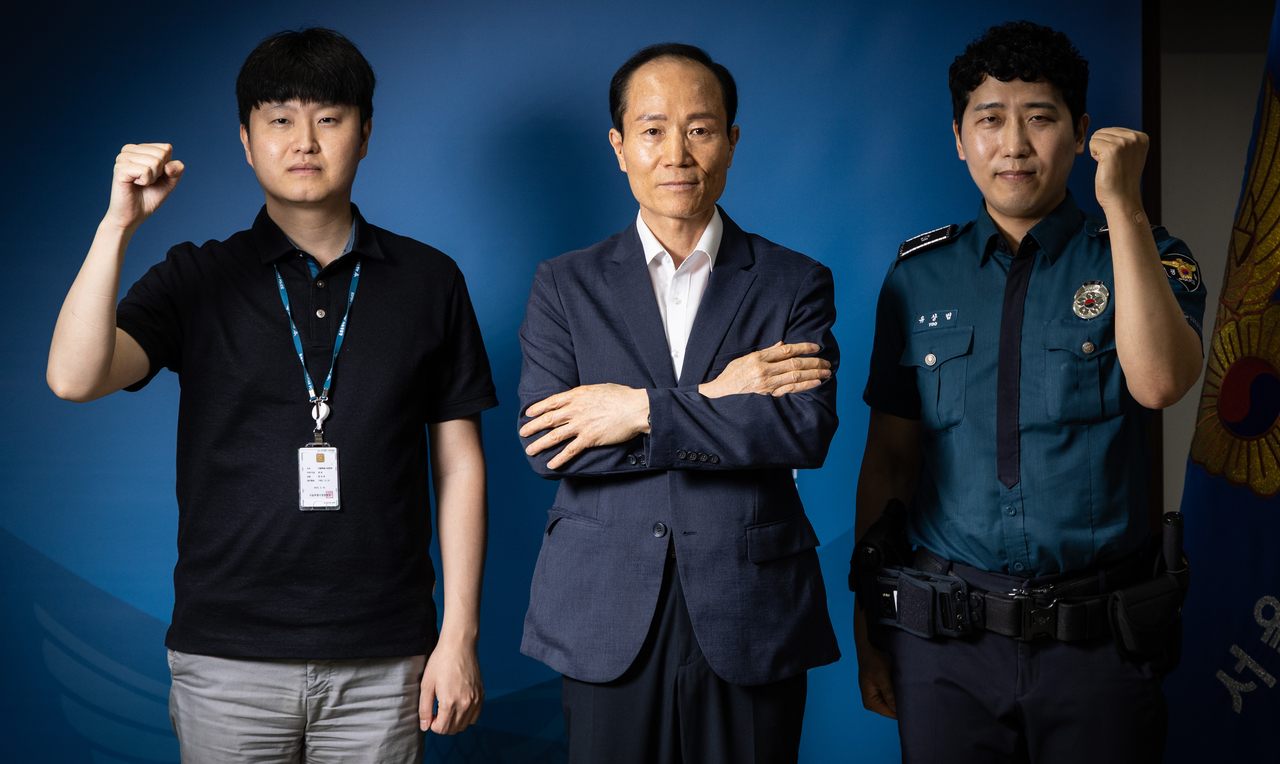
Gangbuk Station is known for having a comparatively young staff and a culture that prioritizes frontline response. When one patrol car is dispatched, nearby units routinely join in support — a practice that has taken root across the station. Soccer and futsal clubs are also active among officers. On the first floor of the station building, a memorial space honors officers who died in the line of duty.
"Our top priority is the safety and happiness of residents," station chief Kim Tae-hyeon said. "Protecting the lives and property of the public, grounded in basic principles, is the very reason the police exist."
Faces of Gangbuk Station
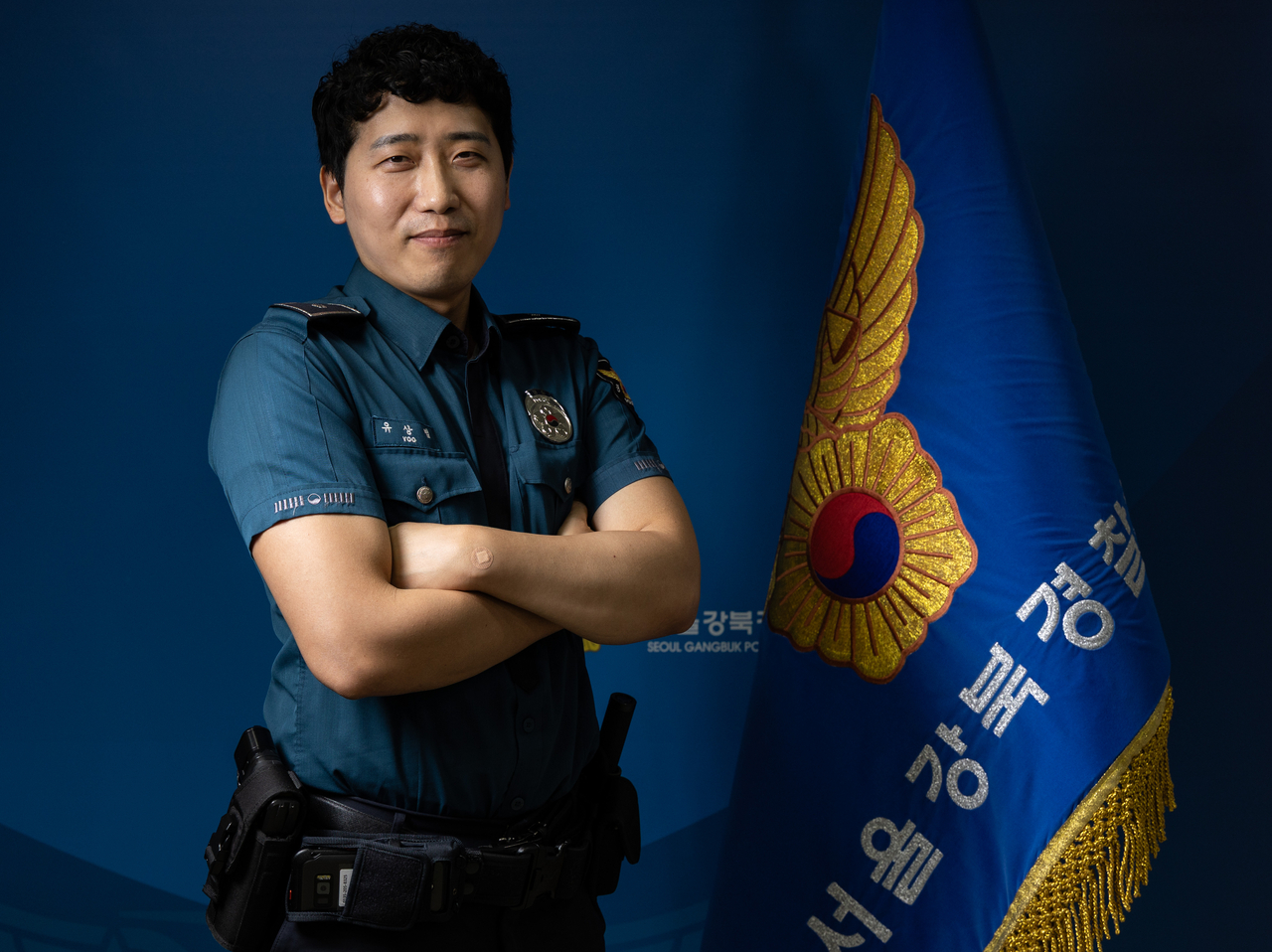
Senior Officer Yoo Sang-beom: The man who saved a 100-day-old baby
Senior Officer Yoo Sang-beom rushed a 100-day-old infant to hospital in his patrol car in March. The baby had lost consciousness with a fever exceeding 40 degrees Celsius. The parents had gone to one hospital only to be told no pediatrician was available, and were on their way to another when they stopped at the Mia district unit to ask for help.
Yoo determined that using a nearby 119 emergency center was not a viable option and immediately set off in his patrol car. It was a weekend afternoon and the roads were congested, but with the cooperation of other drivers he covered a distance that normally takes 30 minutes in about 10.
"The baby was truly only 100 days old," Yoo said. "It could have become a critical situation, so when I heard the child had received treatment and recovered, I felt proud to have been even a small help." After the incident, he personally called the parents to check on the baby's condition.
The case that stays with him most, however, is a Bukhansan mountain rescue in February. A report came in about an active-duty soldier who had not returned to base, and after tracking his location, officers found him at a Bukhansan observatory attempting to take his own life.
"After searching the winter mountain for more than four hours, we found the soldier hesitating at the observatory railing with a rope tied to it," Yoo said. "A week later, his father came in person to thank us — that meant a great deal to me."
Having spent more than a decade on the front lines at district units and precinct offices, Yoo said the frontline remains the most important part of the police organization. "When you look at police-related problems or major incidents, most of them start with a small case or call that happened in the field," he said. "There are quite a few cases where greater harm could have been prevented if the initial response had been handled properly."
"The field is always unpredictable — you never know what situation will arise," he added. "Making accurate judgments requires experience and a thorough understanding of procedure, which is why I believe it's important to have skilled officers out on the front lines."
Yoo also urged the public not to hesitate to call for help. "If it's an emergency, police will respond however the call comes in — a text, the 112 app, any method," he said. "Even sending just a single dot is enough for us to confirm your location and come to your aid."
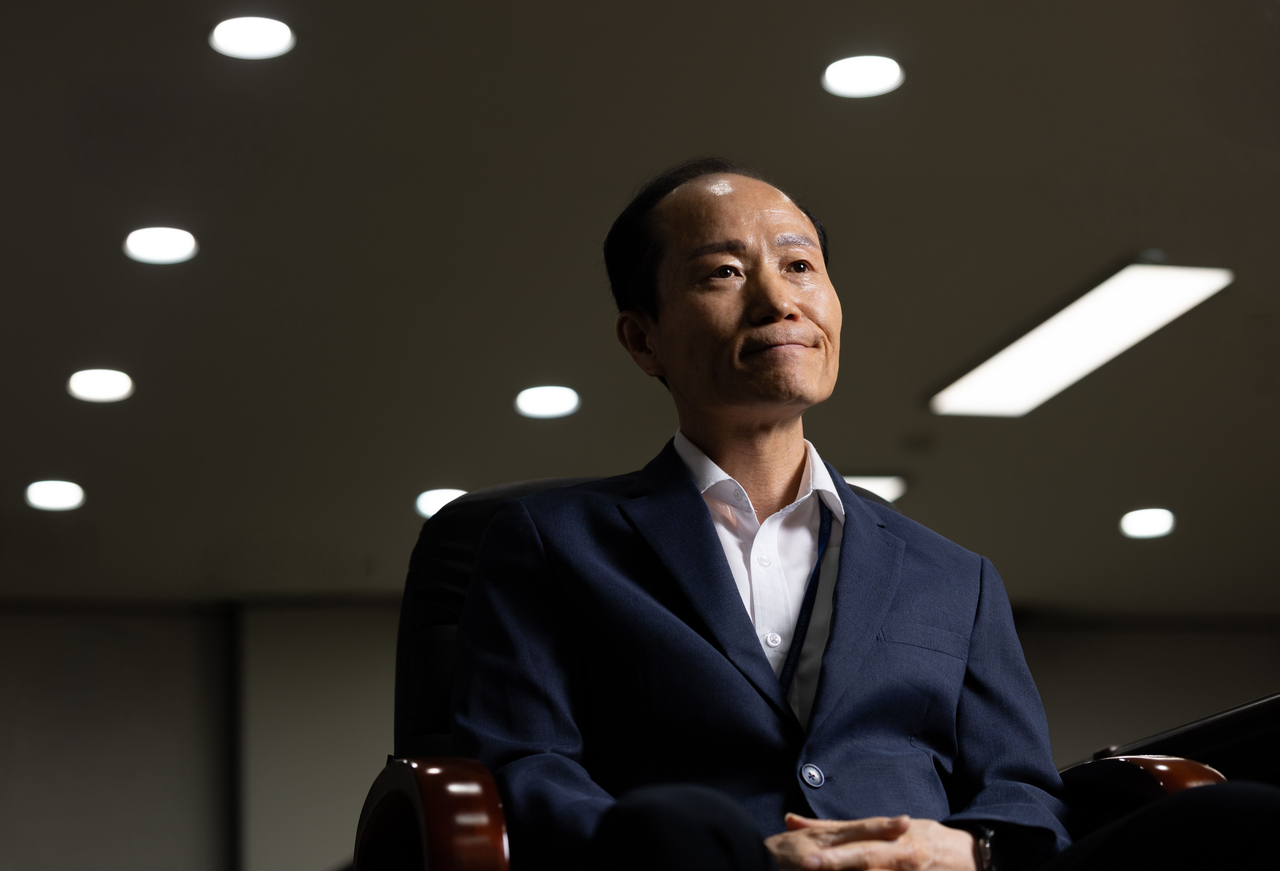
Inspector Kim Seong-gil: A veteran detective who worked the Yoo Young-chul case
Inspector Kim Seong-gil, who leads Gangbuk Station's Intelligent Crime Investigation Team, is a veteran investigator who took part in the 2004 investigation into serial killer Yoo Young-chul.
"There were almost no CCTV cameras back then, so every part of the investigation meant pounding the pavement," he recalled. Tracking suspects through mobile phone location data or digital records — standard tools today — was not an option. When someone went missing, detectives had to canvass the scene in person and talk to people to find leads.
The Yoo Young-chul case also marked the starting point for criminal profiling in South Korea. "The concept of a profiler barely existed at the time," Kim said. "I remember persuading people to let a profiler interview Yoo Young-chul. That case drove major advances in research on psychopaths and serial killers."
More than 20 years on, the investigative landscape has changed entirely. Profiling, digital forensics and virtual asset tracking technology have all advanced rapidly. Yet Kim said veteran investigators still have a role that no technology can replace.
"Younger investigators are strong with technology and digital investigation," he said. "On the other hand, someone who has been investigating for a long time has the experience to read suspects and victims and build a rapport with them." He added: "You can't get to the truth just by firing questions in an interview room. You have to listen to the other person and be able to move them."
Today, Gangbuk Station's Intelligent Crime Investigation Team handles cases with significant public interest — civil servant misconduct, unlicensed financial schemes, economic crimes and misappropriation of government subsidies. The cases tend to be large in scale and often involve complex legal analysis.
With two years left before retirement, Kim said his main focus these days is mentoring junior investigators. Every morning he brews drip coffee and holds a team huddle — not a formal meeting, but a time to share investigative concerns and interests. "When a difficult case isn't coming together, we talk it through and look for a way forward together," he said. "Investigation is ultimately not something you do alone — it's a team effort."
The advice he gives junior colleagues most often is that "knowledge is power." He practices what he preaches, checking the latest court rulings and investigative techniques every morning through an AI case-search system. "As crime evolves, investigation must evolve just as much," Kim said. "Our techniques have to keep pace with how fast criminals are moving. In the end, the most important weapon a police officer has is continuous learning."
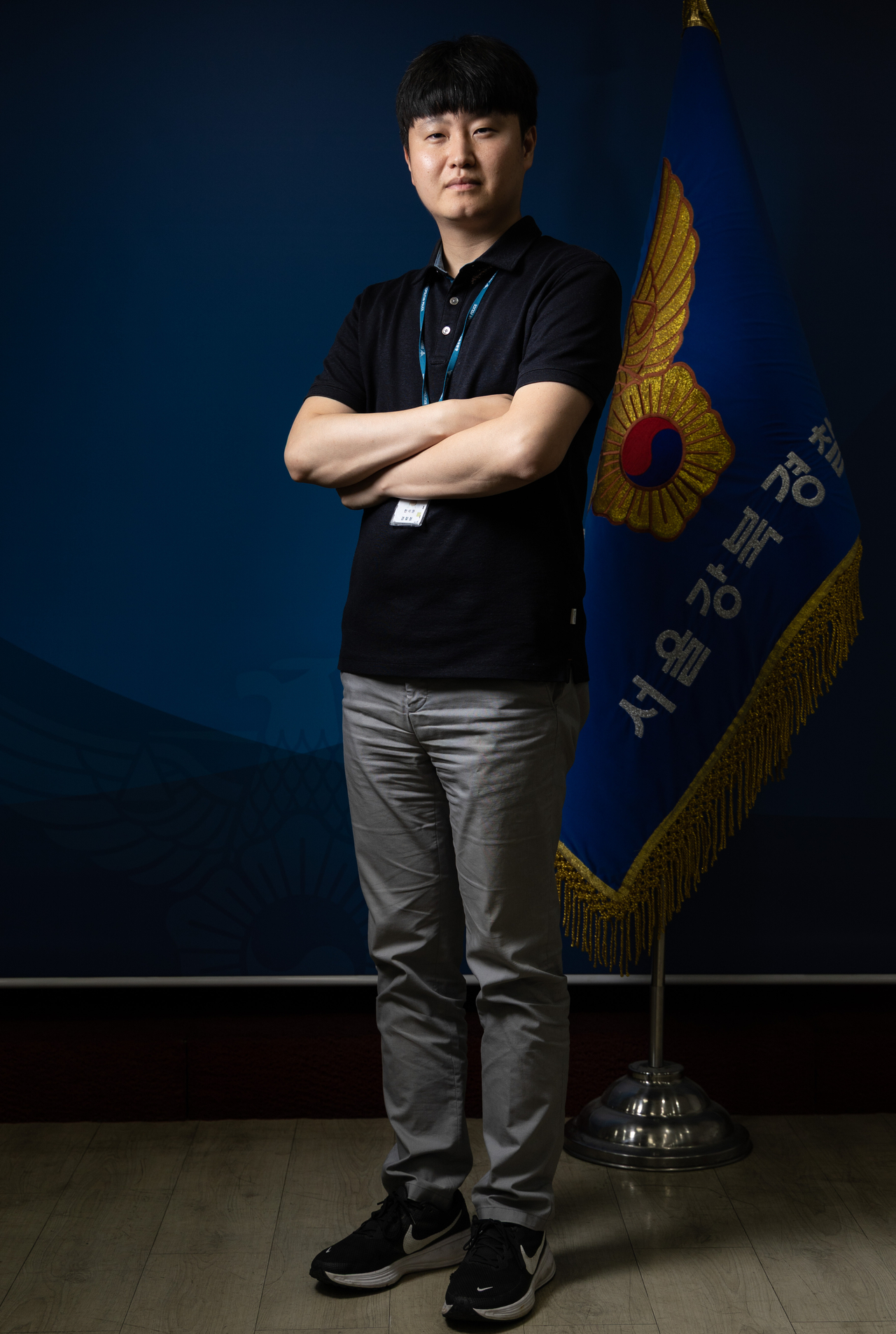
Inspector Han Seok-kwon: The officer who brought down an 800 million-won Tether theft ring
Inspector Han Seok-kwon led the investigation into a theft of 800 million won (about $523,000) worth of Tether (USDT), a case that wrapped up in January. The probe began after a victim filed a complaint in April 2025 and ran for nearly a year, making it one of the station's largest virtual asset crime investigations.
The perpetrators built a fake investment website and lured victims into connecting their personal virtual asset wallets, then tricked them into executing a malicious smart contract. The victim had exchanged messages with the suspects for more than a month, building trust. The gang even paid small amounts of interest to simulate a real investment product, then drained the victim's assets the moment a large sum — raised through loans and borrowing — was deposited.
"At first I thought it was a run-of-the-mill investment chat-room scam," Han said. "But when we checked with a tracking program, 800 million won had actually been taken. It was a scale of loss rarely seen at a local station."
The investigation team arrested and detained six suspects. Particularly notable was the team's success in tracking down and arresting the developer who had built the fake investment site and the malicious smart contract. "It is very rare for a developer to be detained as well," Han said.
The investigation stretched for about a year. The ringleader was based in South Korea, but some members of the organization were abroad. Through Interpol cooperation and by persuading the overseas members' families, the team ultimately apprehended the entire organization. "Virtual asset crimes are often used not just for simple theft but as part of investment fraud or money laundering," Han said. "Tracing the assets is possible, but the hardest part is identifying and proving exactly who took the money."
Han urged the public to exercise caution with personal crypto wallets. "Using major exchanges like Upbit or Bithumb is relatively safe, but creating a personal wallet without sufficient understanding, or connecting your wallet to an unfamiliar site, is extremely dangerous," he said. "Any investment site that cannot be properly verified through a search should be treated as suspicious."
jookapooka@heraldcorp.com





