![Hangyesanseong Fortress in Inje-gun, Gangwon Province [Cultural Heritage Administration]](https://wimg.heraldcorp.com/news/cms/2026/06/05/news-p.v1.20260605.110f35ad810b468eada31ed61b5ed0f5_P1.jpg)
Hangyesanseong Fortress in Inje-gun, Gangwon Province — the site of the final decisive victory against the Mongol invasion and a nationally designated historic site — is on the verge of opening to the public. Construction of visitor infrastructure has surpassed 90 percent completion.
Hangyesanseong is one of the most significant relics of Korea's resistance against the Mongol invasions. Built to exploit the rugged terrain of Seoraksan, it is a large-scale stone fortress stretching roughly 7 kilometers along the southeastern and east-west ridgelines of Ansan, and is considered one of the most formidably situated mountain fortresses in South Korea.
Residents of Inje-gun have long called the valley below Ansan in Hanggye-ri, Buk-myeon, "Seonggol" — meaning "fortress valley." At the summit, 1,430 meters above sea level, a wall stretching 20 ri (about 8 kilometers) was built in terrain so steep that locals marveled it could only have been raised by divine hands. Generations believed the fortress stood watch over their village.
Even the Mongol army — widely regarded as the most formidable military force of its era — suffered casualties against the fortress's impregnable structure and the fierce resistance of the local civilian-military alliance, and was ultimately forced to withdraw. There is even a popular joke that the Mongols coined the phrase "Inje gam-yeon eonje ona" — "If you go to Inje, when will you ever come back?" — a lament born of their failure to conquer it.
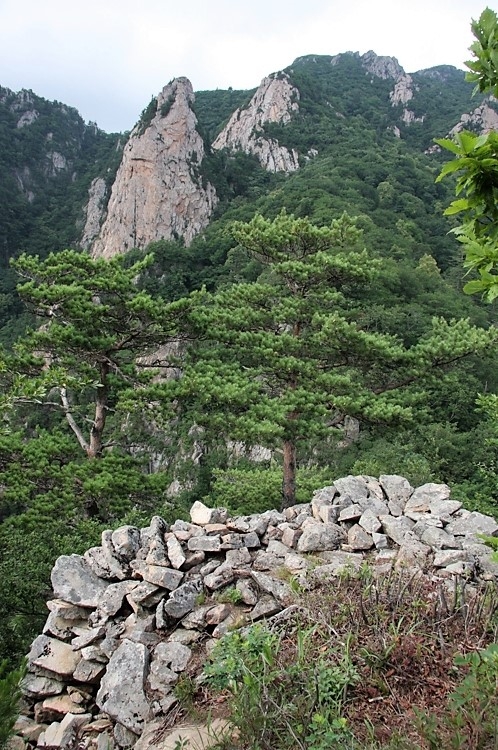
In 1259, Mongol forces attacked Hangyesanseong at the summit of Ansan, west of what is now Seoraksan National Park. Had they taken the fortress, they would have controlled the northern reaches of the present-day Sokcho-Goseong-Yangyang corridor, enabling a swift advance down the east coast and tightening their grip on the Baekdudaegan mountain range. But the fortress, built by a coalition of civilians, officials and soldiers in the most forbidding terrain imaginable, proved impenetrable even to the world's most powerful army.
Defenders had several options — a prolonged siege, sheltering civilians within the walls, or launching sorties outside. The Byeolcho unit under An Hong-min chose not to limit themselves to passive defense. According to the Goryeosa, the official history of the Goryeo dynasty, they launched surprise attacks on Mongol forces in the surrounding mountains, leaving almost none of the enemy alive.
Some historians interpret the victory at Hangyesanseong as a turning point that contributed to the decline — or at least the concessions — of the Yuan dynasty, and helped expand Goryeo's territorial reach.
Because the fortress sits deep in the rugged interior of Seoraksan National Park, public access has long been restricted. Inje-gun has been working to change that, signing a joint conservation and management agreement with the Korea National Park Service and pursuing a phased project to open the site to visitors. Just before the COVID-19 pandemic, in 2019, a pilot trekking program brought hundreds of selected members of the public along with heritage and tourism experts to the site.
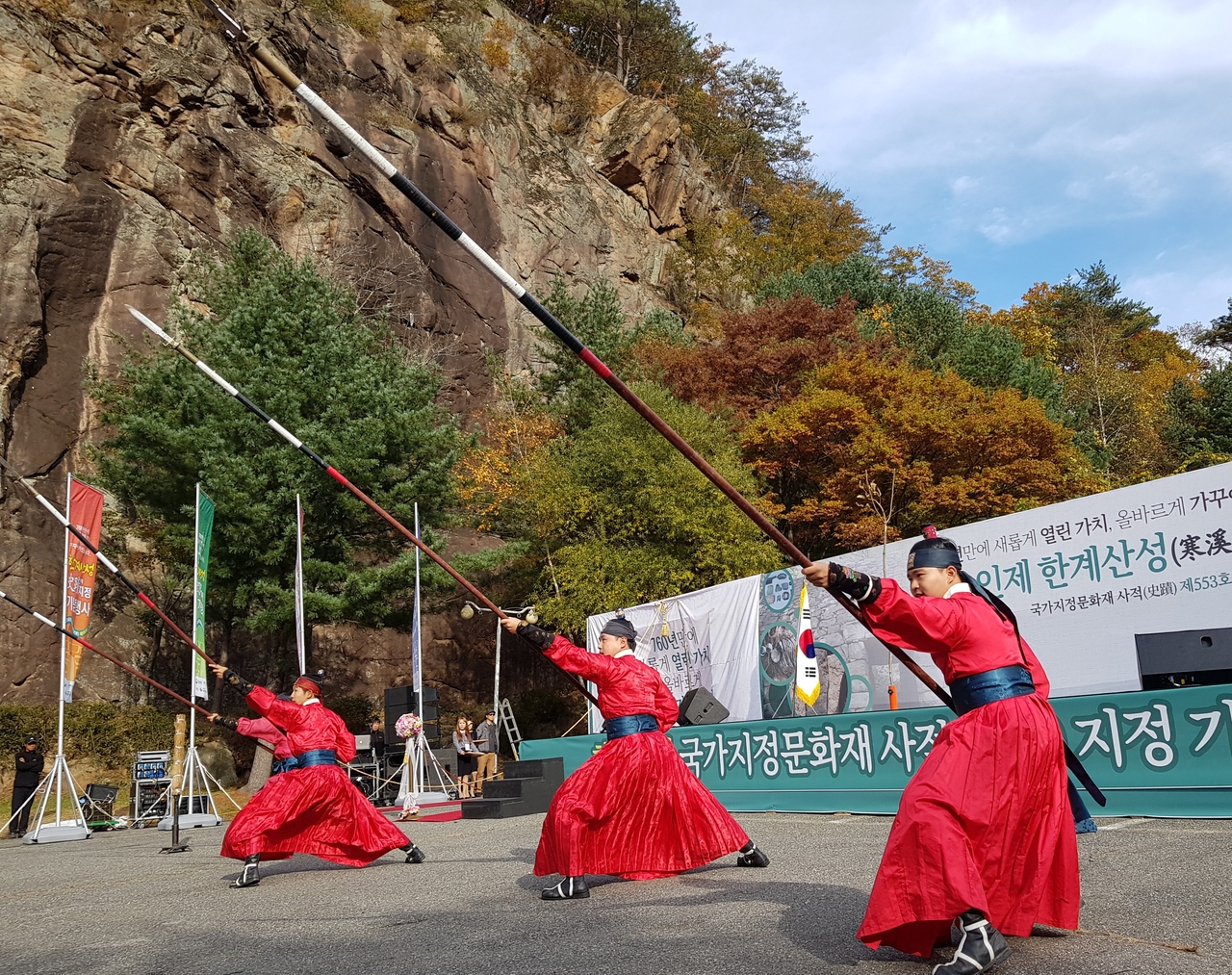
Inje-gun said it is currently preparing to open a trail and build a visitor center as part of its "Hanggye Area Historical and Cultural Tourism Resource Development Project." The visitor center has exceeded 90 percent completion and is on track for a timely finish.
The groundwork is being laid to give the public access to Hangyesanseong — the only monument to national resistance against foreign invasion within the Seorak area.
Since 2009, the county has invested a total of 11.94 billion won (about $8.6 million) in phases, including 5.5 billion won ($4 million) in national government funding, with the aim of developing an anti-Mongol resistance heritage park around the fortress and turning the broader Hanggye area into a cultural tourism destination.
The project site covers the area around San 1-1, Hanggye-ri, Buk-myeon. The county plans to restore a 0.9-kilometer trail and construct a visitor information center and a Hangyesanseong management substation to establish a systematic visitor infrastructure.
Full trail operations are expected to begin in the second half of this year in a pilot format, in cooperation with the Seoraksan National Park Office under the Korea National Park Service.
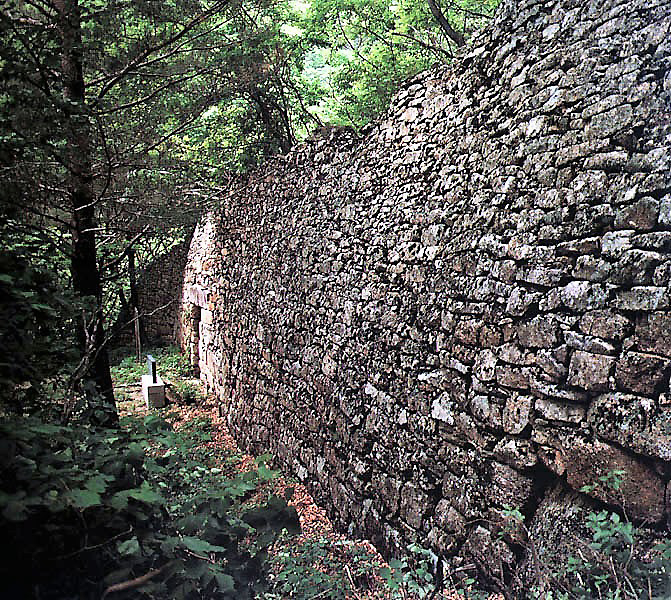
Inje-gun plans to work with the Seoraksan National Park Office to finalize operational details, conducting a comprehensive review of visitor safety, environmental conservation and demand management, and establishing an efficient management system that may include a reservation-based entry system.
Beyond its historical significance, Hangyesanseong sits within the spectacular natural scenery of Seoraksan, and is expected to serve as a key hub linking the region's historical, cultural and ecological tourism offerings.
Lee Ho-seong, head of Inje-gun's Culture and Education Division, said the county would do its utmost to complete the remaining steps — including the pilot operation in the second half of the year and the completion of the visitor center — "so that the Hanggye area can establish itself as a representative historical and cultural tourism destination in South Korea."
abc@heraldcorp.com