Seminar evaluates PPP's performance in June 3 local elections
Yoon Sang-hyeon: 'No change, innovation or unity means no future'
Kim Hyung-jun: 'Rebuilding greater Seoul base is prerequisite for any strategy'
Park Sang-byung: 'PPP leadership changed nothing, even knowing they would lose'
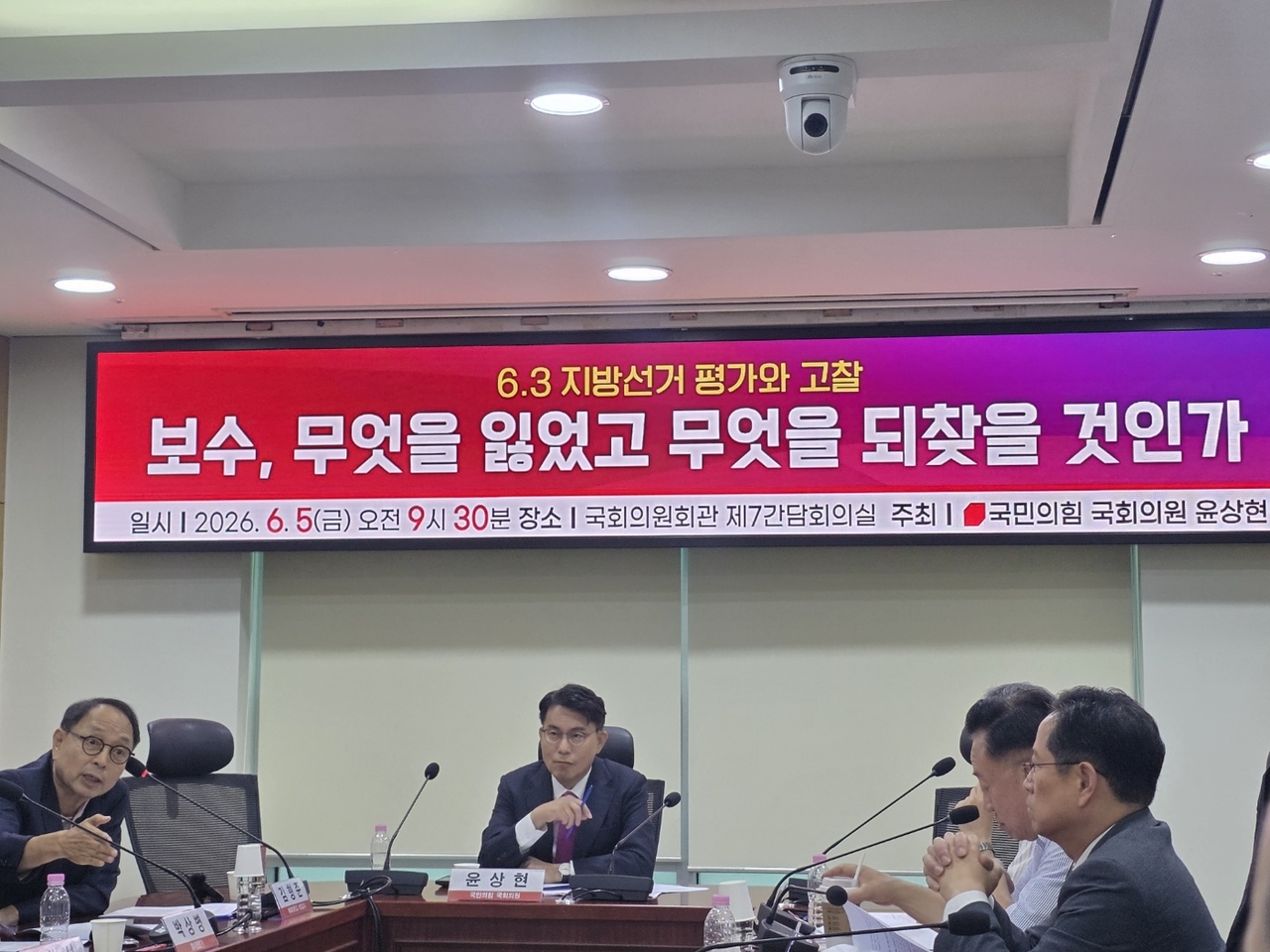
Experts delivered a scathing assessment of the People Power Party's crushing defeat in the June 3 local elections, calling it a "foreseeable loss" and a "crisis of the party's very structure." The consensus went beyond debating whether to replace party leadership — analysts said the PPP must redesign its organizational character and its conservative political line as a whole.
At a seminar titled "Evaluation and Reflection on the June 3 Local Elections," hosted by PPP lawmaker Yoon Sang-hyeon at the National Assembly on Friday, presenters uniformly traced the party's defeat to the collapse of its greater Seoul base, the flight of centrist voters and confusion over the party's identity.
In his opening remarks, Yoon framed the election as one the party "should have approached with a posture of atonement and accountability," calling for fundamental soul-searching.
"There would have been a chance only if we had sought the public's forgiveness for leading the country into total crisis, and presented ourselves with resolve — to defend the values of a liberal democratic republic against the runaway power of the Lee Jae-myung administration and the Democratic Party," he said.
Yoon attributed the defeat to "one percent internal division and one percent lack of vision," arguing that a unified party with a clear vision would have produced a different result. He added that the election was "a warning from the public," and that the party's prospects in the next election would depend entirely on how it responds to popular demands for change, innovation and unity.
Kim Hyung-jun, a distinguished professor at Pai Chai University who served as a lead presenter, said the loss was "structurally inevitable," noting that even within the conservative electorate, support had fragmented so severely among candidates that the party had lost its representational coherence. "Rebuilding the conservative base in the greater Seoul area is a prerequisite — without that, no strategy means anything," he said.
Kim outlined two priorities for conservative renewal: redefining the party's identity and forging new coalitions. "The old ideology-driven conservatism can no longer expand its reach," he said. "The party must reorganize around issues that voters in their 20s and 30s and centrists can actually feel." He also forecast that by the 2028 general election, the conservative camp could consolidate while the Democratic Party may fragment.
Kim also pressed hard on the need for structural party reform, arguing that centralized candidate nominations and state subsidy arrangements had driven the party away from ordinary citizens. He called for open primaries and decentralization of the party structure.
Chae Jin-won, a professor at Kyung Hee University, echoed the diagnosis, saying the PPP's defeat reflected "a dual failure of ideology and organization." He said the party had remained stuck in a Cold War-era conservatism while failing to keep pace with a changed electorate. "The mass-party model built around a hard-core base has reached its limits," he said. "A shift toward a network-style, legislature-centered party is what will make centrist expansion possible."
On the broader public mood, Chae offered a nuanced reading of the results. "It may look like a landslide for the Democratic Party, but in reality it was a warning to both parties," he said, arguing that voters simultaneously sent a message of punishment to the PPP for incompetence and a message of restraint to the Democratic Party against unchecked dominance.
Political commentator Park Sang-byung offered the bluntest verdict of the day. "The PPP leadership knew they were going to lose and changed nothing," he said, adding that even the party's victory in the Seoul mayoral race owed more to the individual candidate's personal strengths and real estate issues than to the party itself.
Park went further, saying the PPP as currently constituted cannot expand in the greater Seoul area, and predicting that a new conservative party championing a Korean-style "third way" was likely to emerge. "A new party anchored in centrists, youth and the greater Seoul region could reshape the political landscape by 2028," he said.
Throughout the seminar, participants also argued that reaching consensus on why the party lost should take priority over assigning blame to the leadership. "The debate over whether the leadership should resign comes second — first there needs to be agreement on why we lost," Kim said, calling for a formal reconfirmation process and a clear roadmap going forward.
rimsclub@heraldcorp.com