Minister Kim Yun-deok to visit Beijing and Inner Mongolia for three days starting Monday to study leading hydrogen industry cases for policy application
The South Korean government is moving to help Hyundai Motor Group build an optimized hydrogen industry ecosystem at Saemangeum.
The Ministry of Land, Infrastructure and Transport said it has assembled a field delegation led by Minister Kim Yun-deok to visit China's leading hydrogen industry sites for three days starting Monday. The delegation will assess full-cycle infrastructure — from production and transport to storage and end use — and track related policy trends.
China has designated five hydrogen pilot city clusters to develop the value chain and has built large-scale production facilities powered by abundant renewable energy, earning recognition as the world's largest hydrogen producer and consumer.
Drawing on those findings, the ministry plans to tailor support measures to Saemangeum's geographic and industrial conditions and drive the development of a sustainable hydrogen ecosystem and an AI hydrogen city there.
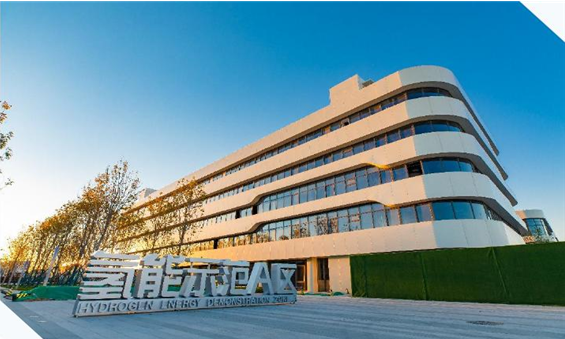
The delegation's first stop will be the Daxing International Hydrogen Energy Demonstration Zone in Beijing, where members will examine a self-contained hydrogen ecosystem. They will then travel to Inner Mongolia to visit what is considered the world's largest green hydrogen production base and observe how renewable energy and water electrolysis facilities are operated in tandem.
The Ministry of Land, Infrastructure and Transport, the Ministry of Science and ICT and other government agencies signed an investment agreement with Hyundai Motor Group in February covering roughly 9 trillion won (about $5.89 billion) in Saemangeum projects. Under the deal, 1 trillion won will go toward installing the country's largest water electrolysis plant, capable of producing and supplying 80 metric tons of green hydrogen per day, while 1.3 trillion won will fund solar power facilities to provide renewable energy-based electricity. After the site visits, the delegation will explore administrative and fiscal support measures to help Hyundai Motor Group move quickly on building a solar-powered water electrolysis plant and developing an AI hydrogen city.
"Building a stable hydrogen supply infrastructure at Saemangeum while crafting policy that accurately reflects corporate demand is of paramount importance," Kim said. "We will mobilize every available support tool, drawing on lessons from leading cases, to ensure that investment in Saemangeum is carried out swiftly."
smh@heraldcorp.com