School Violence as a Survival Game ⑥ — Expert Perspectives
[Editorial note]
A punitive approach to school violence has turned classrooms into a ruthless "survival game." As even minor disputes are automatically referred to school violence committees, the number of hearings has surged — yet the most common outcome is a ruling that no school violence occurred, leaving classrooms stripped of their capacity for self-correction. Caught in a proxy legal war waged by parents desperate to protect their children's university prospects, students have learned to collect evidence of each other's wrongdoing rather than offer apologies or seek reconciliation. This series examines the structural contradictions of a school violence system that has lost sight of victim protection and sunk into judicialization — told through the conflicting perspectives of parents, lawyers, teachers and students.
![A teacher counsels students at school. [Generated via ChatGPT]](https://wimg.heraldcorp.com/news/cms/2026/06/15/news-p.v1.20260611.39b13521722c4780878be6d80c65ef6b_P1.png)
By Kim Yong-jae, The Herald Business
With reports and counter-reports flying back and forth, classrooms have become what experts describe as a "survival game." Specialists say the school violence system has lost its ability to resolve student conflicts through education and now operates primarily as a legal procedure — effectively turning schools into quasi-courtrooms.
Rather than scrapping the system entirely, experts agree the framework needs to be refined so that minor conflicts are handled through educational means while serious violence is met with firm consequences.
Experts call for mediation and restorative procedures in school violence response
Lee Hee-hyeon, a research director at the Korean Educational Development Institute who has helped shape school violence policy, said the current system has lost its original purpose as punitive instincts and university entrance competition have become intertwined. "Over the past decade or so, countless school violence measures and prevention programs have been introduced, yet the number of cases being processed at schools keeps rising," Lee said. "Prevention and relationship restoration have remained slogans — in practice, the system has run on reports, hearings and disciplinary rulings."
Lee identified the fusion of public punitiveness and the university admissions system as the root cause of classroom judicialization. "We jumped straight to a rule-of-law citizenship that maximizes only one's own rights and interests, and in doing so, the educational virtues of apology and forgiveness disappeared," she said. "Even conflicts that peers could easily resolve among themselves are now funneled into formal hearing procedures, producing an explosion of counter-reports and mutual disciplinary reviews."
Lee stressed that mediation and restorative procedures must be placed at the center of the school violence response. She pointed to KiVa, Finland's school bullying prevention program jointly developed by the Finnish government and researchers, as a leading example. Rather than focusing on punishing perpetrators, KiVa aims to restore relationships across the entire peer group. A study involving more than 8,000 students found that bullying and victimization fell significantly within nine months of implementation. Since the program was rolled out nationwide, Finland has also recorded reductions numbering in the thousands in the number of students involved in bullying — both as perpetrators and victims.
"Countries like Finland treat student life and community education as a core pillar of the curriculum, but South Korea's structure is overwhelmingly skewed toward academics and university entrance," Lee said. "We need a carefully designed system in which restorative procedures give students who caused harm a chance to learn accountability, offer students who were harmed a safe path to healing, and protect teachers from complaints."
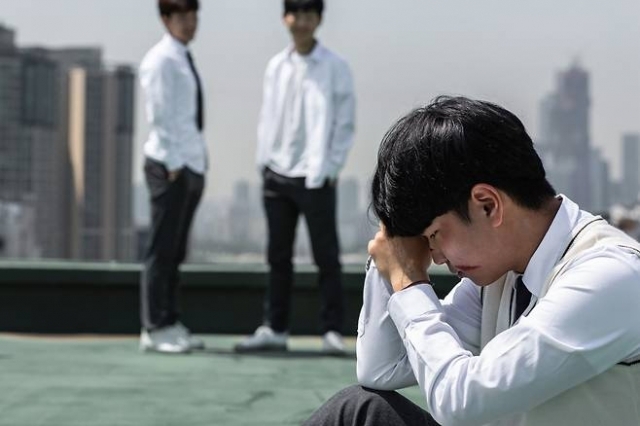
Calls for pre-screening mechanism to filter indiscriminate school violence reports
Against this backdrop, some experts have called for a pre-screening mechanism to filter out indiscriminate school violence reports before they enter the formal process.
Park Jeong-woo, a teacher who handled school violence cases for years through a teachers' union, said the current setup leaves educators with little choice but to pass cases up the chain. "When a parent files a school violence report, the safest option for a teacher is to transfer it through the proper procedure to avoid liability," Park said. "We need a professional deliberation and screening process at the district education office level before cases are referred to a school violence committee."
He added that parents misread how the system works. "Parents think that filing a school violence report will prompt the school to intervene more actively, but the reality is the opposite," he said. "Teachers end up choosing procedural responses over educational intervention in order to avoid complaints."
Curbing the abuse of counter-reports is also seen as a pressing reform. Attorney Lee Ji-su said that when a single incident triggers mutual reports, the cases are often treated as separate matters. "Rather than treating counter-reports as independent cases, we need a review system that consolidates them into one case and evaluates the full context," Lee said.
Lee also warned that strategic counter-reports filed to dilute responsibility are making it increasingly difficult to protect the original victim. "Cases where juveniles under criminal age face pressure-tactic criminal complaints are also multiplying, and that problem needs to be addressed through institutional reform," she added.
![Third-year students at Yeouido Girls' High School take the final mock exam before the 2026 College Scholastic Ability Test in their classroom. [Joint press corps]](https://wimg.heraldcorp.com/news/cms/2026/06/15/ams.V01.photo.HDN.P.20250903.P42025090309141658517230114_P1.jpg)
No normalizing school violence without refining the university admissions system, experts say
Refining the university admissions system is also seen as a critical task. Under the current college entrance framework, school violence disciplinary records are reflected broadly in admissions decisions. Experts acknowledge that this has contributed to some degree of deterrence, but say that applying the same treatment to minor incidents as to serious ones warrants reconsideration.
One official in the university admissions industry said that for level 1 through 3 disciplinary measures — which account for a large share of all school violence rulings — admissions penalties should be partially relaxed when a student has acknowledged wrongdoing and sincerely completed a relationship-restoration program.
The official added, however, that repeated or premeditated violence, group bullying, and cases involving serious physical or psychological harm require stricter management than is currently applied. "We have reached a point where we need to rebuild a social consensus that moves away from a structure in which every conflict is resolved through reports and litigation, and instead strikes a balance between legal protection and educational recovery," the official said.
brunch@heraldcorp.com