Support piles and concrete mats to be installed at sewer pipe joints; 179 km of pipes over 50 years old to be systematically overhauled to prevent road collapses, flooding and odors
Amid growing public anxiety over sinkhole incidents occurring across the country, Mapo-gu has moved to get ahead of the problem by overhauling its sewer pipe construction methods.
Seoul's Mapo-gu, led by District Mayor Park Kang-su, said it is rolling out a comprehensive overhaul of sewer pipe construction methods and strengthening urban safety management to prevent ground subsidence, road collapses and flooding caused by aging sewer infrastructure.
The total length of sewer pipes buried underground in Mapo-gu reaches 393 km. Of those, 203 km have been in service for more than 30 years, while 179 km — roughly 45 percent of the total network — are more than 50 years old. The high proportion of aging pipes makes systematic maintenance urgent, the district said.
Over time, sewer pipes are subjected to ground load and vibrations from vehicle traffic, which can cause joints — the connection points between pipe sections — to loosen or separate. When rainwater and groundwater seep through those gaps, surrounding soil washes away. Left unaddressed, hollow cavities can form beneath the road surface, significantly raising the risk of ground subsidence and sinkholes.
When pipes sink or joints open up, sewage flow is disrupted, increasing the risk of flooding during heavy rain and causing odor problems from stagnant wastewater.
Urban sewer construction projects have long relied on sand and crushed stone as the base material instead of concrete foundations, which require extended curing time, in order to shorten construction periods and minimize disruption to traffic and residents. Some sections, however, have been flagged for pipe subsidence caused by insufficient load-bearing support.
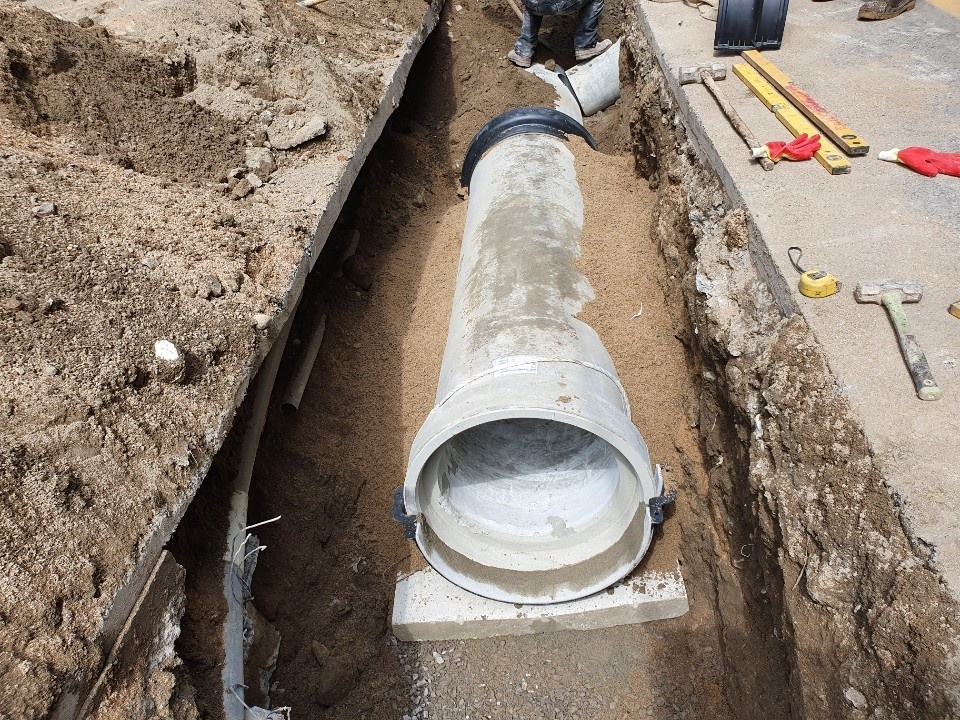
In response, Mapo-gu has since last year applied a new construction method to all sewer pipe projects, replacing the conventional sand-and-crushed-stone approach with support piles and concrete mats installed beneath pipe joints.
The method reinforces load-bearing capacity at pipe connection points to prevent subsidence and joint separation, reducing the risk of road collapses caused by soil erosion. The improved drainage performance is also expected to help prevent flooding during heavy rain and reduce sewer odors.
Mapo-gu plans to expand the method across its broader aging sewer rehabilitation project, accelerating its push to build a "sinkhole-free safe city" by reducing the risk of ground subsidence and flooding and minimizing the formation of underground cavities.
"Sewer pipes are a critical piece of urban infrastructure directly tied to public safety," a district official said. "We will continue to rehabilitate aging sewer pipes to prevent road collapses and flooding damage and do our utmost to create a safer urban environment."
seouldream01@heraldcorp.com