
![[Provided by Snowfox Books]](https://wimg.heraldcorp.com/news/cms/2026/06/04/news-p.v1.20260527.abbd391d042b45b9a59027b2e9958065_P1.png)
"People Who Are Remembered Speak Differently" (Baek Ju-hwan, Snowfox Books) — "Why do we handle a company's words so strategically, yet invest so little effort in how we speak ourselves?" The author began his career in the management planning division of the Chosun Ilbo, earned an MBA from Oxford and worked as a consultant at Accenture Singapore and EY Korea before joining OB Beer as head of public relations in 2015. Drawing on more than two decades as a corporate communications specialist, he distills the strategies he learned on the job into a single volume. He adapts crisis-communication techniques used by corporations and applies them to everyday personal situations — job interviews, presentations and unexpected hostile questions — offering a practical framework for each. According to the author, a company can persuade a market with a single sentence and manage a crisis with a single answer. The book's central message is that a response is not a technique but a strategy, not an expression but a judgment. Even in an age when AI churns out sentences at will, he argues, it is ultimately human beings who must decide what to say and take responsibility for it.
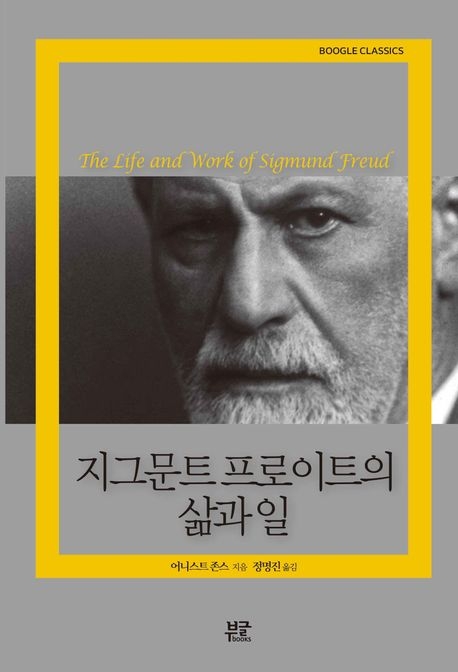
"The Life and Work of Sigmund Freud" (Ernest Jones, translated by Jeong Myeong-jin, Bugle) — A biography of Sigmund Freud, the founder of psychoanalysis, arrives in a brick of a book running more than 1,000 pages. The volume is an abridged edition of the three-volume biography originally published between 1953 and 1957, supplemented with material requiring knowledge of psychoanalytic theory. The author, a British neurologist and psychoanalyst, chronicles the major events of Freud's life and analyzes how they shaped both the man and his ideas. According to Jones, the history of psychoanalysis is essentially a history of departures — key figures in Freud's inner circle leaving one by one. The reason, he argues, was Freud's insistence on defending the theory of sexual libido as the cornerstone of psychoanalysis. Freud regarded colleagues who broke with him over intellectual differences — among them Josef Breuer, Alfred Adler and Carl Jung — as "traitors" seeking to undermine his theories. The book illuminates not only Freud's brilliant insights but also his very human flaws, and that combination, the author suggests, ultimately helps the reader understand his work more fully.

"What Do Artists Do?" (Brian Eno and Betteke Adriaens, translated by Kim Hee-jeong, RHK) — Defining what art does is no easy task. It cannot hold water like a cup or be sat upon like a chair, nor does it convey meaning at a glance the way a sign does. In that sense, art stands on the opposite side of everything that exists for utility. Inefficiency, superfluity and uselessness are among its defining features, which is why discussions of art are always shadowed by the same question: why is it necessary, and what exactly does it do? The author, who has produced records for Coldplay, U2 and David Bowie, shares his reflections on that most fundamental of questions. Through familiar objects — a hairstyle, a subway station — he expands the idea of art beyond the domain of a specialist few and into the whole of everyday life, tracing how art creates emotion, connects us to others and functions as what he calls "the technology of feeling." "Art is not some substance that emanates from paintings or symphonies," he writes. "The word 'art' is the name we give to a particular kind of relationship we have with certain things."
andy@heraldcorp.com





