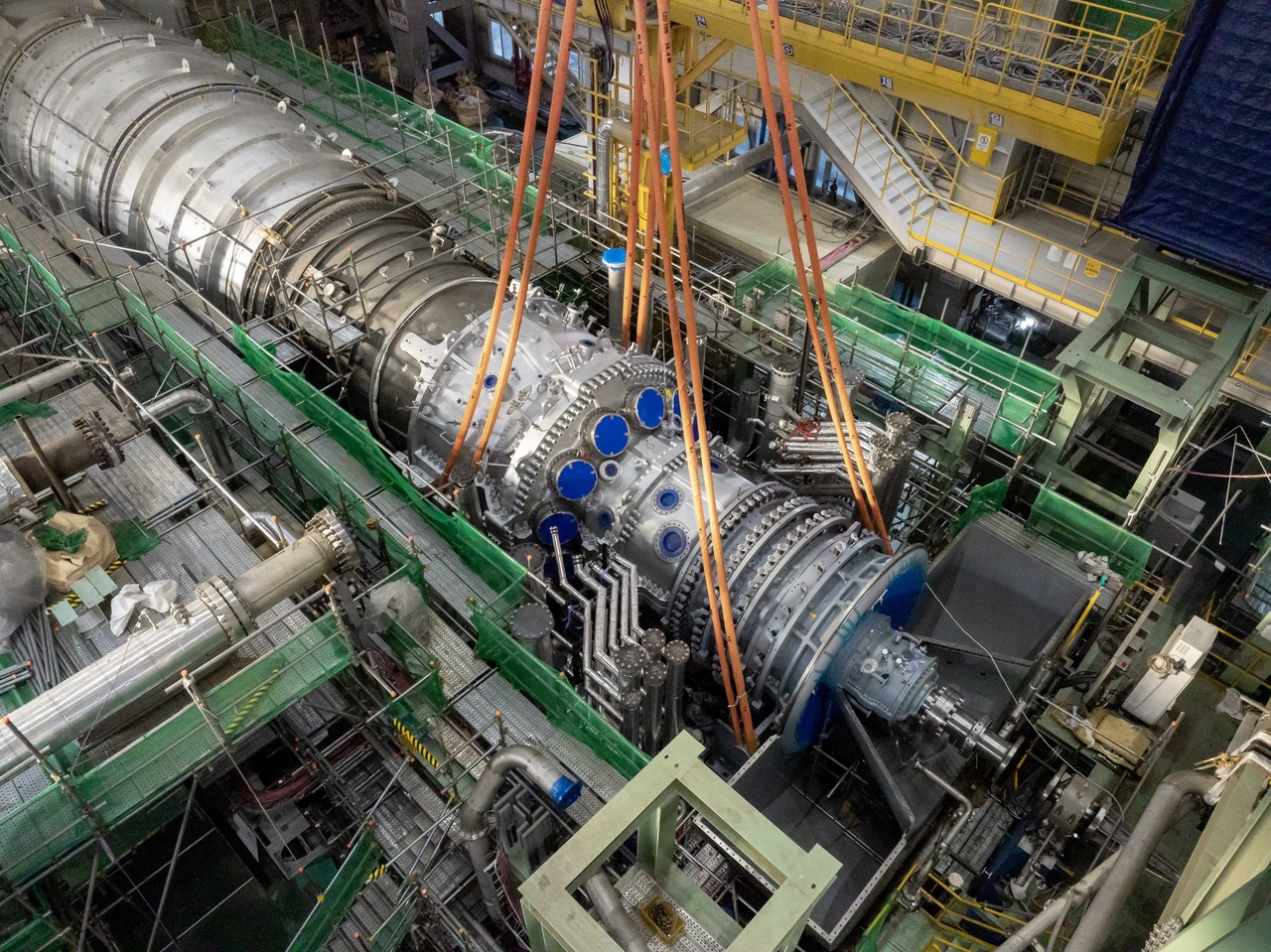
![A Patriot (PAC-3) missile system. [Yonhap]](https://wimg.heraldcorp.com/news/cms/2026/06/10/news-p.v1.20260417.46229ae64e4c46a19f26d9459b4ebfe2_P1.png)
The Patriot interceptor missile, a cornerstone of air defense for the United States and its allies, faces what amounts to an emergency supply shortage, according to reports.
The Wall Street Journal reported Tuesday that demand for Patriot interceptors has surged sharply, but each PAC-3 MSE — the latest variant — takes more than two years to manufacture and costs roughly $4 million per unit (about 6 billion won), deepening the supply crunch.
The Pentagon agreed with defense contractor Lockheed Martin in January to raise annual PAC-3 MSE output from 600 to 2,000 units. That production target is not expected to be reached until 2030.
Against that backdrop, the war in Ukraine has dragged on for more than four years, and recent turmoil in the Middle East has added further strain. Neither conflict shows clear signs of ending. US Patriot stockpiles are reported to be running critically low.
Demand for Patriot interceptors has become near-universal. Allied nations' orders are also tracking at record highs.
The Center for Strategic and International Studies (CSIS) estimates it would take at least three years to restore US Patriot stockpiles to pre-Iran war levels, and that doing so would require far more funding than Congress has allocated for ammunition.
There are also growing concerns that some regions could face a severe security gap if no alternative air defense solution is found.
Each Patriot missile involves more than 400 subcontractors in its production. More than 80 percent of the second-tier suppliers also provide components to other missile programs simultaneously. The WSJ noted this creates a structural bottleneck: ramping up production of one missile system risks paralyzing the supply chains of other essential weapons.
Chris Kubasik, CEO of L3Harris Technologies, said at a recent investor event that quadrupling missile output requires quadrupling every component — "the airframe, igniters, valves, actuators — you have to move the entire ecosystem together."
Questions mount over efficiency of US missile production
Meanwhile, CSIS says the US military fired more than 1,200 Patriot missiles through March 27, before the truce in the Iran war — twice last year's total production output.
Military experts have cited the figures as evidence that the US weapons production system lacks efficiency.
Former Defense Secretary Robert Gates told The New York Times that Ukraine plans to produce 7 million drones this year and asked why the United States cannot do the same. He argued that instead of spending years and vast sums to build a weapon that is 99 percent perfect, the US needs a "'75 percent solution' — something that can be produced quickly and cheaply, even if it performs somewhat less well."
Rachel Hoff, policy director at the Ronald Reagan Institute, said the Defense Department keeps rolling out new organizations and strategies, but "without real changes to contracting and procurement, it ultimately amounts to nothing more than slogans."
Mackenzie Eaglen, a military analyst at the American Enterprise Institute (AEI), said the Pentagon "acts like an overly demanding customer, repeatedly placing small orders and failing to achieve economies of scale."

yul@heraldcorp.com