Local election defeat sparks calls for Jang Dong-hyeok to step down; Han Dong-hoon's return to party, ruling-party negotiations also on agenda
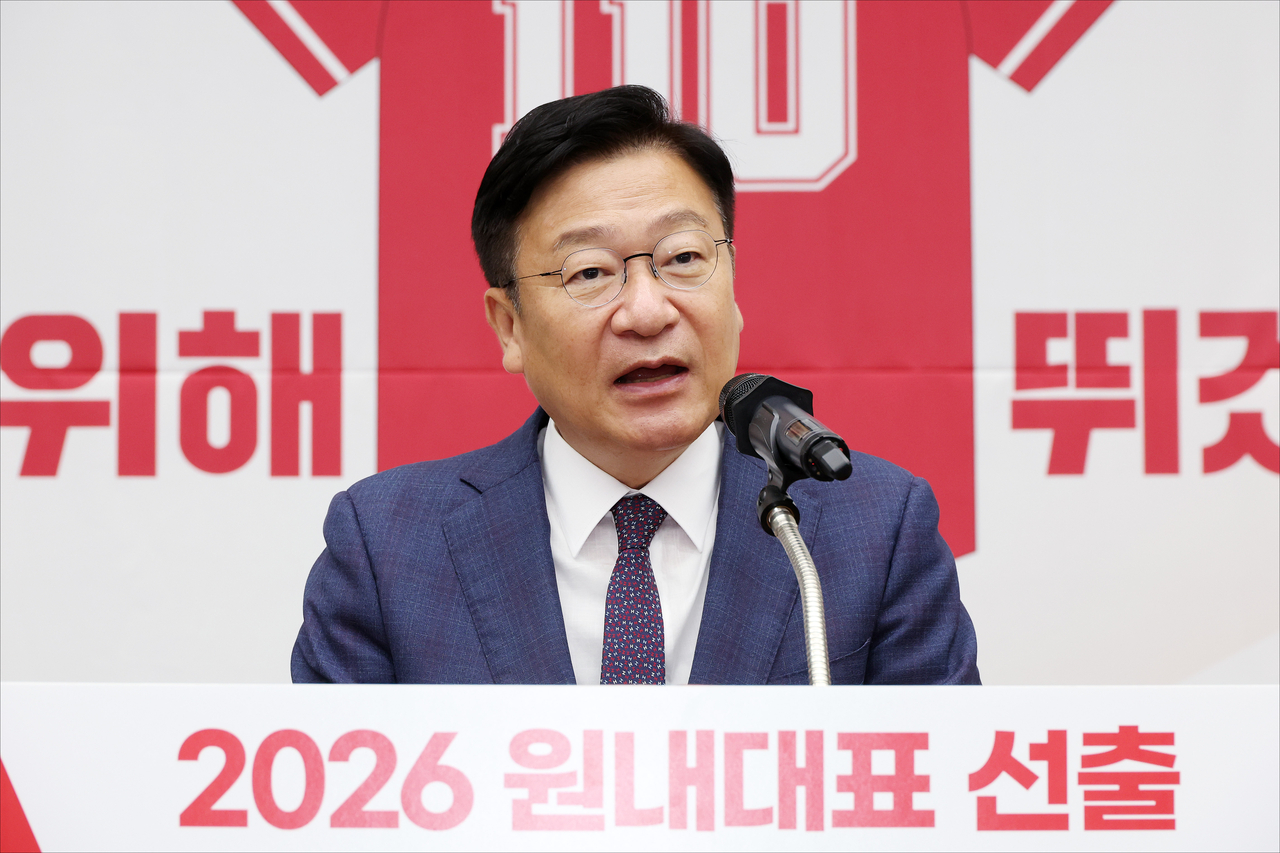
Jeong Jeom-sik, a three-term lawmaker representing Tongyeong and Goseong in South Gyeongsang Province, officially began his tenure as the People Power Party's new floor leader on Wednesday.
His leadership faces an immediate test as he takes on the simultaneous tasks of stabilizing and reforming the party following its defeat in the June 3 local elections, while also managing floor negotiations against the dominant ruling Democratic Party of Korea.
The most pressing issue Jeong faces is the future of party leader Jang Dong-hyeok. Since the local election defeat, voices within the party calling for Jang to resign and take responsibility have grown steadily louder.
Jang's camp has pushed back, characterizing the results as a creditable performance rather than a crushing defeat and insisting that addressing the National Election Commission's ballot shortage crisis should take priority.
All candidates who ran in the floor leader primary — including lawmakers Kim Do-eup and Seong Il-jong — agreed that Jang's future must be resolved. Jeong is therefore expected to gather internal opinion and work toward a solution. How that process unfolds will likely reshape the party's internal power dynamics.
The question of whether independent lawmaker Han Dong-hoon — who won the Busan Buk-gu Gap by-election — should be allowed to rejoin the party is another central challenge. Pro-Han factions have been pushing for his return, but significant resistance remains within the party. During the primary campaign, Jeong said the matter "should be decided after sufficiently gathering the views of lawmakers," signaling a cautious approach for now.
Observers inside and outside the party believe how Jeong handles both Jang's future and Han's potential return will determine the trajectory of the so-called Jang-Han conflict and the broader standoff between the party leadership faction and its rivals.
Party reform in the wake of the local election loss is also unavoidable. The PPP must address concerns raised during the campaign that it was reverting to its old identity as a party beholden to former President Yoon Suk-yeol. During the primary, Jeong pledged the party would not be labeled as such again, underscoring his commitment to reform.
Negotiations with the Democratic Party of Korea over the composition of the National Assembly's second-half session present yet another challenge. Having lost the chairmanship of the Legislation and Judiciary Committee in the first half, the PPP is determined to reclaim it. A string of sharply contested issues — including the abolition of prosecutors' supplementary investigative powers and the introduction of a special prosecutor law targeting the withdrawal of indictments — also awaits resolution.
Jeong must also sort out the party's position on reforming the National Election Commission and on demands for a re-election following the ballot shortage incident. The ruling and opposition parties have already agreed to pursue a parliamentary investigation into the matter, and whether to push for a special prosecutor law will likely be considered as a next step.
thanks@heraldcorp.com