Politics and diplomacy account for 54% of coverage; Korea seen as key regional player
AI and semiconductor economy draws attention amid stock market rally
K-culture earns highest favorability; BTS ranks No. 1
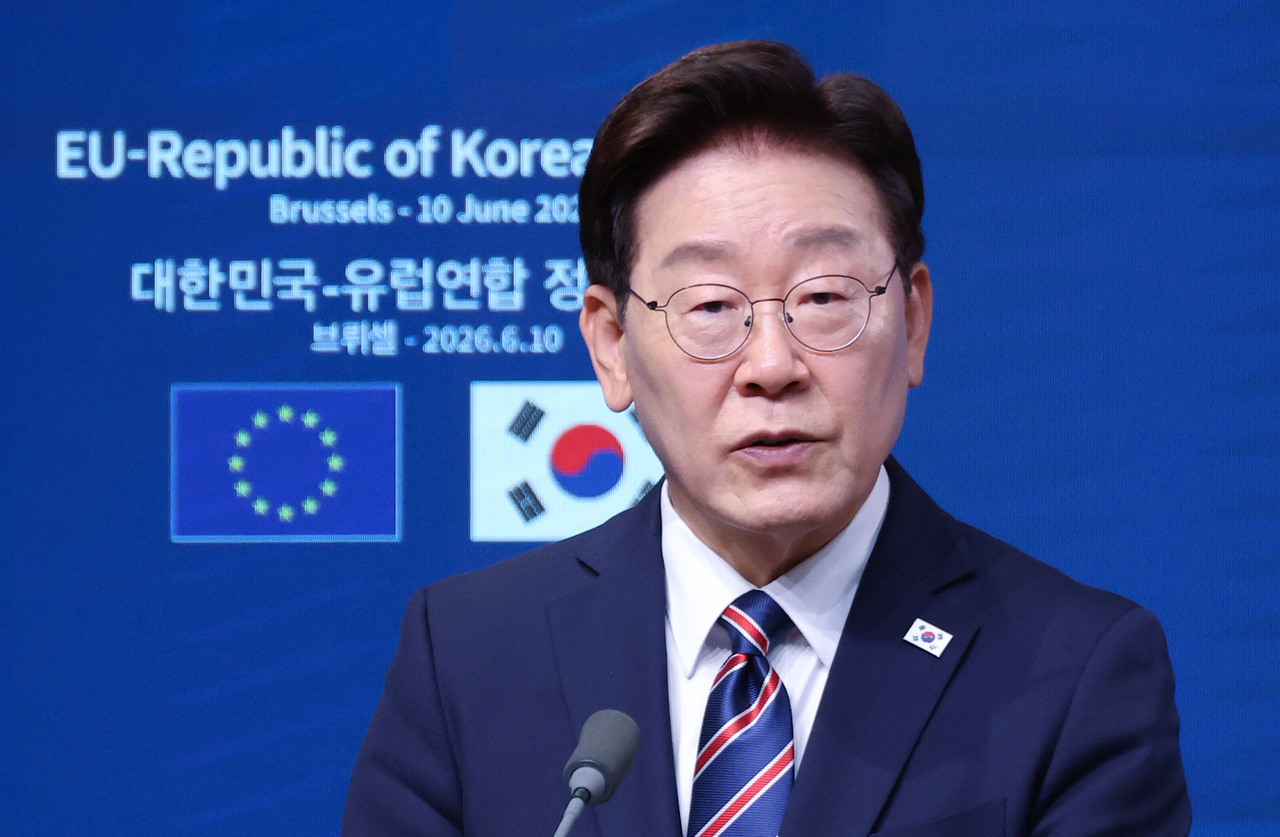
Over the first year of the Lee Jae Myung administration, foreign media reappraised South Korea as a pragmatic diplomatic actor, a key player in AI and semiconductor supply chains, and a rising cultural powerhouse — with the cultural sphere drawing the most favorable coverage of all.
The Ministry of Culture, Sports and Tourism released the findings Thursday, based on an analysis of 64,827 Korea-related articles published by 67 major foreign outlets across 19 countries in the roughly one year since the Lee administration took office, from June 4, 2025, to May 4, 2026.
'Pragmatic diplomacy' lifts Korea's regional profile
Politics and diplomacy dominated foreign coverage, accounting for 54.3 percent of all articles. Business and industry followed at 43.1 percent, then the economy at 40.4 percent, culture at 27.8 percent and information technology at 23.9 percent.
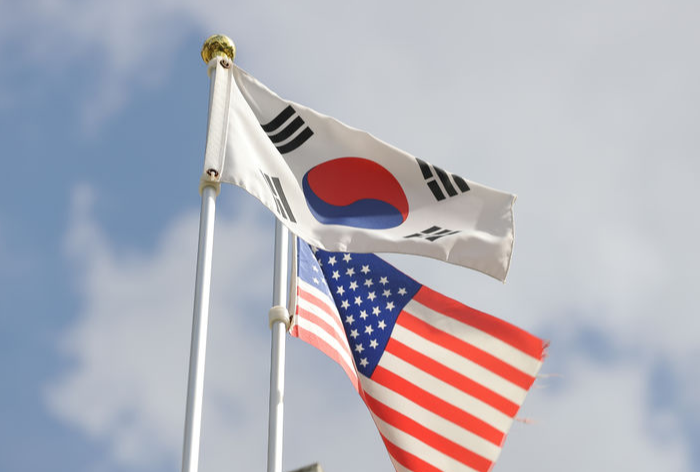
On the diplomatic front, foreign outlets characterized the Lee administration's approach as "pragmatic diplomacy." Despite concerns raised during the election campaign about a tilt toward China or North Korea, international media noted that the administration in practice pursued a realist course — maintaining the South Korea-US alliance and trilateral South Korea-US-Japan cooperation while managing economic ties with China.
The Washington Post said Seoul was "attempting a delicate balancing act in its diplomacy," while the Financial Times described an approach of "restraint and pragmatism" and The Economist reported that South Korea was pursuing "a more balanced foreign policy." China's Global Times also assessed that the Lee administration was "emphasizing rational and pragmatic diplomacy in its China policy."
Coverage intensified particularly after the Asia-Pacific Economic Cooperation summit in Gyeongju, which cast South Korea as a key middle power at the center of US-China strategic competition and supply chain realignment. Reporting volume during the summit period — late October through early November last year — jumped more than 50 percent above the average. Reuters commented that "South Korea's diplomatic role in the region is growing," while The Diplomat wrote that South Korea "is acting as an influential middle power, punching above its weight."
South Korea's diplomatic coordinates also came into sharper focus over the year. Bilateral relations with India and ASEAN nations — Vietnam, Indonesia and Singapore — maintained strong favorability ratings of between +0.5 and +1.5 throughout the period, while ties with the United States, China and Japan held at up to +0.5.
Those diplomatic achievements appear to have shaped foreign media's assessment of President Lee himself. Coverage of the president was most favorable in January, when summit diplomacy with the United States, China and Japan was at its most active. The description foreign outlets used most frequently in connection with Lee was "pragmatic diplomatic line."
AI and semiconductor economy, stock market boom draw positive coverage
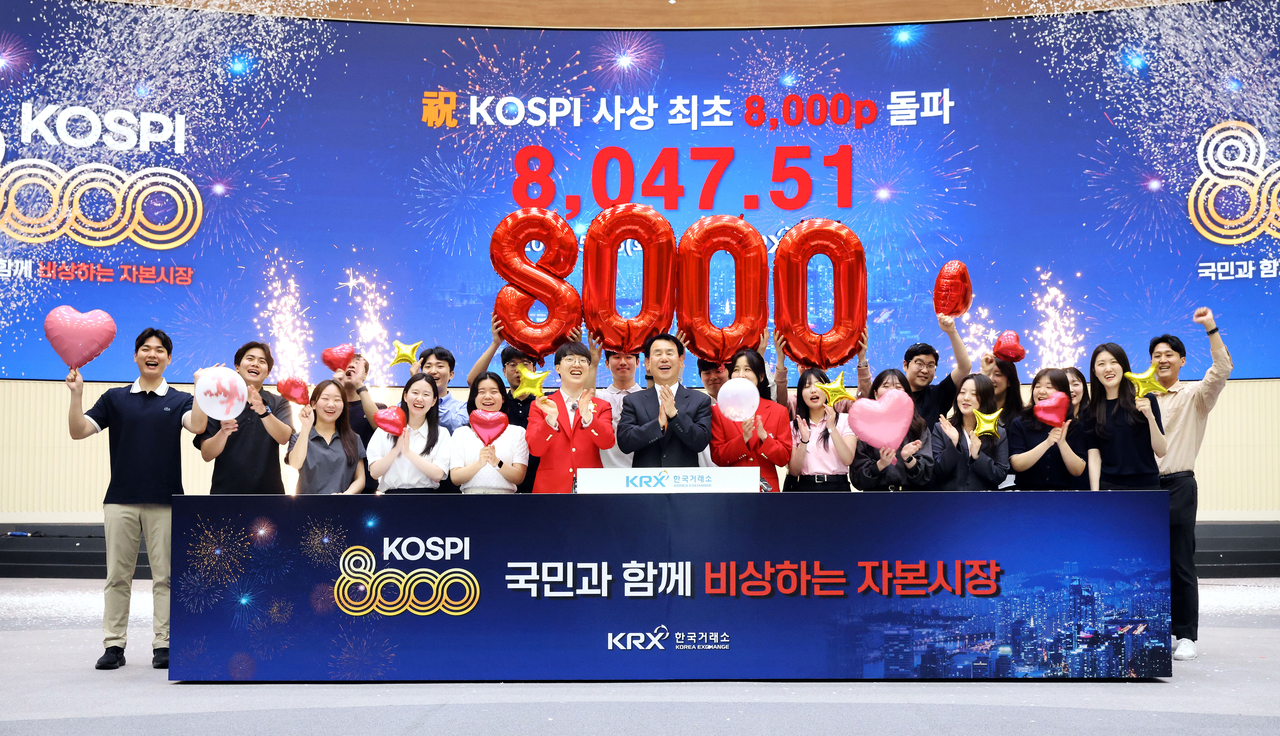
In economic coverage, foreign media portrayed South Korea as an advanced manufacturing economy centered on AI and semiconductors, with the stock market rally — widely referred to as the "Korea Rally" — cited as the most positive factor. Outlets also noted that the Lee administration's governance proved more market-friendly and pragmatic than many had anticipated.
Fortune said "Asia is the backbone of the entire AI value chain, and South Korea is its core manufacturing base," while Reuters reported that Asian tech giants such as Samsung and SK Hynix "are forming a new center of gravity in the AI bull market." Bloomberg said President Lee's market-friendly policies were driving the Korean stock market rally, and CNBC said investor confidence had recovered following the period of political turmoil.
The analysis found that business and industry, technology and IT, the economy, and finance all recorded favorable tones in foreign coverage. Major conglomerates also featured prominently among the proper nouns receiving the most positive foreign media treatment — Samsung ranked third, Hyundai Motor sixth and SK Hynix seventh.
Coverage was particularly concentrated in April and May this year, when the Kospi surged and foreign outlets focused on the AI and semiconductor market boom. International media described the Korean stock market as "a far stronger market than expected" and portrayed South Korea as a central pillar of advanced manufacturing and AI supply chains.
K-culture earns highest favorability; BTS and 'KPop Demon Hunters' lead the way
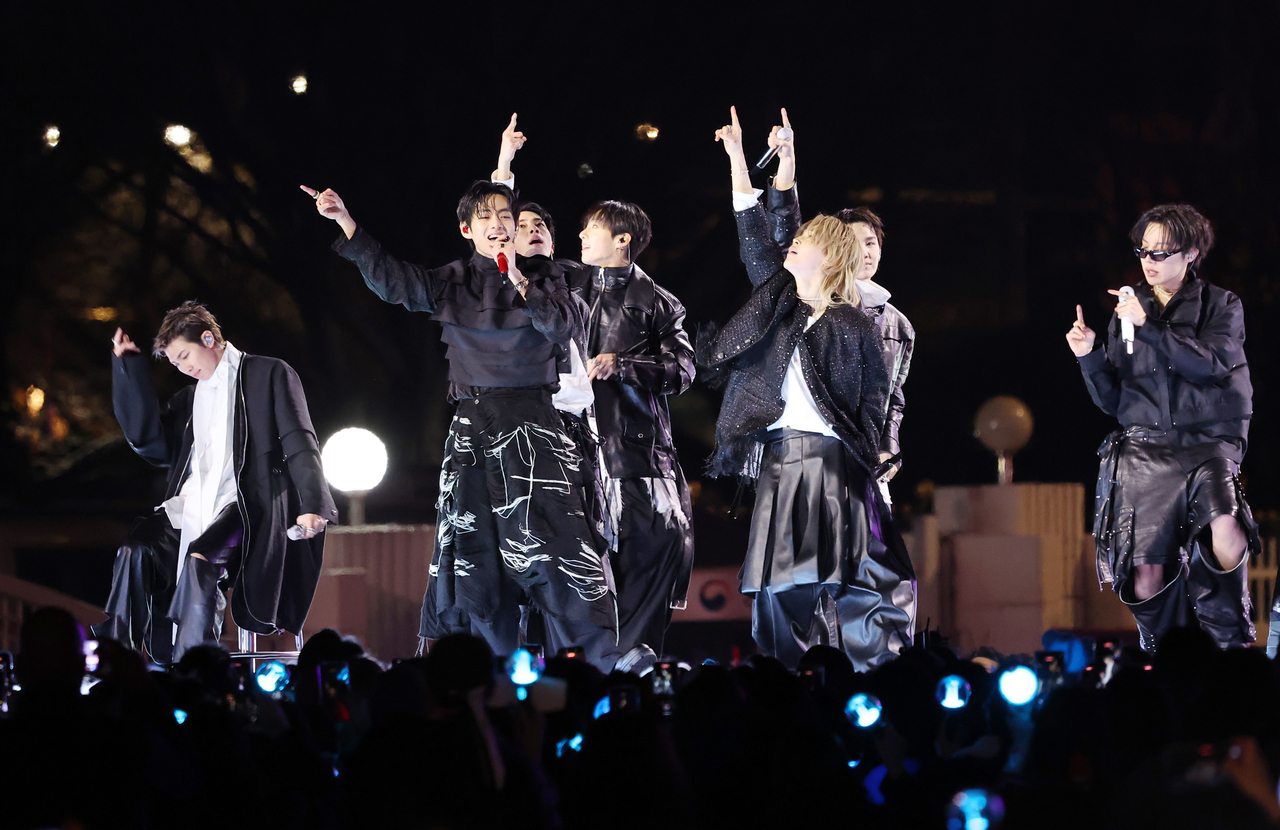
Culture recorded the highest favorability of any topic category. In 10 of the 12 months covered, the most positively reported subject in foreign media was K-content — with BTS, K-pop and BLACKPINK leading the way.
Quantitative analysis confirmed BTS as the most favorably covered proper noun, with an average sentiment score of +1.19. K-pop as a category ranked near the top at +1.12, boosted in part by the phenomenon surrounding "KPop Demon Hunters," the animated film that made Oscar history with two wins. BLACKPINK followed at +1.09 and HYBE at +0.66.
Al Jazeera called BTS "a prime example of national soft power," adding that the group's large-scale comeback "shows that South Korea's strategy of cultivating the cultural industry as a source of national competitiveness is paying off." Foreign Policy said "KPop Demon Hunters" had "opened a new chapter in hallyu," while the Times of India analyzed that "South Korea's rise as a cultural powerhouse shows that the center of global influence is shifting. South Korea's soft power is translating into tourism, Korean-language learning, consumer goods exports and an expanding diplomatic presence."
The strongest identity foreign media associated with South Korea was that of a "global cultural industry powerhouse." The Guardian assessed that "South Korea's influence is reshaping the lifestyles of people worldwide — beyond music, into fashion, beauty and food." CNN coined the term "K-everything" to describe the phenomenon, saying South Korea "is leveraging hallyu to secure new engines of growth." The network also produced a four-part documentary series spotlighting the K-pop, K-food, K-film and K-beauty industries.
Democratic resilience praised; martial law a negative mark
In political coverage, positive assessments of South Korea's democratic resilience stood out. The Associated Press reported that "South Korea's resilient democracy has passed yet another critical test," while the BBC said "South Korean democracy has rallied again." Foreign Policy analyzed that South Korea "has shown it can defend its democracy."
However, foreign outlets also highlighted several factors that weighed on South Korea's national image — among them former President Yoon Suk Yeol's declaration of martial law and the subsequent investigation, political polarization, the Cambodia fraud scandal and the Coupang Inc controversy. Environmental, social and governance issues, along with labor conditions and industrial safety, were identified as structural weaknesses.
The analysis employed a range of AI techniques to measure shifts in foreign media tone and national image, including large language models, embedding-based semantic clustering, GPT-based entity-level sentiment analysis and agenda network analysis.
Kong Hyeong-sik, director of public communications at the Ministry of Culture, Sports and Tourism, said the findings show that "South Korea is being recognized not merely as an economic powerhouse or the home of hallyu, but as an important global strategic state."
pink@heraldcorp.com