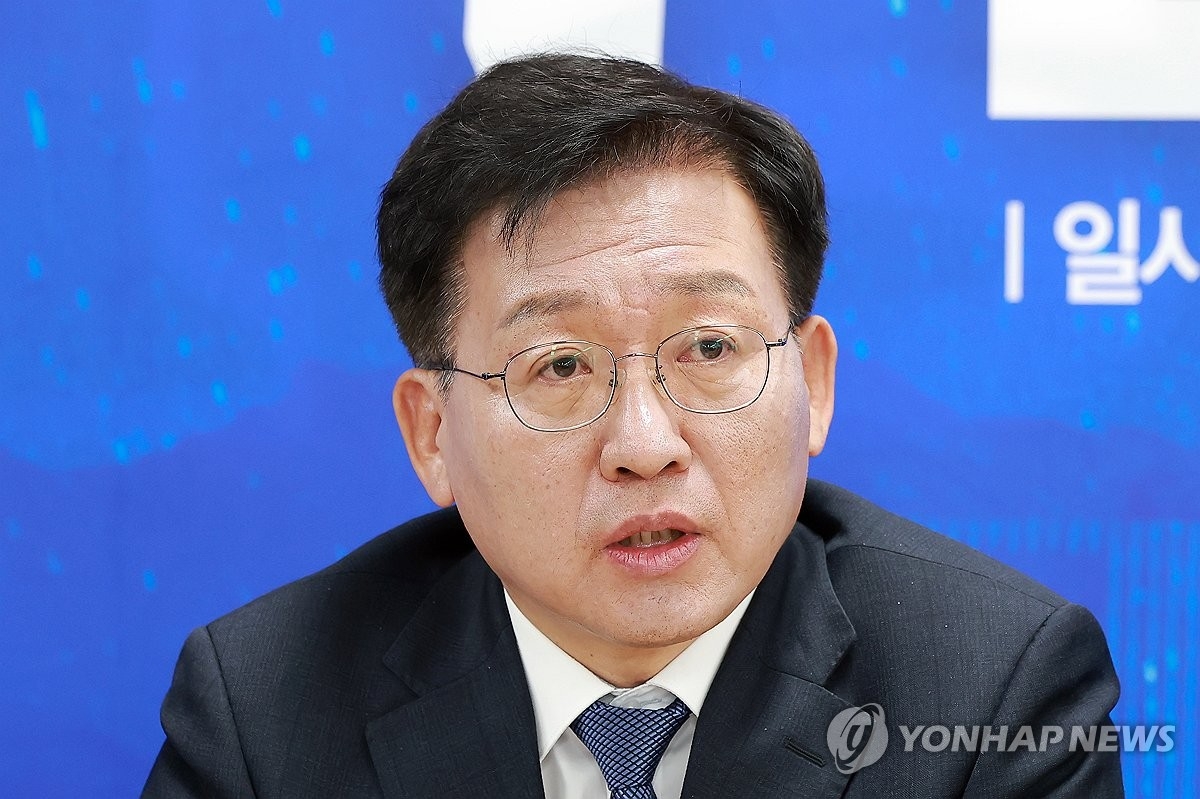
Kang Tae-ung, a former first administrative vice mayor of Seoul, has had a political career defined by challenge and repeated defeat.
After graduating from Seoul National University with a degree in German literature and passing the civil service exam, Kang rose through the ranks of Seoul city government — serving as head of the administrative bureau and director of planning and coordination before reaching the top post of first administrative vice mayor. He was widely regarded as a consummate bureaucrat who earned recognition for his policy planning and execution across the city's most senior positions.
But when he stepped out of public administration and into politics, the road proved far from smooth.
Kang had attended the same high school as the late Lee Hae-chan, former leader of the Democratic Party of Korea, and the two men had a working relationship dating to Kang's time as a secretary during Lee's tenure as Seoul's political affairs vice mayor. It was at the Democratic Party's invitation that Kang entered politics, seeking to translate his administrative experience into a career in local government — only to find the barriers of real-world politics formidable.
His first attempt was a run for the National Assembly.
In the 21st general election, he stood in Yongsan-gu and lost by roughly 3,000 votes. For a rookie candidate, it was a creditable showing — but not enough to win a seat.
He did not give up. In the 22nd general election, he narrowed the gap to just a few hundred votes and fought to the very end. The result, however, was another defeat. The margin had shrunk, but victory remained out of reach.
Then came the June 3 local elections — widely seen as his last real shot at elected office. He ran for Yongsan-gu district chief, but could not overcome Kim Gyeong-dae, a candidate with three terms on the Yongsan-gu council behind him. Kang lost by more than 7,000 votes.
The Democratic Party had designated Yongsan a strategic district and threw its full weight behind Kang's campaign. Party leader Jung Chung-rae and mayoral candidate Jeong Won-o personally visited his campaign office and held strategy sessions there.
Yet the atmosphere on the ground told a different story.
When a reporter visited Kang's campaign office during the election period, only a handful of campaign workers were present — almost no Yongsan residents came through the door. At the rival candidate's office, local residents were stopping by consistently, and the contrast in energy was stark.
Analysts say the gap in local roots explains much of the difference.
Kim Gyeong-dae, the winner, has spent years building a political base in Yongsan. His father also served two terms on the district council, and the family has maintained close ties with the community. That entrenched local network, combined with Yongsan's traditionally conservative leanings, is seen as having decided the outcome.
In practice, Yongsan-gu — home to conservative-leaning neighborhoods such as Hannam-dong and Ichon-dong — is structurally difficult terrain for a Democratic Party candidate.
Even so, some say Kang's vote total was a meaningful achievement given how thin his organizational base was, won largely on personal reputation alone.
Having shed tears in defeat for the third time, Kang quickly found himself with a new role.
On June 8, he was appointed chief of staff to National Assembly Speaker Cho Jeong-sik, giving him a foothold for a political comeback. The appointment is widely interpreted as a gesture of support from the party, as well as recognition of his administrative experience and political acumen.
Political circles are divided on what comes next. One view holds that, having tested the limits of local politics through three campaigns, Kang will now build his career in the National Assembly and on the national political stage.
The other view is that his experience as the speaker's chief of staff could position him to run in Yongsan again in two years.
Attention is now focused on what Kang Tae-ung — a career official turned aspiring politician — will make of this new chapter at the National Assembly.
seouldream01@heraldcorp.com