42 of top 100 YouTube videos on senior health were AI-generated; 24 impersonated medical professionals
Korea Health Promotion Institute revises guidelines, urges older adults to verify health information sources
Two out of every 10 experts appearing in AI-generated health video advertisements do not actually exist, a new analysis has found. The findings have raised concerns about harm to older adults, who tend to follow health information closely, with calls for greater caution in how such content is consumed.
The Korea Health Promotion Institute said Thursday that AI-generated videos featuring fake medical experts have been spreading across video platforms such as YouTube, and urged users to exercise care when seeking health information online.
The institute analyzed the 100 most-viewed YouTube videos on "senior health" posted during April and found that 42 percent — 42 videos — were produced using generative AI. Of those, 24 were found to impersonate medical professionals.
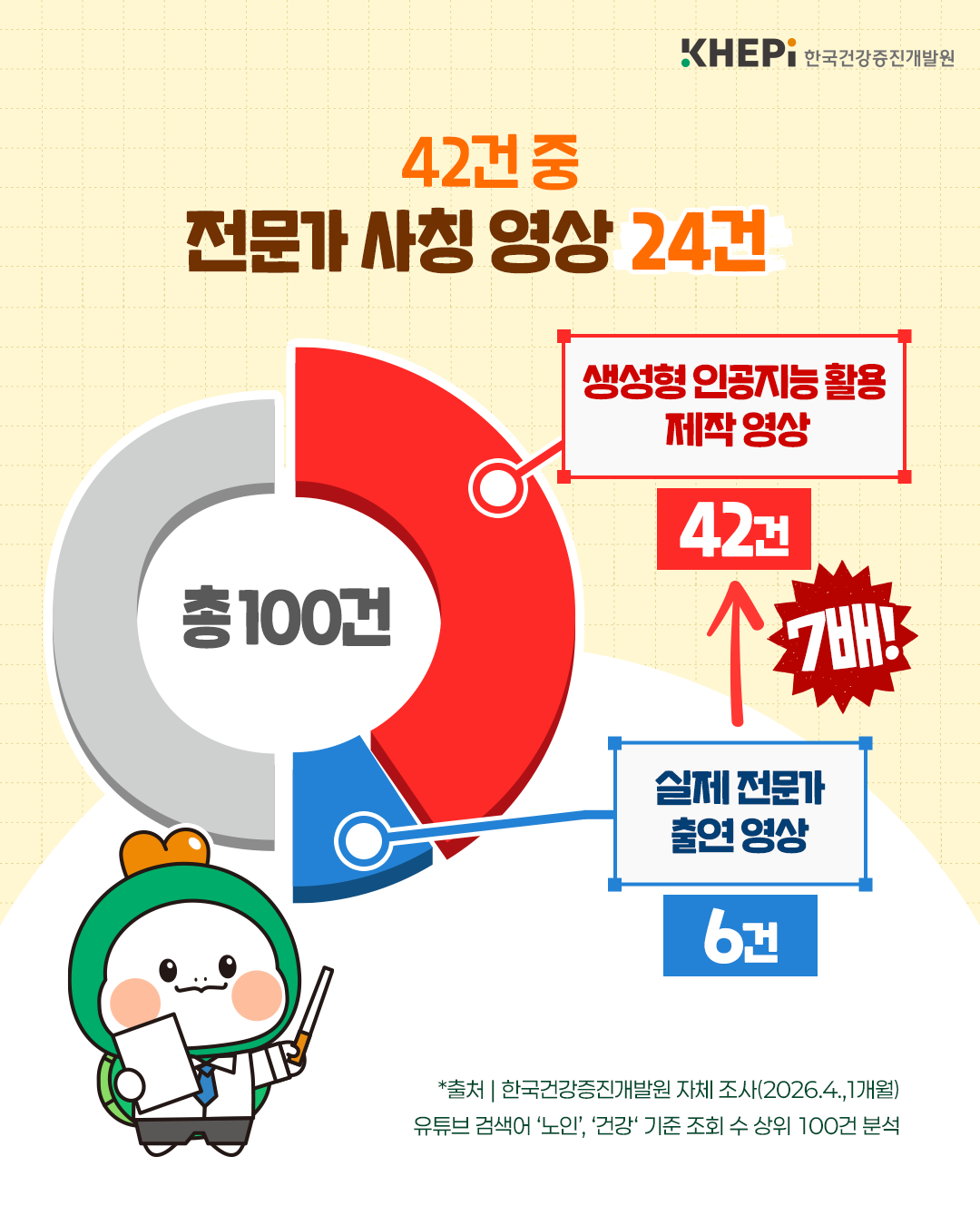
Videos featuring real experts accounted for just 6 percent — six videos — of the total, meaning AI-generated videos outnumbered genuine expert appearances seven to one.
An analysis of the impersonation videos found numerous exaggerated or scientifically unsubstantiated claims, including assertions that warm water is more effective than stomach medication and that frozen blueberries can cure diabetes.
A health information awareness survey conducted by the institute also found that 45.4 percent of people in their 60s seek out health information at least once a week, indicating that older adults are frequently exposed to such content.
Older adults, who tend to have relatively lower digital literacy, are more likely to mistake AI-generated fake-expert videos for verified information. In response, the institute revised its health information posting guidelines last December to help users make better choices and to encourage those who produce and publish health content to do so responsibly.
The institute's guidelines for health information consumers call for verifying the source, checking the date, confirming the purpose, comparing multiple information sources, and applying reasonable skepticism.
For health information producers, the guidelines recommend using clear and easy-to-understand language, conveying information accurately without falsehoods or exaggeration, basing content on evidence, citing sources and dates, and disclosing conflicts of interest and whether AI was used in production.
"As AI technology advances, health information content is becoming increasingly sophisticated, making it harder for older adults to judge what is accurate," said Kim Heon-ju, president of the Korea Health Promotion Institute. "We will continue to proactively counter misinformation that threatens the health of older adults and work to ensure that reliable health information can spread more widely."
thlee@heraldcorp.com