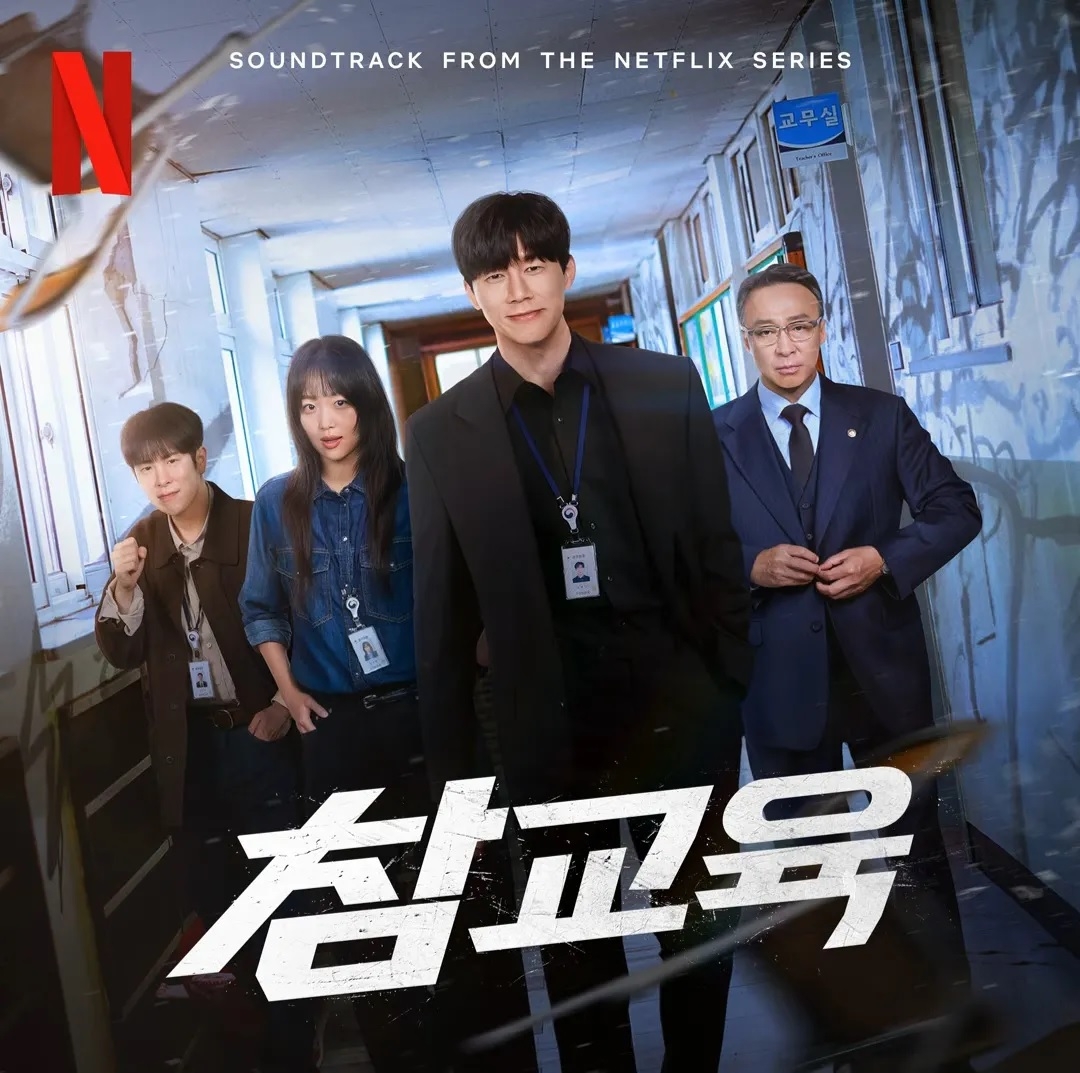
Amid the surging popularity of the Netflix drama series "Teach You a Lesson," critic Wi Geun-u has sharply criticized the show.
On Thursday, Wi shared on social media a news article suggesting that lead actress Jin Ki-joo's performance was a blemish on an otherwise strong work. He pushed back on that framing entirely, saying, "How can something be a blemish on a gem when the work itself is not a gem but a piece of garbage?" — taking aim at the show's overall quality.
"Teach You a Lesson," which premiered June 5, follows a fictional government unit under the Ministry of Education created to restore order to a broken education system. The series has topped Netflix's global Top 10 non-English TV chart, drawing audiences well beyond South Korea.
The show centers on the unit's use of corporal punishment — and even more extreme measures — to deal with violent students, parents who commit gapjil ("power abuse") against teachers, and corrupt educators. It has struck a chord with viewers who share frustrations over the collapse of public education, with many describing the series as deeply satisfying.
Yet even as the show performs strongly, critics have continued to raise questions about its quality and the messages it conveys. The fictional unit operates as a government body under the Ministry of Education but metes out punishment based solely on its agents' unilateral judgment, bypassing any legal process — effectively wielding extrajudicial authority. In reality, authority over investigation, trial and sentencing is deliberately divided to allow deliberation and checks; the show collapses all of that into a single agent's decision. Critics also point to the series' shallow moral universe, in which characters are painted as unambiguous villains in a world where the line between good and evil is rarely so clear. The show also sidesteps a fundamental question: adults who commit far graver crimes are punished under the constitutional principle of legality — no punishment without law — yet students in the series are subjected to extralegal measures on a whim. The glorification of violence in that process has drawn further criticism. The result, some argue, is a fantasy drama that merely uses a school as its backdrop.
The source material — a popular webtoon of the same name — faced its own controversies during its original run, drawing criticism over depictions seen as endorsing corporal punishment of students and containing racially offensive content, including anti-Black imagery. As the backlash intensified, the webtoon went on an extended hiatus and ultimately had its North American service suspended.

paq@heraldcorp.com