The uneven playing field of Korea's indie music scene
Between 'Hongdae goddess' and 'witch' — a long history of misreading women
Female musicians pushed to the margins, but change is slowly coming
![Performers at the Yeonghee Festival [Mapo Arts Center]](https://wimg.heraldcorp.com/news/cms/2026/06/13/news-p.v1.20260612.bd8a966b03c2466d9761db7855e6c942_P1.jpg)
Out of 915 nominees, 251 — or 27 percent — were women. Of 173 award winners, 40 — or 23 percent — were women. Those are the gender ratios for nominees and winners at the Korean Music Awards from 2004 to 2017.
Music, it turns out, has a gender. In February 2017, a small but telling episode drew attention online. Oh Yo, vocalist of the band 75A, went through the full list of nominees and winners across all 14 editions of the Korean Music Awards held between 2004 and 2017 and recorded the gender of each. In the rock, hip-hop, and metal and hardcore categories, not a single woman had won an award in any of those twelve years.
Oh Yo published the findings in the online outlet Pinch. "Ten years ago and now, female artists are still fighting a lonely and exhausting battle," she said.
The following year, singer-songwriter Oh Ji-eun cross-checked the data. Of all the Album of the Year winners from 2007 to 2017, only two had female members: 3rd Line Butterfly, which won in 2013, and Roros in 2015. In a column at the time, Oh Ji-eun wrote: "Is it because women make worse music than men that there are no female winners? It is no coincidence that most of the Korean Music Awards judges are men. Is it really a stretch to say that women's voices and women's narratives are being misread, distorted, and denied fair evaluation?"
Despite broader advances in women's rights across Korean society, female musicians in the indie scene remain on an uneven playing field. They have largely occupied invisible positions, and their absence only becomes apparent in retrospect, once someone bothers to count.
This is not merely a numbers problem. The nickname "Hongdae goddess" — and the fact that women rarely appeared as festival headliners — grew out of persistent doubt and undervaluation of their musical ability. The indie scene, long celebrated as an alternative space and democratic territory guaranteeing autonomy against capitalist planning and commercial conformity, was in fact quietly governed by male-centered networks and entrenched gender hierarchies. The issue came to the surface when Oh Ji-eun stepped forward as the organizer of the Yeonghee Festival.
Oh Ji-eun described the festival's origins as a challenge to the imbalances of a Korean music scene that had objectified and othered female singer-songwriters. Her model was the American festival Lilith Fair — a celebration of women musicians that arose in the 1990s in response to the patriarchal exclusion built into the US music industry.
![Singer-songwriter and author Oh Ji-eun, organizer of the Yeonghee Festival [Mapo Arts Center]](https://wimg.heraldcorp.com/news/cms/2026/06/13/news-p.v1.20260612.3fc6836f95d64f3b9623d53de865c031_P1.jpg)
'Hongdae goddess' vs. 'Hongdae witch' — the romantic violence of a label
If there is one keyword that defined the Hongdae indie scene of the 2000s, it is "Hongdae goddess." The term was a collective nickname for female musicians active in Hongdae. Experts describe it as "a label that objectifies female musicians working in Hongdae, the symbolic home of Korean indie music."
The term was, in fact, born as marketing language. It originated with an offhand remark made in private by someone at a management company. It gained traction when Pastel Music used it in a press release promoting its artist Yozoh, and a lineage of "Hongdae goddesses" was established. Musicians including Yozoh, Taru, Han Hee-jung and Deb had different genres, musical personalities and creative approaches, but they were all folded into a single category.
Singer Han Hee-jung dissected the label in an interview with a fashion magazine at the time, calling it "a product — something a management company started to bundle female singer-songwriters together for a feature." The logic of classification is revealing. Women who fit an aesthetic of purity and harmlessness were designated goddesses; those who refused were labeled witches. The mechanism mirrors the historical patriarchal ideology that either accepts women as controllable aesthetic objects or excludes those who resist as sacrilegious others.
Jaurim's Kim Yoon-ah and Oh Ji-eun fell into the "Hongdae witch" camp. That label, too, was a frame. When female artists tried to express their own voice, critics often dismissed the work as the product of excessive self-consciousness. Rather than recognizing independent female creators as full artists, the scene isolated them as hysterical or overwrought outsiders.
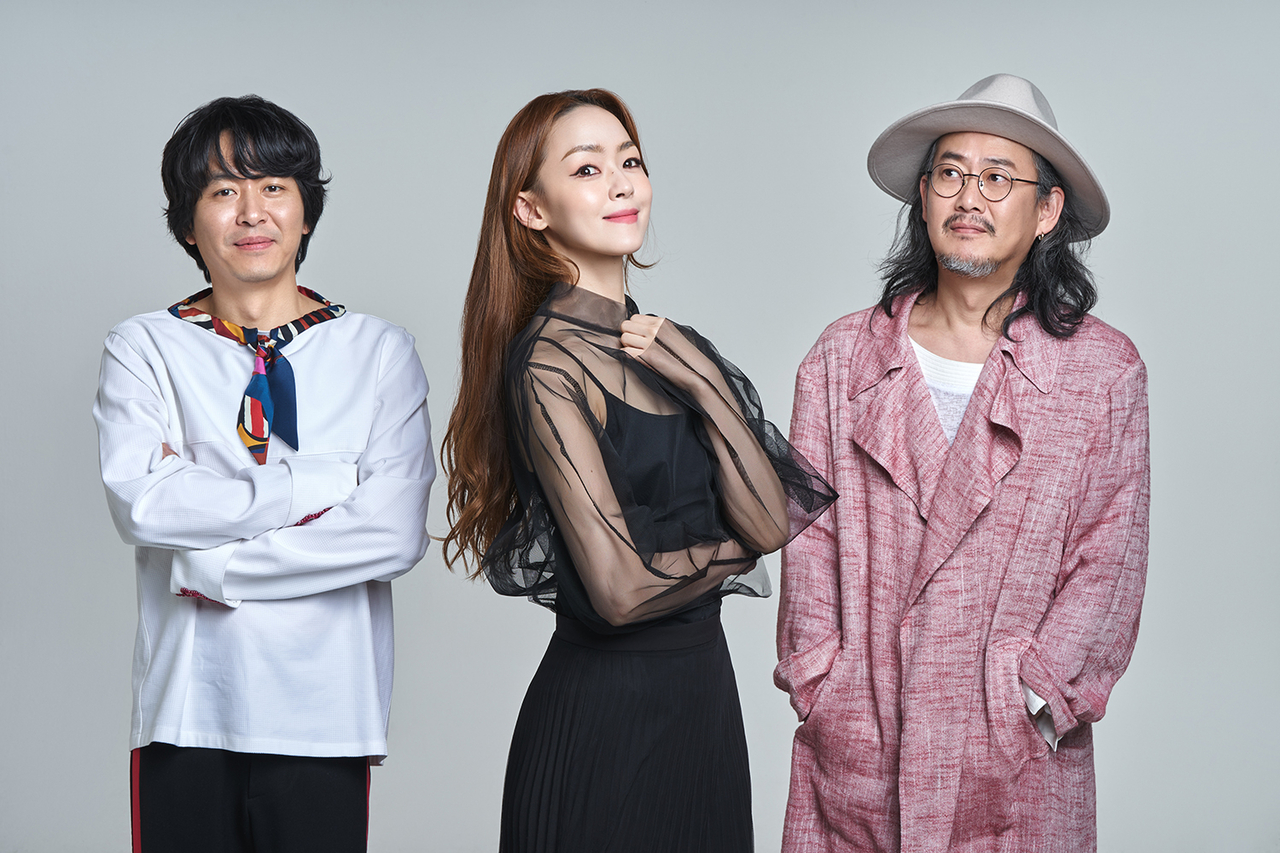
This dynamic maps precisely onto the sexism in music journalism exposed in English-language music memoirs by Kim Gordon and Viv Albertine. Research in that field has found that "music journalism has defended the identity of male-centered subculture by treating female artists not as independent musical subjects but as ornaments — the 'girl in a band' — or as uncontrollable witches."
In a column published around 2018, Oh Ji-eun wrote: "Worship and hatred are two sides of the same coin. You can be worshipped and, at the same time, be denied the chance to be understood because you are seen as a tired type."
The "goddess" label was no different. Yozoh demonstrated an original everyday narrative and melodic sensibility through songs such as "Egugugo" and "I Like You," yet media and listeners reduced her music to the visual signboard of "a pretty girl making breezy acoustic music," imposing a ceiling on what her work could be. Yozoh addressed the nickname on a radio program: "I thought the 'Hongdae goddess' label would fall off after five years, but one day 'original' got added in front of it. I'm not a pork-knuckle restaurant."
Music sociologists Eva Tsai and Shin Hyun-joon, writing in the journal Popular Music, defined the central gender trope of the Korean indie scene as "the indie music goddess in control of subdued femininity."
Their analysis held that the word "goddess" functions as a double mechanism — simultaneously granting women a transcendent position while confining them within a framework of suppressed femininity. Whether a woman was cast as goddess or witch, she was viewed not as a creative subject but as an object of consumption.
"The Hongdae indie scene is mostly enjoyed by women, yet women were flattened into a binary of good and evil, goddess and witch," Oh Ji-eun said. "As a result, they were robbed of the chance to show the full range of their music."
![Kim Sa-wol and Kim Hae-won [The Herald Business DB]](https://wimg.heraldcorp.com/news/cms/2026/06/13/news-p.v1.20260613.3c1e595f53de48afb27243fb288e5daf_P1.jpg)
'Did you write the lyrics yourself?' — how the gender filter works
The double standard applied to female singer-songwriters was most visible in how their music itself was received. Before their work was evaluated on its merits, a "gender filter" kicked in. Standards never applied to male musicians were applied to women, and the same themes and emotions read differently depending on the artist's gender.
"When a male musician sings about depression, solitude or the destructiveness of love, he is typically called 'sensitive' or praised for having a 'worldview,'" Oh Ji-eun said. "But when a female musician sings about love and pain with the same intensity, she gets told she is 'emotionally excessive,' 'too self-conscious,' or 'always going on about love.'" When a man does it, it is a theme and a worldview; when a woman does it, it becomes emotional pandering.
Female musicians in the indie scene at the time were also saddled with the descriptor "breezy music" — Oh Ji-eun's phrase. The irony is that many of the musicians who succeeded in the indie scene with languid, sensory music were men. "A man's softness became 'artisanal sensitivity,'" Oh Ji-eun observed, "but a woman's softness was treated as 'shallowness' or 'breeziness.'"
Experts note that the spread of home-recording technology and the growth of online platforms in the 2000s increased the number of female creators. Women were central producers and consumers of indie music, yet the credit and influence rarely flowed back to them.
Unconscious discrimination was particularly visible in the domain of technical skill. Composition, arrangement, engineering and producing — the "control" roles — were coded as male territory, while an unspoken assumption kept women in the position of vocalist or keyboard player.
Oh Ji-eun recalled reading an interview with Kim Sa-wol. "In one interview, she was asked, 'You didn't actually play the guitar yourself, did you?' and she answered, very calmly, 'I did,'" Oh Ji-eun said. "Kim Sa-wol is a skilled mixing engineer and instrumentalist with independent production capabilities, yet the very fact that she made and played her own music was treated as something to be doubted."
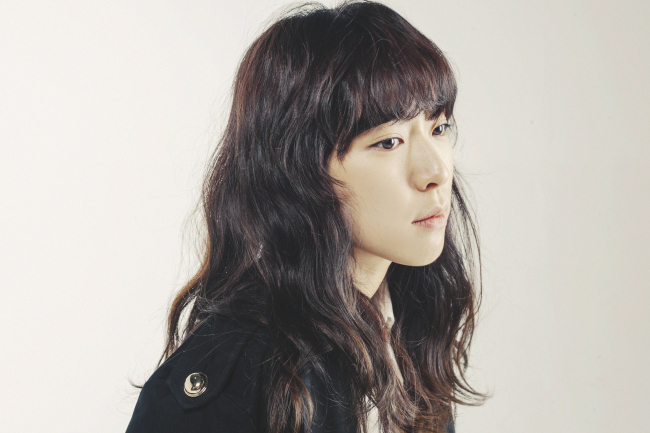
Oh Ji-eun continued: "In the past, people assumed female musicians couldn't write songs. Then, when women appeared who could, the assumption shifted: they can't play instruments. When women showed up who could do both, it became: they can't produce, they can't work with music software. Every era found a new way to look down on them. But women have always made music — and today they are producing K-pop, programming beats and working with Cubase."
The Korean Music Awards — South Korea's equivalent of the Grammys — laid bare the realities of the domestic pop music industry during a particular period. The gender imbalance among nominees and winners was severe from the mid-2000s through the mid-to-late 2010s, and the gaps by genre are especially striking.
According to statistics compiled by Oh Yo, women accounted for just 18 of 445 nominees in the rock category — a mere 4 percent. In hip-hop, only one woman appeared among 230 nominees: Kim Shin-young of Primary School, nominated in 2007. In metal and hardcore, women held zero nominations and zero wins. Across all three genres, not a single woman won an award in twelve years.
By contrast, the gender breakdown was relatively balanced in pop (47 percent female nominees), folk (53 percent) and dance and electronic (51 percent of winners were women).
The imbalance ultimately reveals a hierarchy between genres coded as "feminine" and those coded as masculine. The structure appears to permit women's participation in the emotionally expressive, lyric-centered realms of folk and pop that patriarchal society deems acceptable, while men dominate the genre power that demands physical force or sonic craftsmanship.
The composition of the judging panel reproduced the same imbalance. Of the 63 selection committee members for the 14th Korean Music Awards in 2017, only five were women. In the very process of evaluating music and certifying excellence, women's voices were a structural minority. When women are absent from the room where "good music" is decided, the structural likelihood that those decisions will disadvantage women rises accordingly.
Within this rigid evaluation system, however, one development stands out: transgender electronic musician KIRARA won the Best Electronic Album award at the 14th Korean Music Awards. The industry regards it as a significant moment — the first crack in a cisgender male-dominated authority structure opened by a queer subject.
![Oasis performing in Korea for the first time in 16 years as a reunited band [Live Nation, Joshua Halling]](https://wimg.heraldcorp.com/news/cms/2026/06/13/news-p.v1.20251022.f4c4bad44bb2432c95ad6439d8fcc882_P1.jpg)
Why the headliner slot has always gone to men
In the indie music world, a slot at a major rock festival is a key indicator of economic survival and public recognition. Female artists are rarely invited to such festivals in the first place, and their names are even harder to find at the top of the bill. Those who do appear tend to occupy the margins.
The Jisan Valley Rock Festival, which reigned as South Korea's largest rock festival from 2009 to 2019, filled its headliner slots across a decade exclusively with all-male bands or bands fronted by male singers. The sub-headliner positions allocated to domestic artists also went to male solo acts.
The headliner roster ran from Oasis in 2009 through Massive Attack and Muse in 2010, the Chemical Brothers, Arctic Monkeys and Suede in 2011, Radiohead and the Stone Roses in 2012, the Cure and Nine Inch Nails in 2013, and Foo Fighters in 2015.
At the Incheon Pentaport Rock Festival, a woman or a female-fronted band did not reach a headliner-level stage until 2022, when Jaurim — led by Kim Yoon-ah, widely known as the original Hongdae witch — topped the bill. At Beautiful Mint Life, Younha became the first female artist to headline the main stage, in 2025. The Seoul Jazz Festival did not have a female headliner on opening night until Janelle Monáe took the slot in 2026.
The imbalance is not unique to Korea. A 2024 survey by European music industry research bodies IQ and Rostr found that 92 percent of festival headliners across Europe were male artists. A 2022 BBC study found that half of the 50 major UK festivals had not featured a single female headliner. Women accounted for roughly one in ten headliners overall. Of 200 major acts surveyed, 149 — or 74.5 percent — were all-male bands or male solo artists, while 24 were mixed-gender acts. All-female bands and female solo artists numbered just 26, or 13 percent of the total. One act was nonbinary. The BBC noted, however, that "the Wireless Festival's headliners — SZA, Cardi B and Nicki Minaj — were all women, which represented some progress."
In 2019, Glastonbury Festival announced with fanfare that booking Janet Jackson and Kylie Minogue as headliners marked a historic breakthrough for gender equality. Yet the instrumental session musicians performing behind those female headliners were all men. The women's sets were placed on a sub-stage during afternoon hours with poor weather and limited visual immersion, while the Cure, the Killers and Stormzy — all-male acts — occupied the main stage's prime evening slots.
![Han Hee-jung [EBS]](https://wimg.heraldcorp.com/news/cms/2026/06/13/ams.V01.photo.HDN.P.20151031.201510310000002233944234_P1.jpg)
Progress has been made, but it does not amount to sweeping change. Researchers at the University of Manchester, in a study titled "Inclusion as a Universal Value or an Illusion: An Analysis of 'Hard' vs. 'Soft' Gender Balance in Music Festival Lineups," warn of the trap of soft gender balance — the gap between appearances and reality. Some festivals counted a single female member within a mixed-gender band as a female artist and declared their gender balance targets met. But when researchers counted the gender of every individual performer on stage, the female presence tumbled to below 30 percent.
Festival organizers justify the low proportion of female artists with commercial arguments: that women cannot guarantee ticket sales, or that there are simply no female candidates in the rock band pool. The result is a self-perpetuating practice of booking the same male artists year after year.
Korea is no different. "At summer rock festivals, women artists are not booked on the grounds that they don't draw crowds," Oh Ji-eun said. "But for men, one gets booked because he's popular, another because he has a devoted following, another because of his artistic credibility. Behind those judgments, the unconscious biases and personal tastes of the decision-makers weigh heavily — and when the decision-makers are of a particular gender and age group, the effect is even stronger."
The data bear this out. According to the FACTS report published in 2024 by female:pressure, a European electronic music gender monitoring organization, there is a clear inverse relationship: the larger the festival, the sharper the drop in gender diversity. The proportion of female performers rises dramatically — to 62.7 percent — only when the artistic director or programming decision-maker is a woman. Who holds the gatekeeping power, the report concludes, is central.
John Shotel, chief diversity, equity and inclusion officer at the University of Missouri, said: "Festivals reflect the structural problems that exist in the music industry and in broader society. There is also a fear among female musicians that if they publicly raise the issue of representation, they will be seen as difficult and not get booked."

Oh Ji-eun admitted she felt the same pressure. "During my most active years, from the mid-2000s to the mid-2010s, raising the imbalance as a problem felt uncool, and I ended up thinking either 'I just need to get better' or 'maybe I'm just not good enough,'" she said. "Speaking up about the imbalance is the healthy thing to do, but the moment you say something, you hear: 'You're being greedy' or 'You still get to play festivals, don't you.'" Female musicians, she said, are effectively coerced into silence in the face of inequality as a condition of survival.
The hidden audience: the violence of being told to show yourself
Were female singer-songwriters truly unable to draw audiences or sustain devoted fan bases — and therefore unfit to headline festivals?
Women who did not attend festivals were not women who did not listen to music. The indie scene simply had not looked for them — or had not wanted to.
Festival culture takes a particular mode of enjoyment as its standard: gathering outdoors in large groups, releasing physical energy, experiencing music inside a crowd. Listeners who do not fit that template are not counted as an audience. They are the people who listen through earphones, who stream music late at night or in the familiar small hours of 3 a.m., or who play a specific song while driving.
"Each musician has fans who prefer different formats, but because they don't show up on the radar, female musicians get labeled as having no draw and no popularity," Oh Ji-eun said. "In my own case, my agency told me they couldn't promote me because they didn't know where my fans were. Those fans don't want to form a community — they explore the music and the musician on their own terms. They are people who engage privately, the kind who show up at a book talk."
Distinct fan bases exist, but what is interesting is that a single listener can enjoy both male bands and female artists — much as K-pop fans follow more than one group at a time. "I have seen a female audience member who sat in the back row of my concert with her eyes closed, listening quietly, then stood at the very front at a male band's show and let all her energy out," Oh Ji-eun said with a laugh.
At a male musician's concert, she explained, the same listener might slam and release outward energy, making her presence visibly countable. At a female musician's concert, she might sit quietly and absorb the music as a form of private consolation for inner pain — a reflective mode of consumption that leaves no visible trace.
The problem, Oh Ji-eun argued, is that when male-centered promoters reduce female creators to flat labels like "Hongdae goddess" or "Hongdae witch," female listeners internalize a sense of emotional resistance and shame at seeing an artist they love subjected to objectification. "After I made my debut as a writer and started doing book talks, I kept running into fans in unexpected places — people who had kept their distance during my peak years and only later confessed, 'Your music saved my soul,'" she said. A delayed fandom phenomenon had taken hold. The existence of these "shy fans" is itself evidence that an audience for female artists was always there.
![Lee Rang [Yonhap]](https://wimg.heraldcorp.com/news/cms/2026/06/13/news-p.v1.20260613.51450478c5804ffb90450c7ef276eac6_P1.jpg)
The standardization of how music is enjoyed has led to a systematic undervaluation of female musicians' market worth — a pattern seen in the United States as well. The assumption was shattered as early as 1997, when Sarah McLachlan launched Lilith Fair, a women-centered festival. When US format radio claimed that playing female singer-songwriters back to back drove listeners away, McLachlan organized a festival with an all-female lineup. In its first year, Lilith Fair grossed $16 million, making it the highest-earning touring festival of the year — surpassing the male-dominated Lollapalooza. Over three years, the festival achieved $52 million in total revenue and raised more than $10 million for charity.
In Korea, a similar proof of concept emerged when WeWeWe, a music collective centered on Oh Ji-eun, released a women's rock compilation album in 2020 and hit 210 percent of its crowdfunding target. As female listeners with wide-ranging cultural tastes organized themselves as an active force, the standardized model of music enjoyment began to unravel.
The Yeonghee Festival, which opened Friday, offers further evidence. With Oh Ji-eun as general director, the festival places at its center the female artists who had been reduced to token inclusions or secondary supporting acts at male-dominated large-scale festivals. When blind tickets went on sale, every seat for every showing sold out within a minute.
"This is not a festival where you sit on a sun-scorched lawn," Oh Ji-eun said. "It is a festival where you sit in a chair, listen to music and think." It breaks entirely from the standardized mode of enjoyment.
The festival takes its name from "Yeonghee" — the most common, ordinary female name in Korean textbooks — and layers onto it the hanja meanings of "glory" (영, 榮) and "joy" (희, 喜). The lineup reads as a genealogy of women in the Korean indie scene: Kim Yoon-ah, Sunwoo Jung-a, Lee Sang-eun, Kim Sa-wol, Yozoh, Lee Rang, Ahn Da-young, Jung Woo and Ahn Shin-ae — female creators long scattered across the scene, brought together in one place to push back against the inequalities the Korean indie world has long sustained.
The music world has been slowly changing since the 2020s. At the Korean Music Awards, Baek Yerin won Best Pop Album in 2021 and Jeong Mil-a took Album of the Year the same year. In the global tallies compiled by Europe's female:pressure, the share of female performers rose from 9.2 percent in 2012 to 29.8 percent in 2023.
An industry insider who asked not to be named said: "It is too early to say whether this represents a structural change or merely a change in visibility. The headliner slot is still narrow, and women remain rare in the technical decision-making roles. The gender equality lag in the Korean indie music scene is a structural flaw — the product of subculture's financial insularity combined with a male-centered environment. It is worth looking at concrete road maps such as the gender-balance quota system adopted by the UK's Keychange movement."
shee@heraldcorp.com