Average audit fees for listed companies have fallen for four consecutive years since 2023; FSS pushes to expand quality-based auditor designations and shorten inspection cycles
![[Herald DB]](https://wimg.heraldcorp.com/news/cms/2026/06/14/news-p.v1.20260505.b8208e6b14014a7d93b907b6f6453a4a_P1.jpg)
The Financial Supervisory Service is taking direct aim at the intensifying race to the bottom on audit fees among accounting firms. The regulator said it will immediately launch auditor inspections and financial statement reviews whenever audit fees fall to abnormally low levels or billable hours drop sharply without reasonable justification.
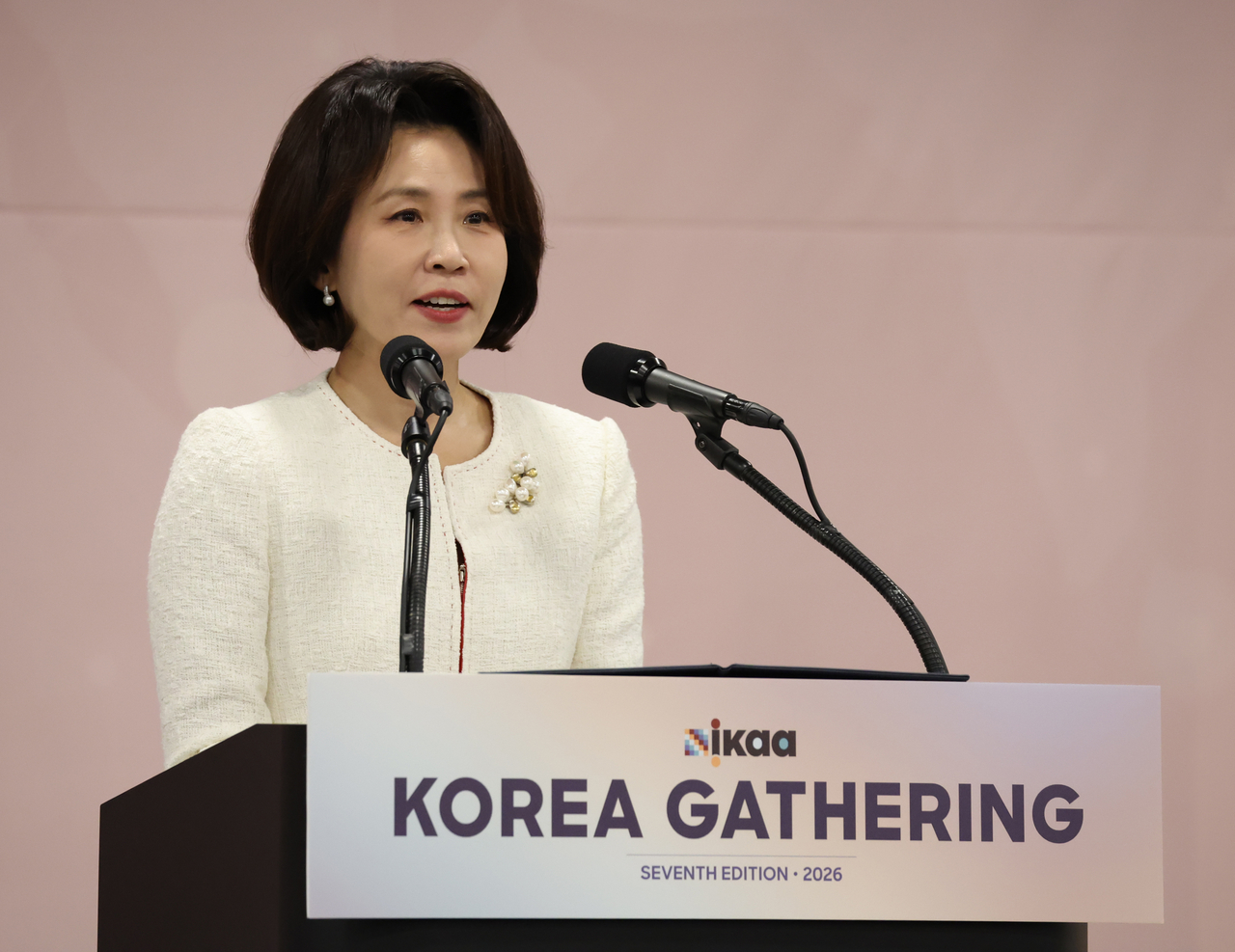
The FSS announced Sunday that it held a meeting on June 10, chaired by senior deliberation commissioner Yoon Jeong-suk, with audit division heads from 12 accounting firms — including Samil, Samjong, Hanyoung and Anjin — each registered as auditors for listed companies with more than 200 certified public accountants. The meeting was convened in response to a string of media reports raising concerns about audit fee dumping and accountant overwork in the industry.
According to the FSS, the average audit fee for listed companies — which had risen after the introduction of the revised External Audit Act — has now declined for four consecutive years: from 2.65 million won (about $1,740) in 2023 to 2.59 million won in 2024, 2.52 million won in 2025 and 2.46 million won in 2026. The FSS warned that the fee decline could lead to reductions in audit staffing and hours, ultimately undermining audit quality.
Commissioner Yoon warned that any unjustified sharp reduction in audit hours would trigger immediate auditor inspections and financial statement reviews. She also said the FSS would press ahead without wavering on reforms to the auditor designation system, expanding mandatory designations for firms that demonstrate superior audit quality.
The management of audit-hours data also drew scrutiny. The FSS stressed the need for rigorous data management to ensure reliability, noting that actual audit-hours data underpins the standard audit hours regime and the broader external audit system. On AI use, the FSS said it would actively encourage the technology as a tool for improving audit efficiency, while urging firms to pay particularly close attention to information security to prevent audit data from leaking externally.
Accounting firm representatives at the meeting shared concerns about falling fees and deteriorating audit quality driven by cutthroat competition for engagements, and said they would "continue self-regulatory efforts to build a culture where firms compete on audit quality, not price." On the expansion of AI technology, participants noted that the broader scope of audit work and the substantial staffing and time required to verify AI-performed tasks mean further assessment is needed to determine whether cost savings can offset the recent fee declines and AI development costs.
The audit fee dumping problem gained momentum in 2023, when companies subject to the periodic mandatory auditor designation system began transitioning back to free-choice selection. Industry observers say large accounting firms have been engaging in a "chicken game," undercutting fees to secure audit mandates from major conglomerates.
The FSS plans to conduct financial statement reviews and auditor inspections targeting reports with a high risk of deficient auditing, while also working to expand its inspection workforce and upgrade its oversight tools in pursuit of shorter review cycles — targeting a 10-year cycle for Kospi-listed companies and a five-year cycle for Kosdaq-listed companies.
psj@heraldcorp.com