
Outlook is for one of four three-term Democratic Party district mayors to be chosen — Ryu Gyeong-gi, Lee Seung-ro, Park Jun-hee and Kim Mi-gyeong are all in the running; Jungnang-gu Mayor Ryu seen as frontrunner given his administrative experience and negotiating track record
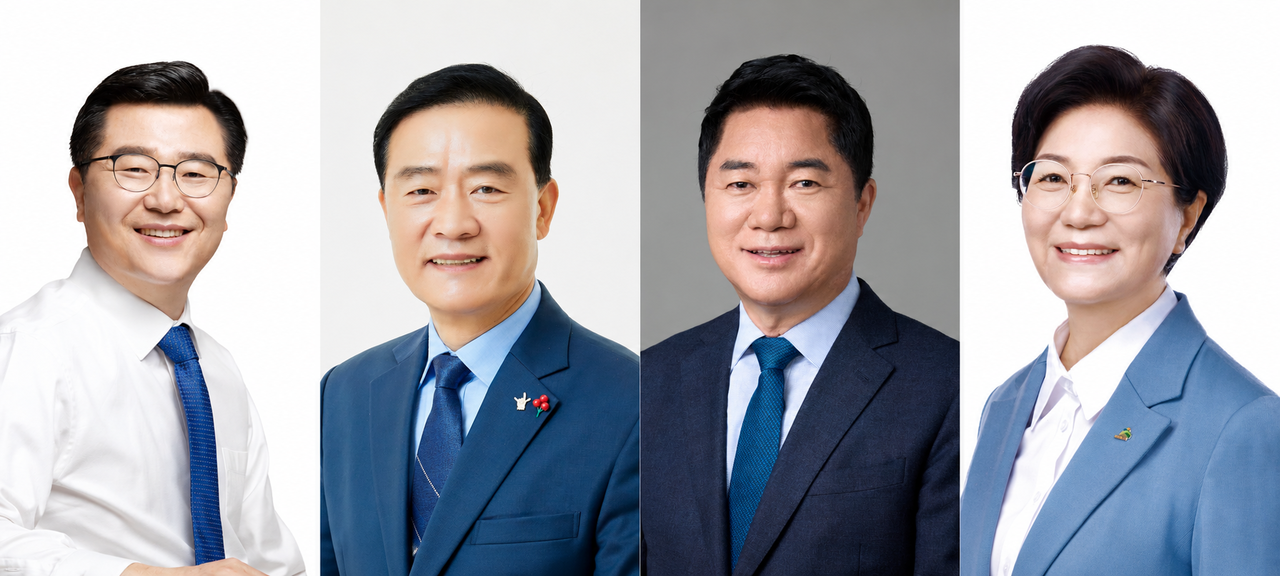
Four Democratic Party of Korea district mayors won third consecutive terms in Seoul's autonomous districts in the June 3 local elections.
They are Ryu Gyeong-gi of Jungnang-gu, Lee Seung-ro of Seongbuk-gu, Park Jun-hee of Gwanak-gu and Kim Mi-gyeong of Eunpyeong-gu.
With the ninth directly elected administration set to launch July 1, attention is turning to which of the four will serve as the inaugural chair of the Seoul District Mayors Council.
The council is the primary body coordinating relations between the Seoul Metropolitan Government and the city's 25 autonomous districts. It coordinates joint responses to shared issues and conveys district-level positions to the central government and city hall, giving the chair considerable standing.
During the eighth administration, People Power Party district mayors held the majority and rotated the chairmanship on a one-year basis.
Now that the Democratic Party holds the majority in Seoul's autonomous districts under the ninth administration, observers expect the three-term mayors to take turns leading the council, with the first chairmanship drawing the most interest.
The question of who takes the inaugural role is the central focus.
Within and around the Seoul Metropolitan Government, many see Jungnang-gu Mayor Ryu Gyeong-gi as the most likely candidate.
Ryu graduated from Seoul National University with a degree in political science and passed the civil service administration exam before serving as Seoul Metropolitan Government spokesperson, head of the administrative bureau, head of the planning and coordination office, and first vice mayor for administration. He is regarded as a seasoned administrative expert with deep knowledge of city organization and policy and extensive experience negotiating with the central government and city hall.
In 2018, then-Minister of Planning and Budget Park Hong-keun strategically recruited Ryu during the late Mayor Park Won-soon's tenure and put him forward as the candidate for Jungnang-gu. Ryu successfully wrested the district from the conservative camp after a prolonged period of People Power Party control and has since won three consecutive terms — in the seventh, eighth and ninth directly elected administrations.
During his tenure, Ryu earned high marks from parents and residents for education initiatives — including a program encouraging children to read 1,000 books before starting school — and for his welfare administration record. In this election, he defeated his opponent by more than 55,000 votes, a margin credited with contributing to the Democratic Party's broader victory in Seoul.
Seongbuk-gu Mayor Lee Seung-ro is also considered a competitive candidate. A local politician who served on the Seongbuk-gu council and the Seoul Metropolitan Council before winning three terms as district mayor, Lee brings broad experience across the city assembly and district administration.
Gwanak-gu Mayor Park Jun-hee served two terms on the Gwanak-gu council and two terms on the Seoul Metropolitan Council before winning his third term as district mayor, giving him extensive experience in local politics. He is regarded as a strong communicator with residents and an effective policy driver.
Eunpyeong-gu Mayor Kim Mi-gyeong served on the Eunpyeong-gu council and won two terms on the Seoul Metropolitan Council before securing her third mayoral term. She has drawn praise for her leadership and her hands-on, resident-focused approach to administration, making her a figure who cannot be overlooked in the race.
However, analysts say Ryu holds a relative edge for the inaugural chairmanship when the weight of the role is taken into account. Coordinating district issues with city hall and the central government from the outset of the new administration — while unifying the positions of all 25 district mayors — requires precisely the administrative depth and external negotiating experience he brings.
Ultimately, the selection of the first Seoul District Mayors Council chair is expected to be decided through consultations between the Democratic Party's Seoul chapter and the newly elected district mayors.
Whoever takes the role, the question is whether they can demonstrate the leadership needed to represent the voice of Seoul's autonomous districts over the next four years.
seouldream01@heraldcorp.com





