Policy briefing marks one year since government took office; emergency transport system to be overhauled; tobacco price hike 'not under review'
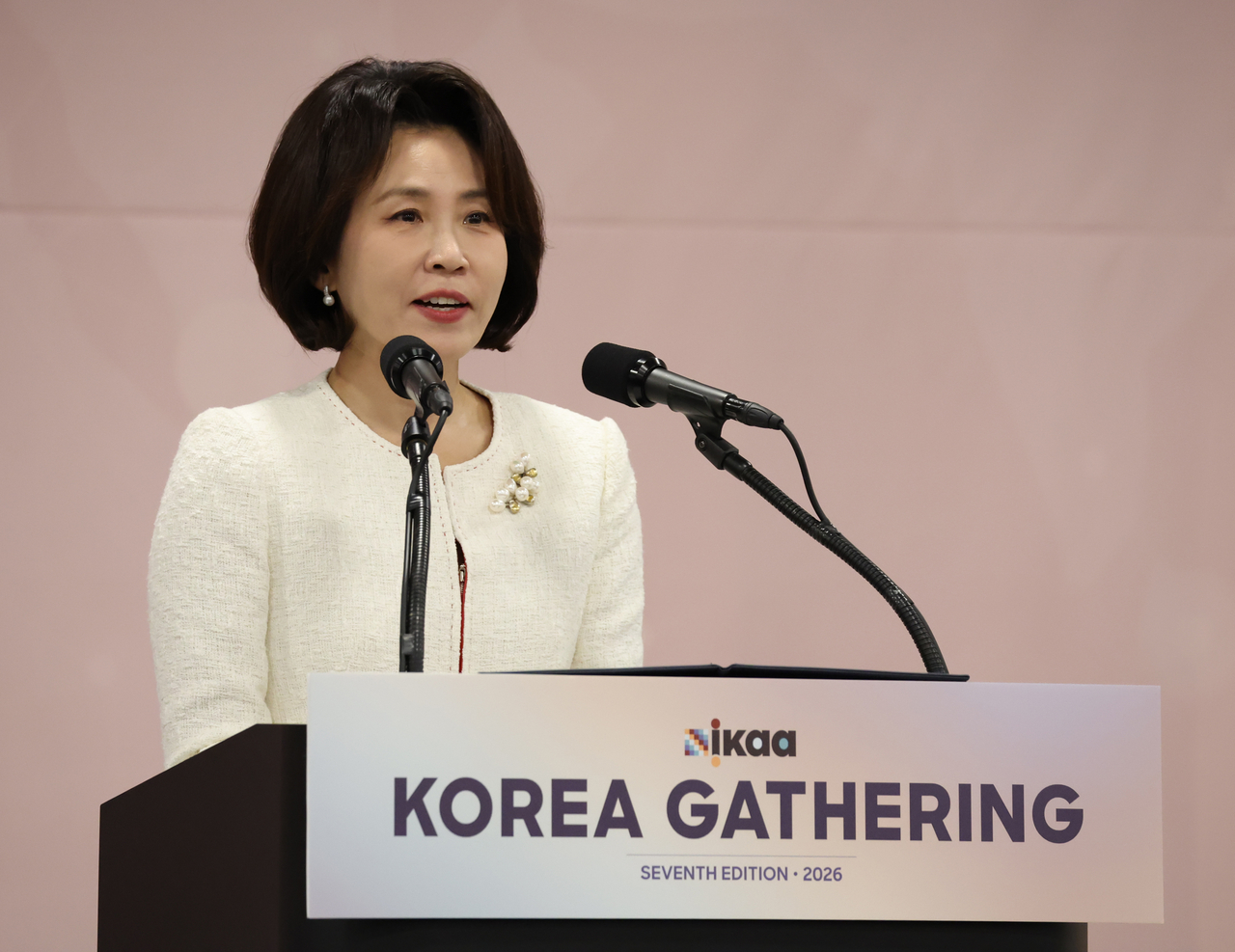
![Minister of Health and Welfare Jeong Eun-kyeong attends a policy briefing marking the first anniversary of the current government. [Ministry of Health and Welfare]](https://wimg.heraldcorp.com/news/cms/2026/06/14/news-p.v1.20260614.e8ad58fbc2a34abca9cf0a843bff227b_P1.jpg)
The government plans to overhaul the basic pension system into a tiered structure designed to reduce elderly poverty, with the changes to be rolled out in phases.
Alongside this, the government will push to extend national health insurance coverage to hair loss treatment and to address the recurring problem of emergency rooms outside the greater Seoul area refusing to accept patients — by revamping the emergency transport system and strengthening critical care capacity.
Minister of Health and Welfare Jeong Eun-kyeong outlined these priorities at a policy briefing held Thursday in Jongno-gu, Seoul, marking the first anniversary of the current government and focusing on key initiatives for the second half of the year.
The government intends to reform the basic pension system, which currently pays a fixed monthly benefit to seniors aged 65 and older whose income falls within the bottom 70 percent of the elderly population, in order to better support low-income older adults.
The recognized monthly income threshold used to determine basic pension eligibility has risen to about 96 percent of the median income, driven by growth in public pension payouts and rising housing asset values. Rapid population aging has also increased the fiscal burden, and critics have pointed to the inequity of paying identical amounts to seniors regardless of whether they have other income. The government plans to address these issues by shifting to a tiered benefit structure that gives more to lower-income recipients.
"There are many discussions to be had, but within the second half of the year we want to set the direction, amend the relevant legislation, and go through National Assembly review — including the pension special committee — so we are trying to move as quickly as possible," Jeong said.
She added that experts broadly agree in principle on the need to provide more generous support to low-income recipients across the various fiscal projection scenarios under consideration. "We will finalize the reform plan in the second half, but the actual changes will likely be phased in gradually," she said.
Jeong also said expert reviews had flagged concerns about sharply cutting the share of eligible recipients. "The government will draw up a proposal on what the eligibility criteria and benefit amounts should be — the goals, the specifics, and the pace of adjustment — and there will be a public forum to explain it and build social consensus," she said.
The government also decided to expand nationwide a pilot program for overhauling the emergency patient transport system that has been running in the Honam region since May, in response to the persistent problem of emergency rooms refusing to accept patients. Alongside this, the government will pursue various measures to strengthen critical emergency care capacity at regional medical institutions.
Under the pilot, provincial and city governments work with local medical institutions and fire departments to revise transport protocols tailored to regional conditions. When transport is delayed, a regional coordination center or designated priority-admission hospitals step in. The government plans to extend the program nationwide from September after completing the regional pilots.
"The emergency medicine problem is not simply a matter of emergency rooms — it is a structural problem of treatment capacity in critical emergencies," Jeong said. "Even if a patient can get to an emergency room, treatment ultimately ends with surgery, so we must secure the capacity to treat patients in emergency situations."
She said South Korea excels at pre-scheduled procedures such as cancer surgery but struggles to keep medical staff available around the clock and to maintain sufficient personnel for emergency response. "Appropriate fee schedules, adequate staffing, and a standby system and network that allow medical staff to be on call 24 hours a day are all critical," she said.
Jeong added that the criteria for designating regional emergency medical centers are also being revised — shifting the focus from emergency room facilities, equipment and staffing to "definitive treatment capacity" in critical situations. "If mandatory liability insurance is introduced and criminal liability is eased in the second half for high-risk essential medical fields where there is no gross negligence, that will reduce the burden on medical staff," she said.
The Ministry of Health and Welfare is conducting a working-level review of extending national health insurance coverage to hair loss treatment and plans to gather public opinion in the second half before moving forward.
Jeong said views are divided — some argue coverage is necessary given the significant impact hair loss has on young people's health and daily lives, while others say insurance should focus on serious conditions. "We judged that public input was needed, and a survey of 1,000 people conducted by the National Health Insurance Service returned positive results," she said. The government plans to factor in opinions from the Ministry of Interior and Safety's public deliberation forum scheduled for July before deciding whether to proceed.
President Lee Jae-myung had directed the ministry to review extending national health insurance coverage to hair loss treatment at a Cabinet meeting late last year, saying young people appear to regard hair loss "as a matter of survival."
On the question of a possible tobacco price hike, which has drawn public attention recently, Jeong said the government has not conducted any specific review of the matter.
Jeong also pushed back against suggestions that the National Pension Fund is being mobilized to prop up the domestic stock market. The National Pension Service raised its target allocation for domestic equities at the end of this year to 20.8 percent at a fund management committee meeting in May, up from the previous target of 14.9 percent — or 19.9 percent including the permitted deviation range.
"There was a large gap between the actual domestic equity holdings and the target ratio, and a sharp adjustment would have had significant implications for profitability, stability and market impact — those factors were taken into account," Jeong said. "The emphasis was on updating and aligning the asset allocation to current conditions, not on expanding the domestic equity share."
She also said the fund's currency hedging policy is not aimed at pushing down the exchange rate, as some critics have claimed, but is a risk-management measure to protect the fund's returns. She stressed that no significant changes have been made to the hedging principles set by the fund management committee.
carrier@heraldcorp.com