South Korean flag flies at Le Mans for the first time among 22 nations; Genesis builds full-scale hospitality pavilion in debut appearance; French industry insiders call brand 'Korea's ambassador'
![Genesis brand partner and Magma Racing advisor Jacky Ickx (driver's seat) drives the Genesis X Gran Convertible during the driver parade in Le Mans, France, on Friday local time, alongside GMR drivers Mattis Jäger, Luis Felipe Derani and André Lotterer (rear seats, left to right). [Genesis]](https://wimg.heraldcorp.com/news/cms/2026/06/15/9/news-p.v1.20260614.2be27f7e12b5405d96a1f610c8508870_P1.jpg)
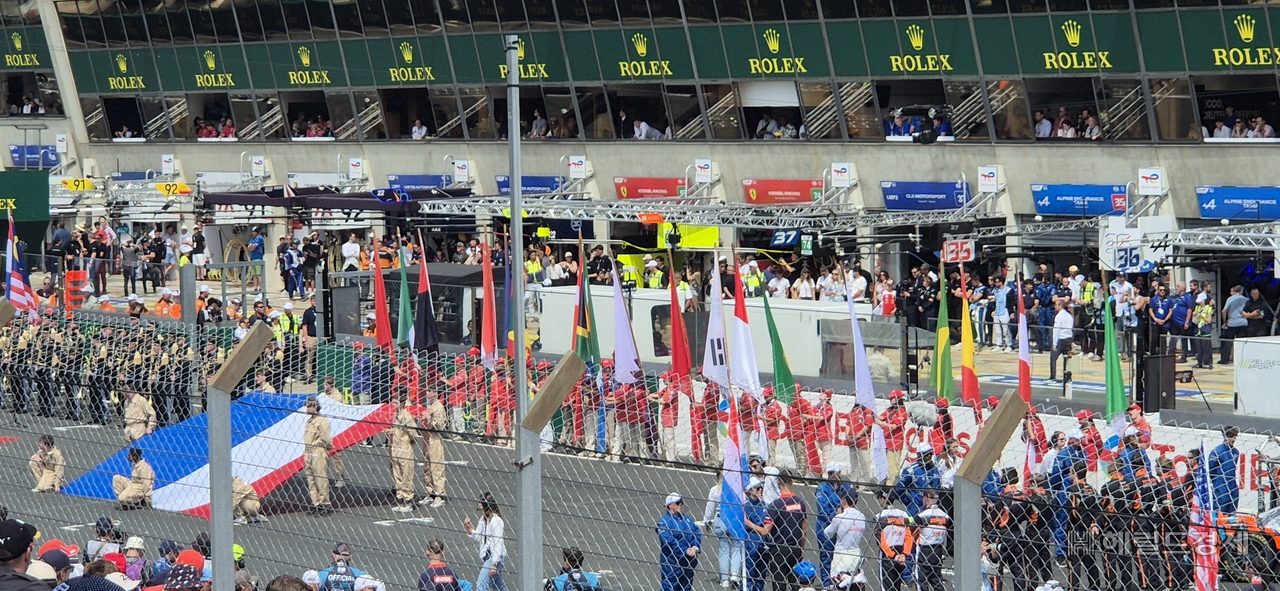
LE MANS, France — At the top of the Circuit de la Sarthe, home to the world's most prestigious endurance race, flags representing the 22 nations of competing manufacturers flew side by side. Among them, for the first time, stood the South Korean flag. On Saturday local time, Genesis — Hyundai Motor Group's luxury brand — became the first Korean manufacturer to enter the Hypercar class of the 24 Hours of Le Mans, marking Korea's presence at the very heart of European motorsport.
![Flags representing the nations of manufacturers competing in the 24 Hours of Le Mans fly at the Circuit de la Sarthe in Le Mans, France, on Saturday local time. The South Korean flag appeared for the first time as Genesis became the first Korean manufacturer to enter the Hypercar class. [Genesis]](https://wimg.heraldcorp.com/news/cms/2026/06/15/news-p.v1.20260615.48f705f038824582a4ae1d58184c84b8_P1.jpg)
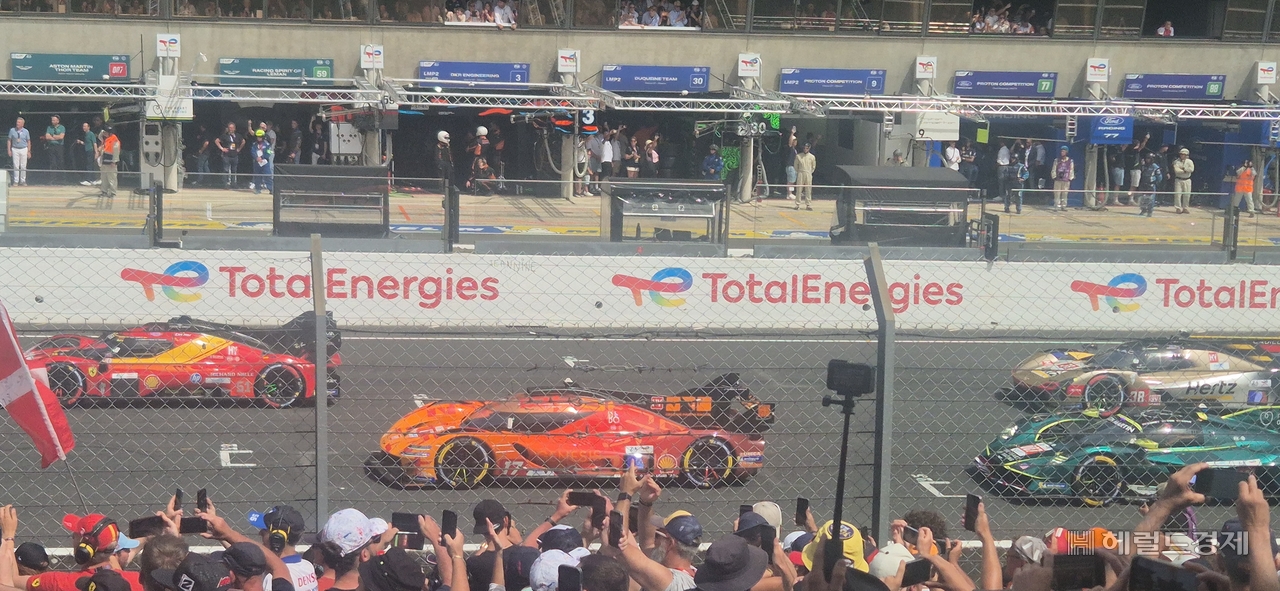
The atmosphere reached a fever pitch just before the 4 p.m. start. As a military band played "La Marseillaise," flag bearers representing each competing nation took their positions in front of the race cars — an iconic scene from the 24 Hours of Le Mans, a contest of automotive prestige and national technological rivalry.
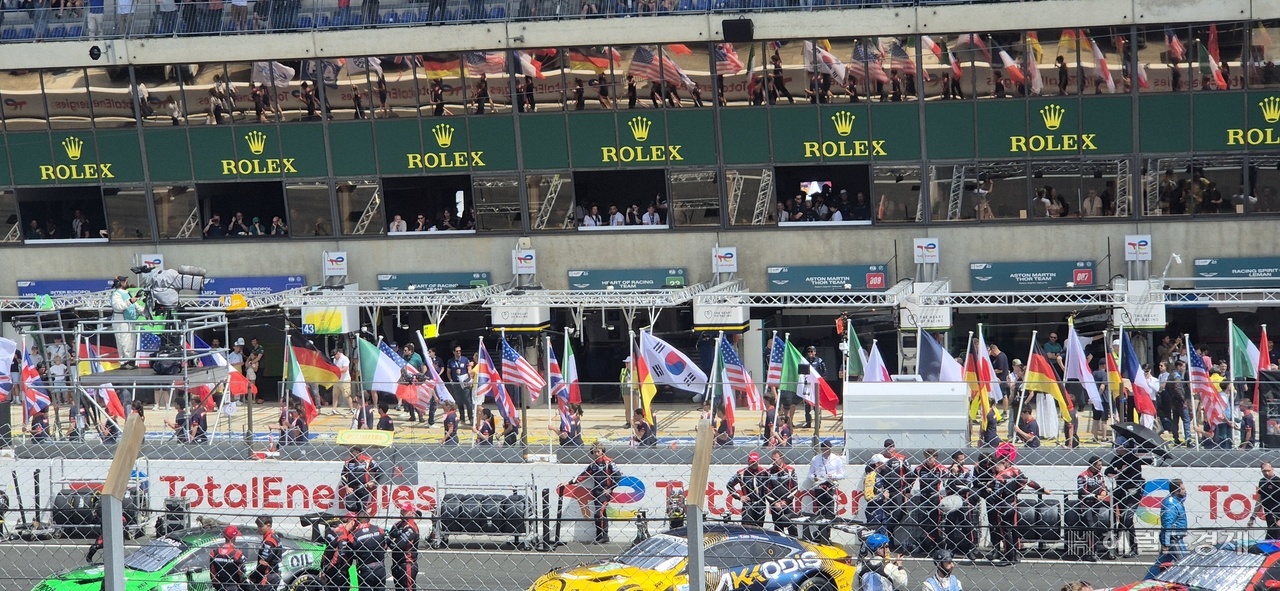
As drivers lined up on the grid, the flags of their nations unfurled beside them. When the South Korean flag took its place in the row, cheers broke out across the grandstands. Genesis's debut was more than a newcomer joining the field — it became a symbolic stage for Hyundai Motor Group to test how its brand registers on the global motorsport scene.
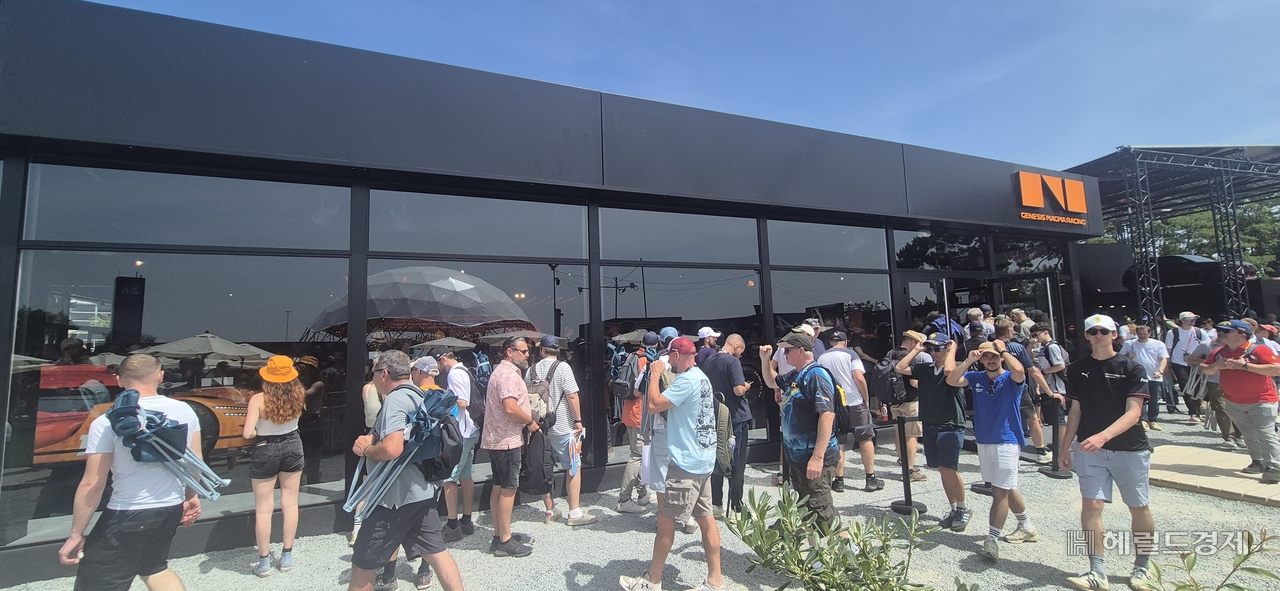
On the ground, the attention directed at Hyundai Motor Group felt markedly different from before. The Genesis Hospitality pavilion inside the Circuit de la Sarthe stood alongside those of McLaren and Aston Martin. Despite being a first-time entrant, Genesis built a three-story structure that held its own against neighboring brands in sheer scale — a clear sign that the company treated Le Mans not merely as a race but as a strategic platform to build brand awareness.
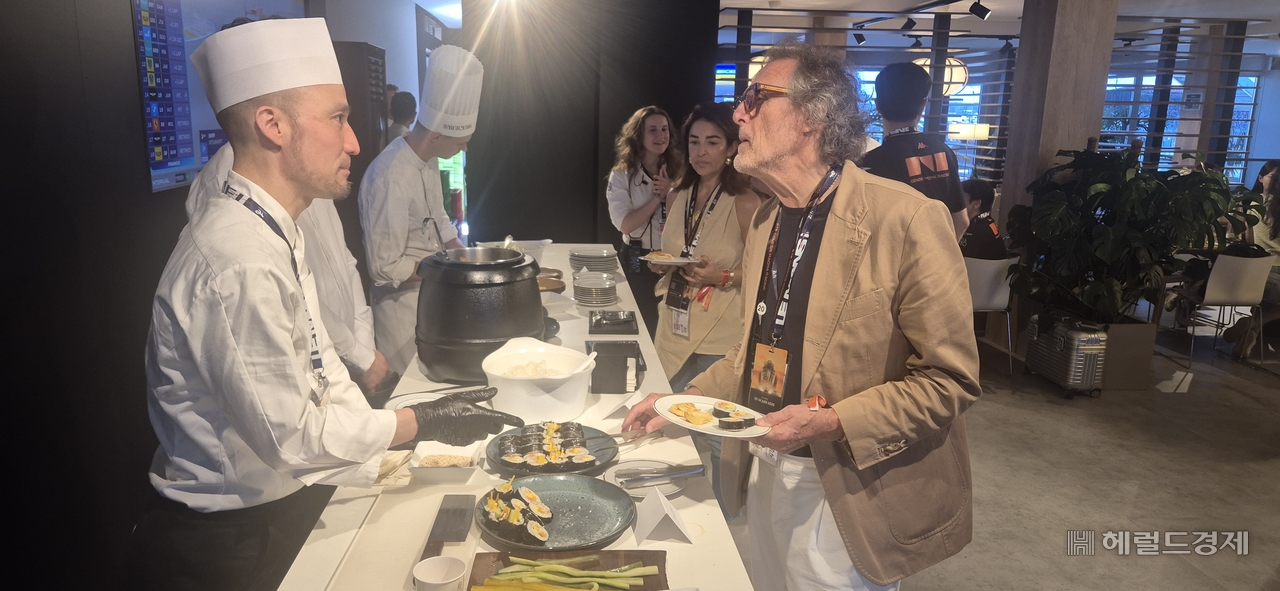
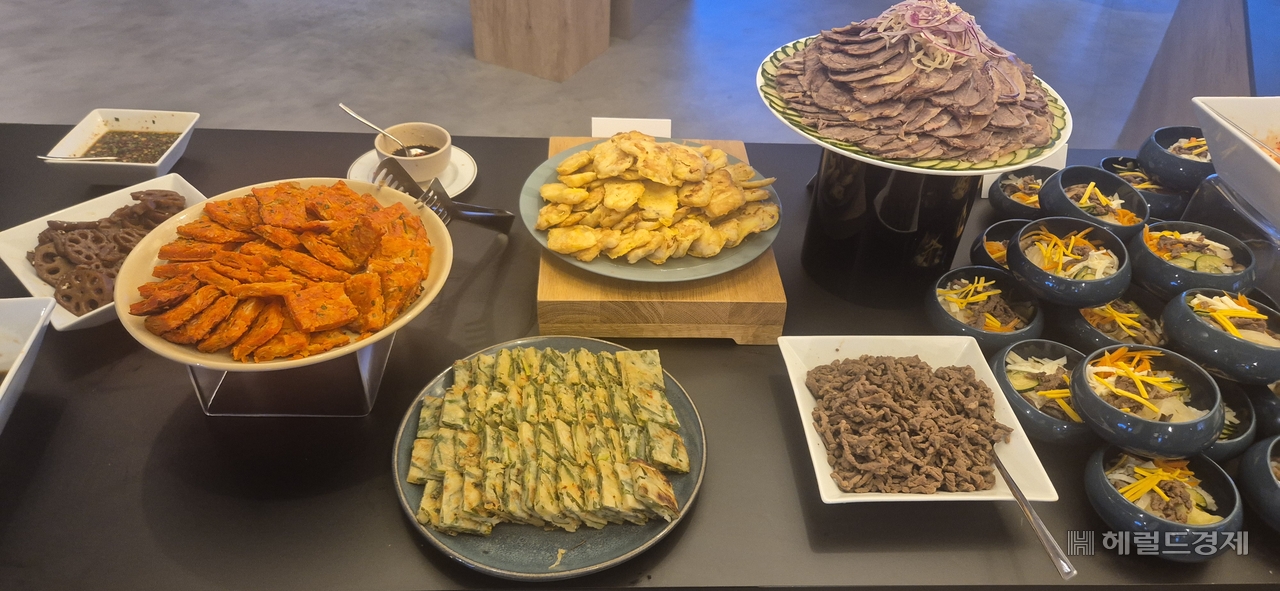
Genesis also served as an ambassador for Korean culture at the festival. The hospitality space offered a spread of hansik — bibimbap, kimbap, kimchi pancakes and yukgaejang — drawing foreign visitors and industry guests alike. Korean chefs were stationed on-site to offer tastings and explain each dish. One visitor pointed at the kimbap, asked what it was, then practiced pronouncing the word several times. Genesis extended its brand experience beyond vehicle displays to embrace Korean hospitality culture.
The brand has formalized that spirit of Korean hospitality under the name "SON-NIM," weaving it into how staff engage with customers. Hyundai Motor President Jose Muñoz said Genesis ensures every customer interaction conveys the feeling of being "a truly important guest." "The response has been strong in the United States and other global markets, and we will expand the approach to Europe and other regions," he said.
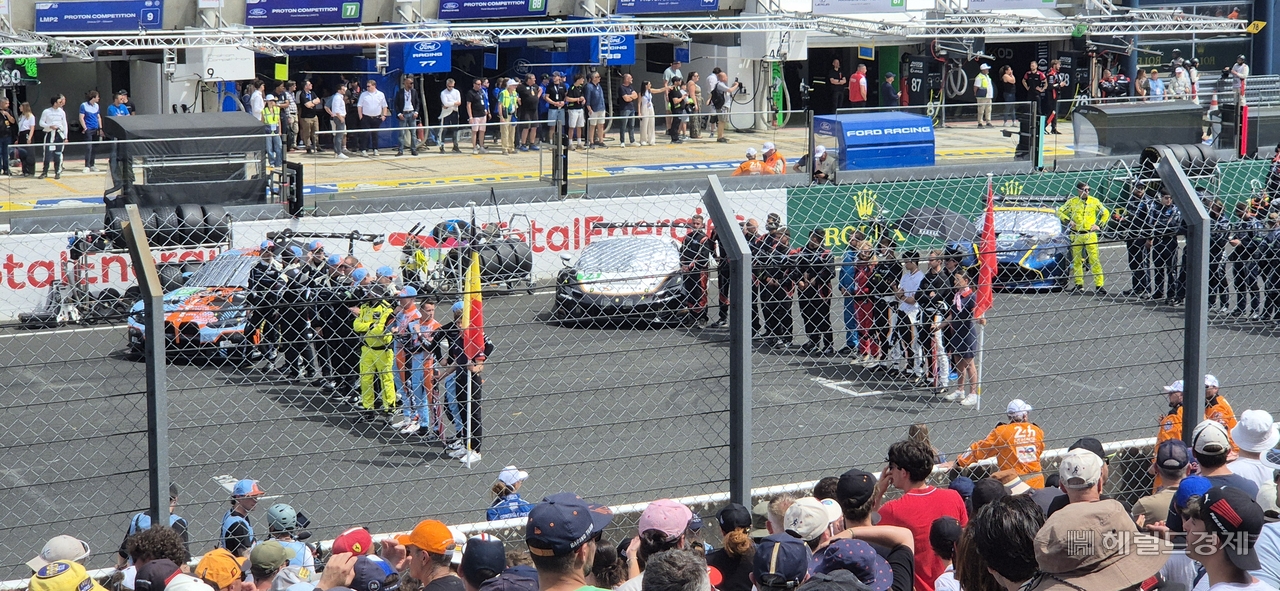
The circuit and its surroundings buzzed with the energy of the world's biggest motorsport festival. This year's 24 Hours of Le Mans drew roughly 300,000 spectators. Visitors moved around on bicycles and electric scooters; some jogged the perimeter of the circuit to get a feel for the course. Fans pitched tents and spent the night trackside. Roads around the venue were packed, and the flow of people never let up. The 24 Hours of Le Mans is not simply a car race — it is a celebration of European automotive culture.
Crowds flock to the Magma Orange — Korea's rising stature on the world stage
The Genesis Village drew its own crowds. Five cars were on display: the G80 Electrified, the GV70 Electrified, the race car, the Magma GT3 Concept and the GV60 Magma.
A merchandise area offered shirts, caps and bags, and visitors could send postcards from the venue. Long lines formed as spectators waited for a close look at the race car and concept cars — a level of interest that belied the brand's status as a first-time entrant.
![Genesis Magma Racing's No. 19 GMR-001 Hypercar races during the 24 Hours of Le Mans at the Circuit de la Sarthe in Le Mans, France, on Saturday local time. [Reuters]](https://wimg.heraldcorp.com/news/cms/2026/06/15/rcv.YNA.20260614.PRU20260614026201009_P1.jpg)
A French automotive industry insider at the circuit said Genesis had "a clear style" and that it "looks like it's acting as Korea's ambassador — beyond the car itself."
"There's pressure that comes with that, but the impression is that they're really trying to get everything right," the person added. "I expected a queue at the Porsche display, but I never thought people would line up like this just to get into Genesis."
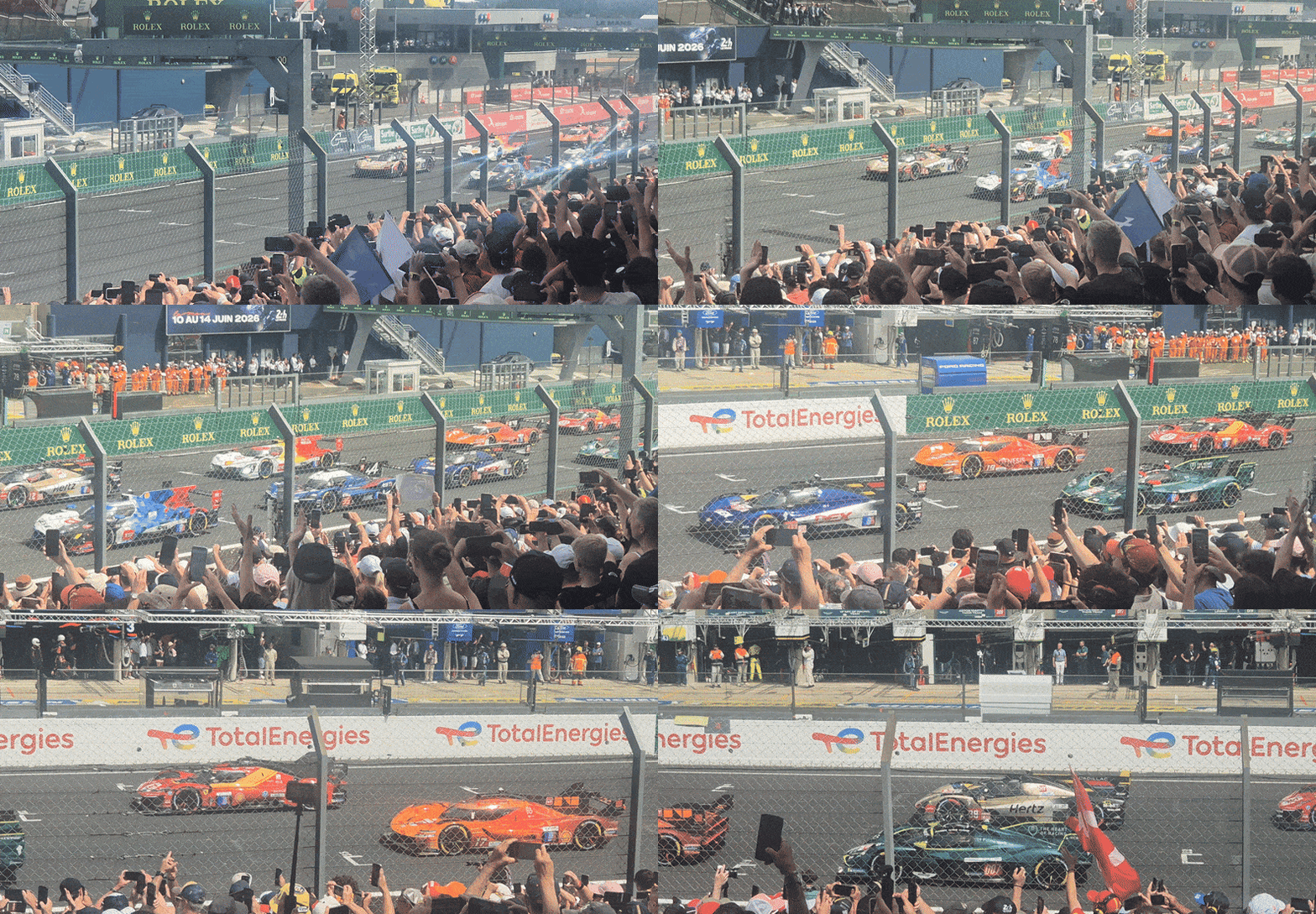
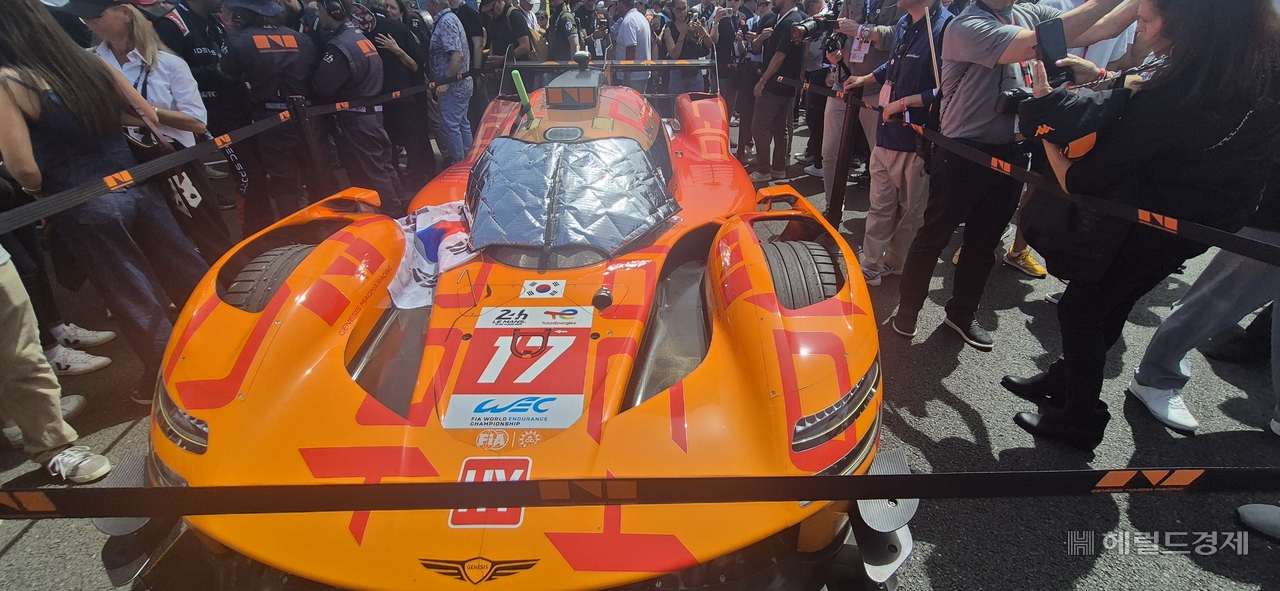
Genesis also drew attention during the pre-race grid walk, which allowed spectators onto the track for a close look at the cars. Amid a lineup of established names — Ferrari, Porsche, Toyota — the vivid Magma Orange GMR-001 attracted its own cluster of onlookers. The curiosity surrounding the first Korean hypercar to appear among familiar European and Japanese brands was palpable on the ground.
![Spectators gather around Genesis Magma Racing's GMR-001 Hypercar during the pre-race grid walk before the 24 Hours of Le Mans at the Circuit de la Sarthe in Le Mans, France, on Saturday local time. [EPA]](https://wimg.heraldcorp.com/news/cms/2026/06/15/rcv.YNA.20260613.PEP20260613149501009_P1.jpg)
An 11-year-old brand enters Le Mans — and the key to success lies in group cohesion
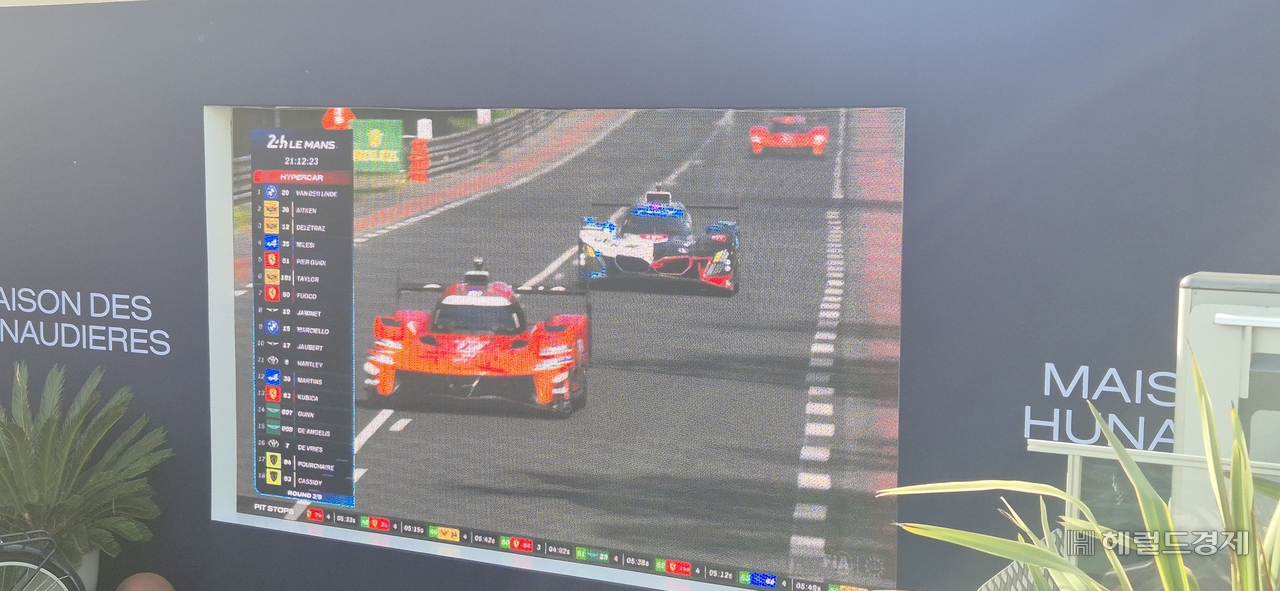
Race commentary also reflected the attention Genesis was receiving. Broadcasters introduced Genesis as "a Korean brand not yet 10 years old," but were quick to add that it "did not start from a blank page" — crediting Hyundai Motor Group's manufacturing base and technological capabilities as the foundation that enabled a rapid ascent to the hypercar stage.
"To build a great car, you need mechanics, engineers, drivers and a way of looking at people," the commentary continued. "They showed their presence in qualifying, but there is still much to learn. Ultimately, the key to success lies in group cohesion and the people involved."
Genesis's Le Mans challenge was ultimately made possible by the accumulated capabilities of Hyundai Motor Group as a whole.
Vehicle development, high-performance technology, an electrification strategy and motorsport operational experience all converged to carry Genesis — founded in 2015 — onto the world's premier endurance racing stage in just 11 years. The entry reads not as Genesis's achievement alone, but as the product of the technological and organizational foundation Hyundai Motor Group has built over time.
Lee Si-hyuk, executive vice president and head of the Genesis Division, said competing at Le Mans — "one of the most prestigious stages in the world" — as the first Korean manufacturer was "a source of great pride for Genesis." "This is not Genesis's achievement alone," he said. "It shows that Korea's standing in global motorsport is rising."
"We are proving here that innovation, performance and cultural identity can come together to create something meaningful," he added.
![[르망 24시] 레이싱판 월드컵…제네시스, 13일 ‘한국 대표’로 첫 도전](https://wimg.heraldcorp.com/news/cms/2026/06/12/news-p.v1.20260612.e0224eba423248ec8c821d3ee6a9a805_T1.jpg)
Genesis made its debut in the Hypercar class of the 24 Hours of Le Mans on Saturday, using the race to put its high-performance Magma brand to the test on the world stage.
kwater@heraldcorp.com