Seoul Metro analyzes last year's ridership data, finding that heavy rain and extreme heat each cut average daily passengers by about 320,000; Sunday ridership falls hardest, dropping 8.4% on rainy days
Kim, a 47-year-old homemaker in Songpa-gu, Seoul, had planned a weekend outing with her elementary school-age son but called it off. The event she had hoped to attend — a reading-related program — was scheduled outdoors between 1 and 3 p.m., when temperatures were forecast to exceed 30 degrees Celsius. She took her son to an indoor shopping mall near their home instead.
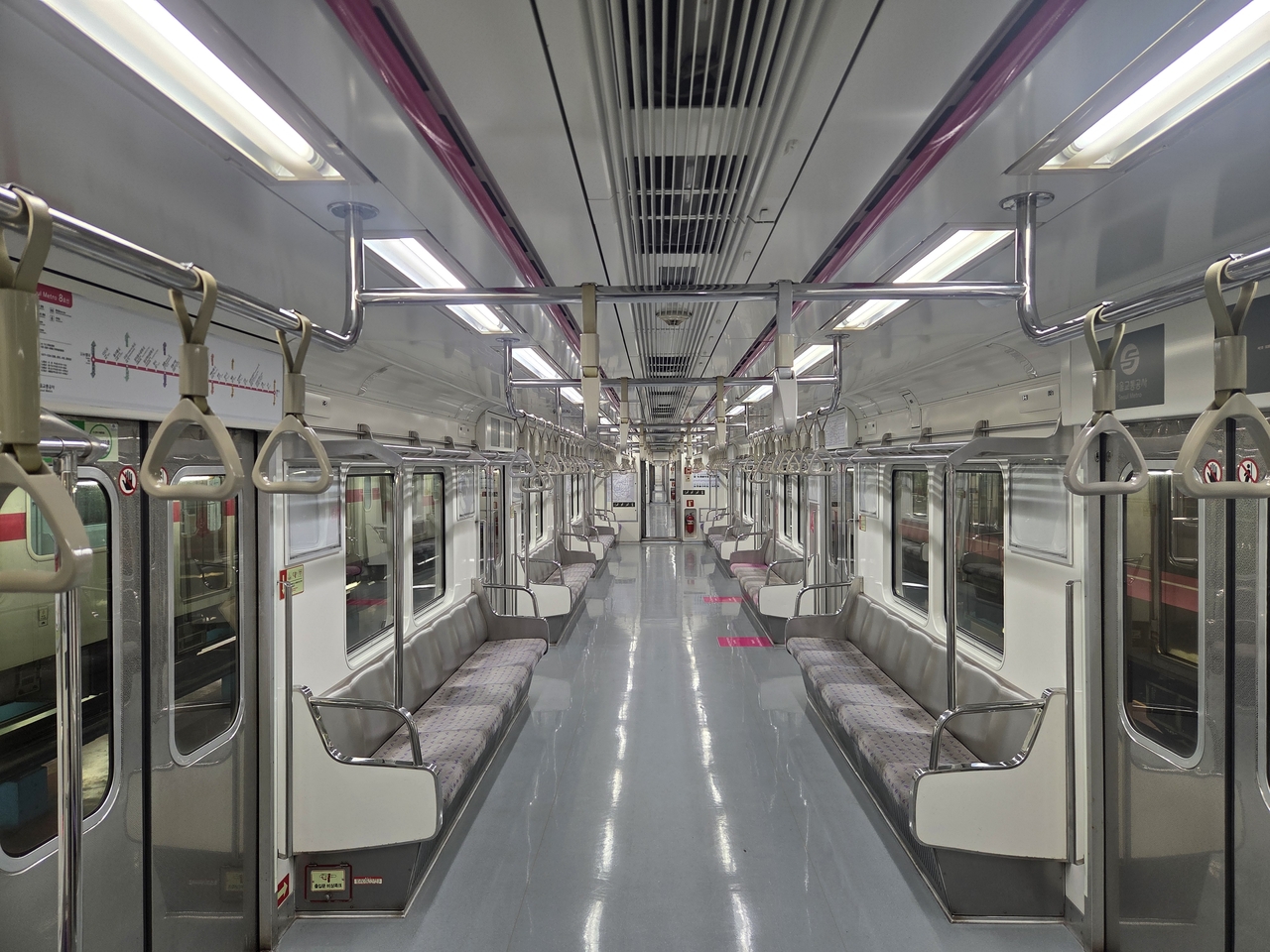
Her experience reflects a broader pattern: Seoul residents actually ride the subway less, not more, on rainy or sweltering days.
Seoul Metro released an analysis of subway ridership data Monday showing that on days last year when rainfall reached 10 millimeters or more, average daily ridership stood at 8.84 million — about 320,000 fewer than the normal-day average of 9.16 million, a drop of roughly 3.5 percent. Extreme heat produced a nearly identical effect: on days from June through September when the daily high hit 33 degrees or above, average ridership fell to 8.70 million, compared with 9.02 million on other days — again a decline of about 320,000.
Weekend ridership showed an even sharper drop. On rainy weekends with rainfall of 10 millimeters or more, average ridership fell from 6.61 million to 6.24 million, a decrease of about 370,000 passengers, or 5.6 percent below the normal weekend average. On weekends when the high reached 33 degrees or above, ridership slipped from 6.43 million to 6.08 million — roughly 350,000 fewer riders, a 5.4 percent decline.
Breaking the figures down by day of the week, Sunday saw the steepest drop on heavy-rain days, with ridership falling 8.4 percent below normal, followed by Wednesday at 6.0 percent. On extreme-heat days, Saturday recorded the largest decline at 7.2 percent, while Monday and Tuesday fell 5.0 percent and 4.5 percent, respectively.
Seoul Metro attributed the pattern to the nature of weekend travel. Because weekday trips are dominated by commuting, ridership holds relatively steady regardless of weather; weekend trips, which are more likely to involve leisure and outdoor activities, are far more sensitive to adverse conditions.
The analysis drew on full-year ridership data from last year. Heavy rain was defined as days with total precipitation of 10 millimeters or more, while extreme heat was defined as days from June through September on which the daily maximum temperature reached 33 degrees or above.
"The data show that weather conditions have a considerable influence on how residents move around the city," said Ma Hae-geun, head of Seoul Metro's operations division. "We will continue to use a wide range of data to analyze travel patterns and improve the transportation services we provide."
ikson@heraldcorp.com