The district will screen ordinances, projects and public spaces for children's rights before implementation, adding a child accessibility indicator to UN Convention on the Rights of the Child principles — and bolstering its bid for UNICEF Child-Friendly City re-certification at a higher tier.
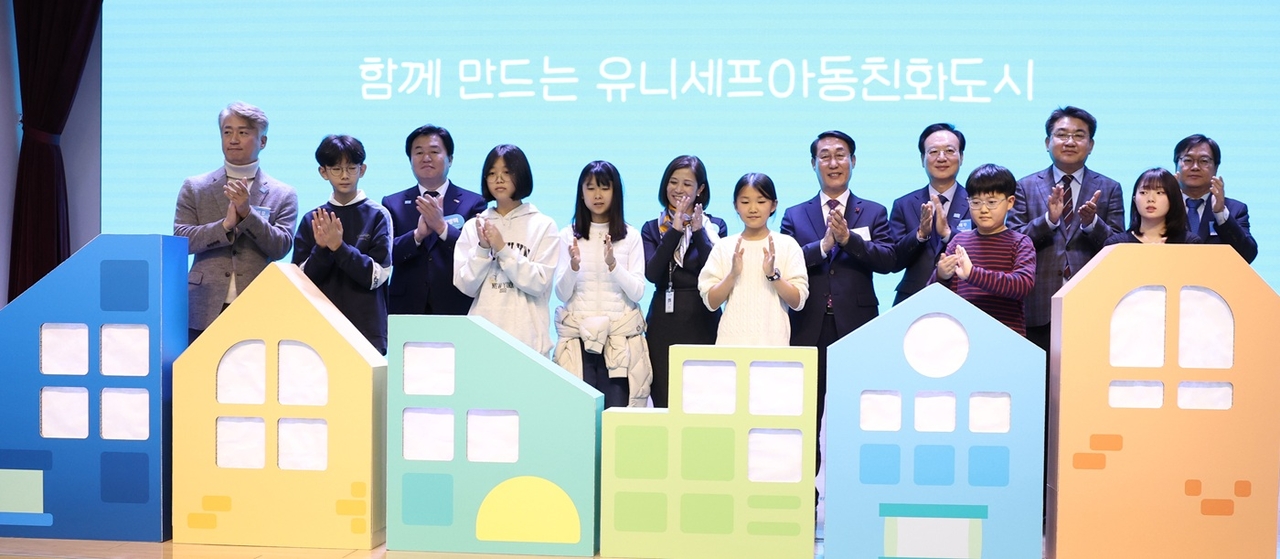
Seoul's Nowon-gu has introduced a "Nowon-gu Child Impact Assessment" system to proactively review how child-related laws, key policies and projects affect children's rights, the district announced.
The child impact assessment is a system designed to examine in advance how policies and projects affect children, ensuring their rights are neither violated nor overlooked. It is significant as a form of "preventive administration" — embedding children's rights from the planning stage rather than addressing problems only after a policy has been implemented.
The district expects the new system to support its push this year for re-certification at a higher tier of the UNICEF Child-Friendly City designation. The framework provides a more systematic basis for meeting certification requirements, including building a child-friendly legal structure and establishing child-friendly spatial plans.
The assessment covers the enactment and revision of child-related ordinances and regulations, the creation of child-friendly spaces, and key child-related projects. Relevant departments will use a child impact assessment form from the project planning stage to review initiatives from a children's rights perspective and incorporate any necessary improvements.
The assessment criteria are organized around the four core principles of the UN Convention on the Rights of the Child — non-discrimination, the best interests of the child, survival and development, and respect for children's views — as well as the convention's four fundamental rights: the right to survival, the right to development, the right to protection and the right to participation.
Nowon-gu set its framework apart by adding a self-developed "child accessibility" indicator to the existing children's rights criteria. The indicator evaluates practical access conditions — including facility location, information and signage systems, and operating hours — to verify whether policies and facilities are genuinely usable from a child's perspective. The move translates abstract concepts of children's rights into concrete, actionable indicators applicable in the field.
The assessment criteria were developed through expert consultation with the district's "Children's Rights Ombudsperson." Experts described the system as "an institutional mechanism that allows children's rights to be systematically reviewed before a policy is implemented." The assessment has been piloted on relevant projects since May.
As a UNICEF Child-Friendly City certified at a higher tier, Nowon-gu has been advancing a range of policies to promote children's rights. Last year, it was the only autonomous district in Seoul selected as an outstanding local government in the Ministry of Health and Welfare's 2025 Child Abuse Public Response System Operation Evaluation. The district also operates a number of pioneering child-friendly initiatives — the I-Hyu Center, an after-school care facility providing comprehensive care services; the nation's first Nowon-type Sick Child Care Center; and the "I'm an Architect" project, in which children participate directly in designing public spaces.
"The introduction of the child impact assessment has laid the groundwork for examining policies and projects as a whole from a child's perspective," district mayor Oh Seung-rok said. "I hope Nowon will continue to grow into a child-friendly city where children's rights are naturally reflected across all areas of administration."
seouldream01@heraldcorp.com