At forum on shifting to comprehensive income tax system, experts call for redefining income as net wealth increase rather than by source
![Taxation of asset income. [Created using ChatGPT]](https://wimg.heraldcorp.com/news/cms/2026/06/23/news-p.v1.20260623.4f940e616bf944f9acfa937c3de429d1_P1.png)
Unrealized gains from investments in real estate and shares should be treated as income and subject to comprehensive taxation, participants at a policy forum argued Tuesday. The proposal calls for taxing increases in net wealth based on economic capacity rather than income source, in order to close gaps in the tax base and address equity concerns.
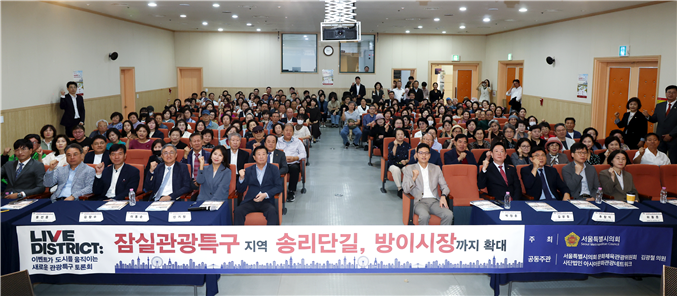
The forum was held Tuesday morning at the National Assembly Members' Office Building in Yeouido. It was organized by Democratic Party of Korea lawmaker Kim Young-hwan, Progressive Party lawmaker Yun Jong-o, Rebuilding Korea Party lawmaker Cha Gyu-geun, Social Democratic Party lawmaker Han Chang-min, and civic groups including People's Solidarity for Participatory Democracy, the Korean Confederation of Trade Unions and the Federation of Korean Trade Unions. The event focused on gaps in asset income taxation and the possibility of shifting to a comprehensive income tax system.
Kim Hyeon-dong, a professor in the department of business administration at Pai Chai University, presented a paper on reorienting the concept of income in the income tax law from a source-based theory to a net wealth increase theory. "The source-based theory of income primarily adopts an enumeration approach, which means it cannot cover all income as taxable," Kim said. "This reveals limitations in terms of fairness and tax neutrality while creating gaps in taxing new types of income."
He went on to say that "the net wealth increase theory is theoretically superior because it typically adopts a comprehensive approach, aligns with the principle of equity, and can maintain tax neutrality."
However, he cautioned that sufficient review is needed, as constitutional debates may recur over violations of the principle of statutory taxation and the prohibition on blanket delegation of legislative authority.
The argument is that taxation should be based on the actual increase in net wealth and economic capacity, regardless of whether or in what form an asset has been sold.
In the discussion that followed, Lee Sang-min, a senior research fellow at the Narasallim Research Institute, said the distinction between unrealized and realized income is not a fundamental criterion for determining whether income exists. "The core issue is not whether income has been realized, but when and how it should be taxed," Lee said. He argued that taxing only at the point of realization gives taxpayers an incentive to hold onto assets to avoid or defer taxes — a "lock-in effect" that prevents capital from moving to more productive uses. Lee proposed recognizing unrealized gains as income in principle, while allowing tax payment to be deferred until the point of sale or carried forward with interest.
Park Gi-san, a director at the Federation of Korean Trade Unions, said capital income is taxed relatively leniently compared with labor income. "The source-based income theory has failed to capture new forms of labor, industrial transitions and capital income, creating gaps and deepening income inequality," Park said.
Park called for strongly incorporating the net wealth increase perspective into the income tax law to impose strict taxation on capital and asset income, saying the current unequal taxation system must be reformed. He also proposed reviving the financial investment income tax, scaling back tax exemptions and deductions concentrated among high earners, and adding new nominal tax brackets to raise the effective tax rate on the ultra-wealthy.
jshan@heraldcorp.com