World's No. 3 oligo CDMO with supply references for 5 commercialized drugs; proactively building manufacturing capacity for AOC, in vivo CAR-T and gene editing; 4 contracts signed from roughly 20 projects redirected from China amid US Biosecure Act
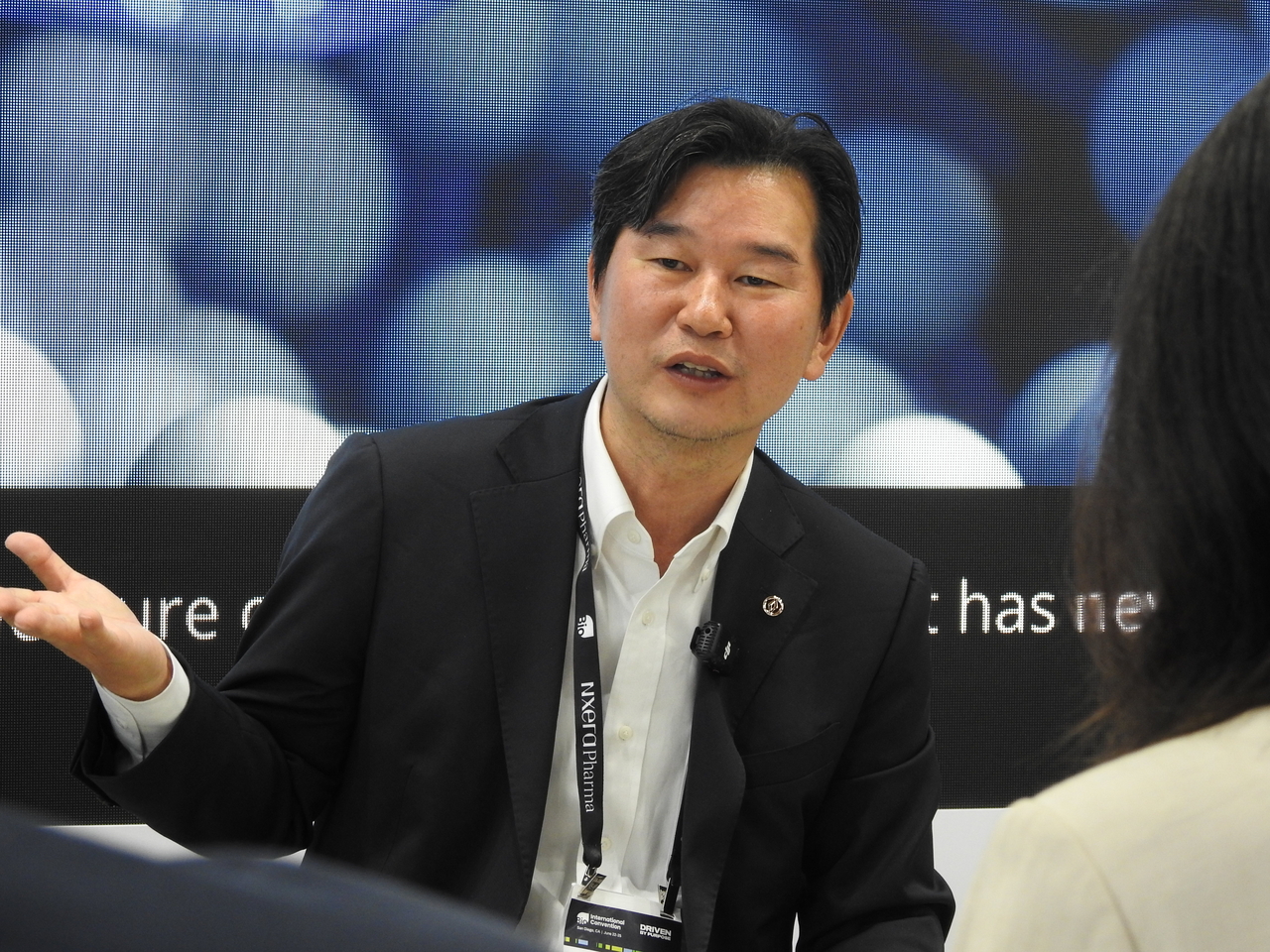
ST Pharm has declared its ambition to become a fully integrated RNA contract development and manufacturing organization (CDMO), positioning itself to serve every major next-generation RNA therapeutic modality as the global RNA treatment market rapidly expands into chronic diseases, oncology and CRISPR gene editing.
The company showcased its capabilities at the 2026 BIO International Convention (BIO USA) at the San Diego Convention Center, presenting its end-to-end RNA CDMO platform to global pharmaceutical and biotech companies. ST Pharm aims to demonstrate on the world stage not just raw material production but a full suite of proprietary technologies — including high-purity RNA synthesis, quality control, analytical method development, 5' capping, lipid nanoparticle (LNP) formulation and guide RNA (gRNA) manufacturing.
ST Pharm holds the No. 3 position globally in the oligonucleotide (nucleic acid therapeutics) CDMO segment. Choi Seok-woo, executive vice president and head of the company's business division, told reporters Tuesday (local time) that of the roughly 16 commercialized oligo-based drugs currently being manufactured by CDMOs, ST Pharm supplies five. A total of 27 oligo-based drugs have received regulatory approval to date, with the number of approvals surging over the past five to seven years.
ST Pharm is expanding its business portfolio from oligonucleotides into mRNA and LNP formulation — the messenger RNA and lipid nanoparticle drug-delivery technology — as well as gRNA. Choi said the two areas the company is primarily promoting at the convention are oligonucleotides and the scalability of its mRNA-LNP platform, which gained wide recognition during the COVID-19 vaccine rollout. The company has developed its own 5' capping technology, SmartCap, and its proprietary LNP formulation technology, STLNP.
Among next-generation therapeutic modalities, ST Pharm is paying particular attention to antibody-oligonucleotide conjugates (AOC). Choi said AOC is drawing strong interest as a solution to difficult drug-delivery challenges such as crossing the blood-brain barrier, and that Denali Therapeutics' breakthrough last month is expected to open the floodgates for further advances. "Even when an antibody delivers a drug to a specific tissue or cell, the core therapeutic payload doing the actual work is the oligonucleotide," he said. "That makes high-purity oligo payload production, impurity management, and quality design and analytical capabilities suited for conjugation increasingly important — and we have already started relevant projects."
In gene editing, ST Pharm has built manufacturing capabilities for gRNA and mRNA encoding editing enzymes needed for CRISPR-Cas-based therapeutics. The company is also responding to growing demand in the in vivo CAR-T space, where directly reprogramming immune cells inside the body is emerging as the dominant approach over conventional ex vivo methods. On the production capacity front, Choi said the company invested more than 100 billion won ($65.1 million) last year to add three new oligonucleotide production lines, and plans to add two larger lines within the next two years. Once construction begins on the additional expansion, completion is expected to take roughly 24 to 30 months.
Benefits from the US Biosecure Act are also materializing. Choi said the company has been receiving a clear uptick in inquiries from major US-based pharmaceutical companies and biotechs related to the legislation. "Programs that initially went to China for lower costs or faster production are now shifting over," he said, adding that of roughly 20 projects the company has been approached about, four have already resulted in signed contracts.
Commercial revenue from mRNA CDMO work, however, is not expected to materialize quickly. Choi said orders are continuing to come in but are not large enough to stand out. "Getting mRNA to the commercial stage takes a long time," he said. "We are preparing along three tracks: pandemic vaccine readiness for a potential future outbreak, vaccines for other viruses, and personalized therapeutics that can be manufactured within 48 to 60 days."
Choi also addressed the company's use of AI, saying it is being applied in two ways: optimizing manufacturing processes to maximize efficiency, and assisting customers with sequence design and chemical modification optimization. "That is also an area where we can build a competitive edge," he said, noting that the company's collaboration with Mogam Institute for Biomedical Research is part of that effort.
"The global RNA therapeutics market is expanding rapidly beyond vaccines into diverse modalities including AOC, CRISPR gene editing, cancer vaccines and in vivo CAR-T," Choi said. "At this BIO USA, we intend to actively communicate ST Pharm's one-stop RNA CDMO competitiveness to global customers and expand meaningful partnership opportunities." During the convention, ST Pharm is holding one-on-one partnering meetings with North American and global RNA therapeutics developers to identify new business opportunities.
silverpaper@heraldcorp.com