WTI hits post-war low; jet fuel falls to 270 cents per gallon
Third-quarter earnings improvement expected as fuel surcharges drop
'Travel demand suppressed by high fuel costs set to recover'
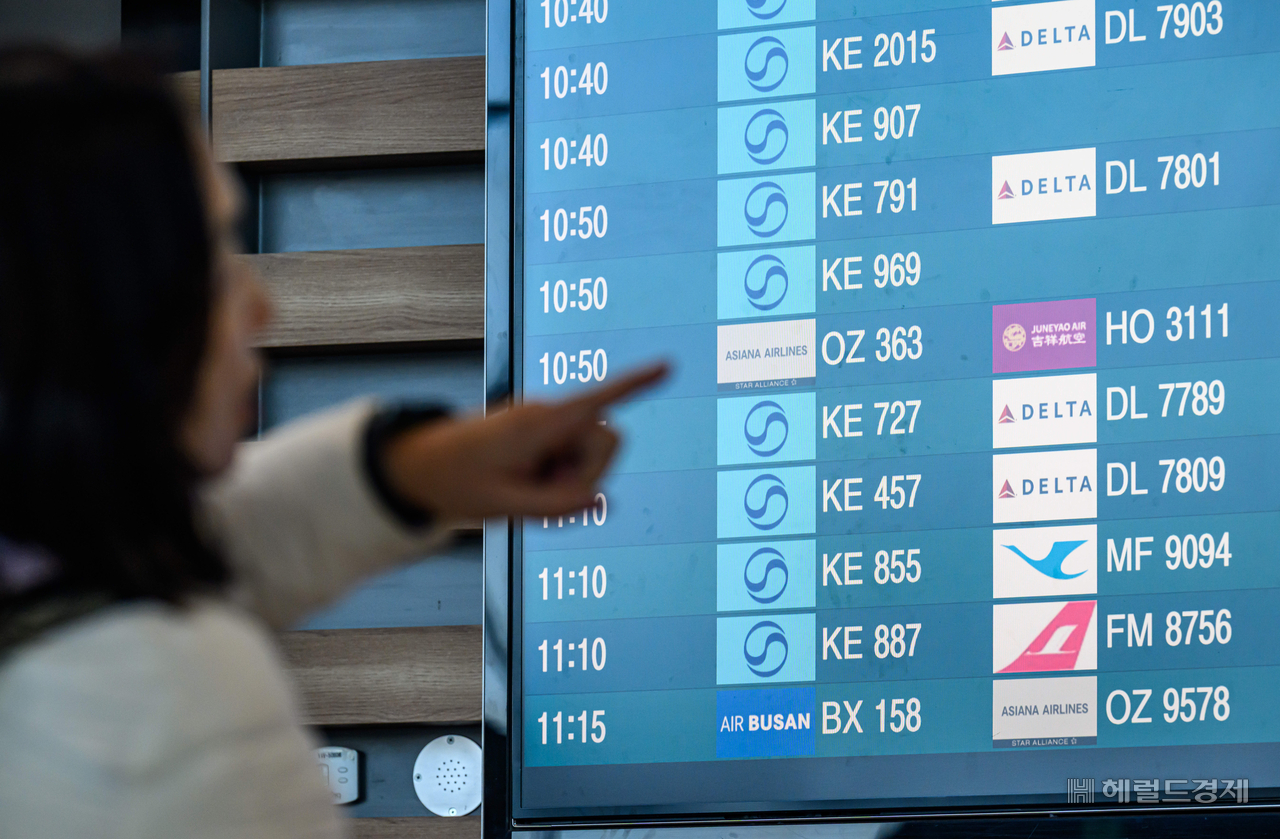
International crude oil and jet fuel prices, which had surged in the wake of the Middle East war, are now falling ahead of the summer travel season — giving airlines a much-needed reprieve. Carriers that had been grappling with squeezed margins due to high fuel costs and a weak won now expect a combination of peak-season demand and stabilizing oil prices to drive an earnings recovery in the third quarter.
West Texas Intermediate crude for August delivery settled at $73.21 per barrel on Tuesday, down 65 cents (0.88 percent) from the previous session, according to the New York Mercantile Exchange. That is the lowest closing price since March 2 — the first trading day after the outbreak of the war with Iran — when WTI closed at $71.23.
As crude prices continue to fall, jet fuel costs, which directly affect airline profitability, are also declining sharply. The average Singapore jet fuel price (MOPS) has recently dropped to around 270 cents per gallon, according to the industry — roughly half the level of more than 510 cents per gallon recorded after the war broke out.
![An oil tanker is anchored near the Strait of Hormuz, close to Kharg Island, Iran's main oil export terminal. [Getty Images]](https://wimg.heraldcorp.com/news/cms/2026/06/24/news-p.v1.20260624.d30bd23dc50f47678f6018b9f3141e0b_P1.jpg)
Airlines expect stabilizing fuel prices to directly improve their bottom lines, given that fuel costs account for an outsized share of operating expenses. Korean Air's jet fuel purchases last year totaled $2.92 billion (about 4.48 trillion won), far exceeding its standalone operating profit of 1.54 trillion won (about $1 billion) for the same period.
Passengers can also expect lower costs ahead of the peak travel season, as fuel surcharges levied on top of base fares are likely to be reduced in stages. Fuel surcharges apply when jet fuel prices exceed a certain threshold and are adjusted across up to 33 tiers depending on the price level.
Korean Air's fuel surcharge reached tier 33 in May, pushing the round-trip surcharge on international flights departing from Incheon to as high as 1,128,000 won. In July, it dropped to tier 19, bringing the round-trip surcharge down to around 688,000 won. The industry anticipates a further reduction in August — if prices hold at around 270 cents per gallon, the surcharge could fall to tier 13.
"Demand for summer travel tickets typically builds consistently months in advance, but this year it appeared somewhat subdued due to high fuel costs and a weak exchange rate," an airline industry official said. "With peak-season bookings picking up from July and fuel cost pressures easing, we are expecting an improvement in third-quarter earnings."
![A Korean Air passenger jet takes off. [Korean Air]](https://wimg.heraldcorp.com/news/cms/2026/06/24/news-p.v1.20260518.397595bd8f9d4f08be4a9b6aab023685_P1.jpg)
Second-quarter results, however, are expected to be weak, as carriers bore the full brunt of the oil price spike during that period. According to financial data provider FnGuide, Korean Air is forecast to post an operating loss of 184.3 billion won, while Asiana Airlines is expected to record an operating loss of 349 billion won. Jeju Air is projected to log a 54 billion won operating loss, Jin Air 70.3 billion won, and Trinity Airways (formerly T'way Air) 120 billion won.
"Jet fuel prices are expected to continue declining gradually as peace talks progress," said An Do-hyeon, an analyst at Hana Securities. "In the third quarter, sales from tickets issued after the war began will start flowing through in earnest, and that should translate into a meaningful earnings recovery."
eyre@heraldcorp.com