2,700–2,900 elementary and 4,700–5,100 secondary teachers to be hired next year; plan reflects demand from high school credit system and AI education despite enrollment decline
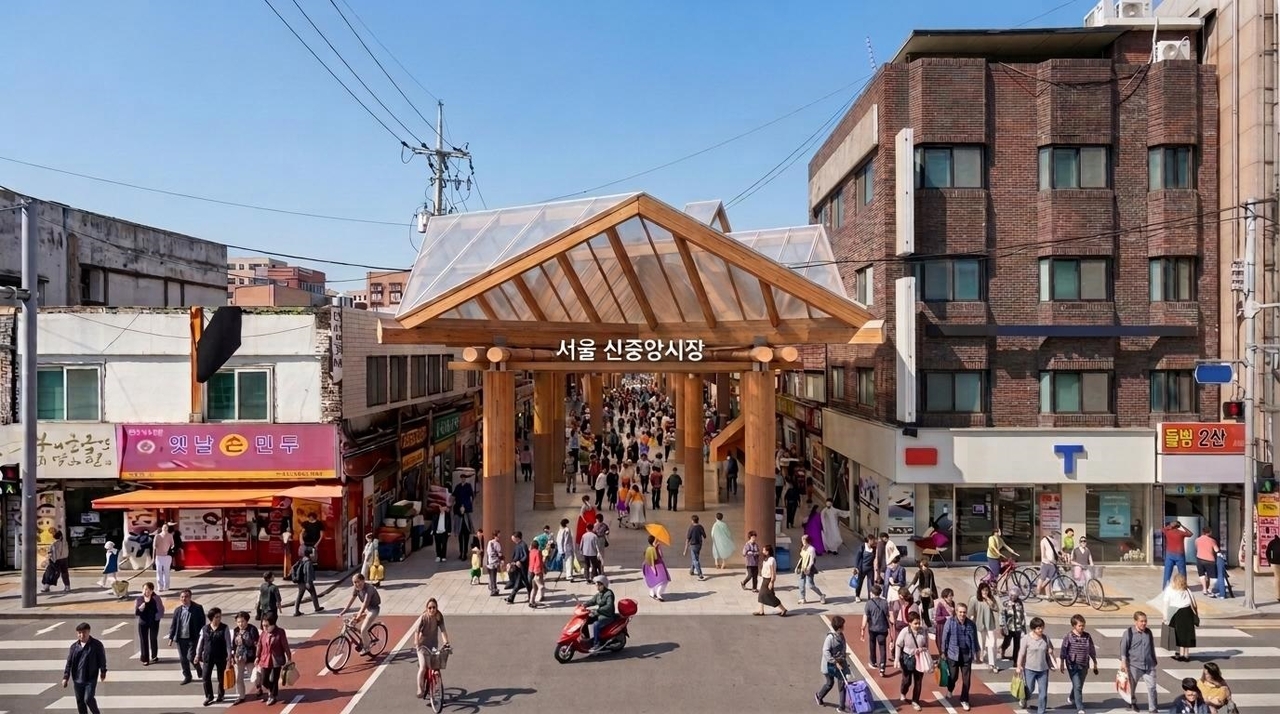
![The Ministry of Education has released a medium- to long-term teacher supply plan calling for the hiring of 2,700–2,900 elementary school teachers and 4,700–5,100 secondary school teachers annually over the next four years, even as the school-age population is projected to fall by about 900,000 by 2030. [Provided by the Ministry of Education / Created with ChatGPT]](https://wimg.heraldcorp.com/news/cms/2026/06/25/news-p.v1.20260625.aac21807e4fc410c904bc07782f9e138_P1.png)
By Kim Yong-jae, The Herald Business
South Korea's Ministry of Education has unveiled a medium- to long-term teacher supply plan calling for 2,700–2,900 elementary school teachers and 4,700–5,100 secondary school teachers to be hired annually over the next four years, even as the school-age population is projected to shrink by about 900,000 by 2030.
The ministry announced the plan — covering the 2027–2030 period — on Thursday. Public elementary and secondary school enrollment is expected to fall from about 4.22 million in 2025 to about 3.32 million in 2030, a decline of roughly 900,000, or 21 percent, over five years. Elementary enrollment is projected to drop more than 30 percent, from about 2.299 million to about 1.601 million, while middle and high school enrollment is forecast to fall from about 1.921 million to about 1.716 million over the same period.
Reflecting the enrollment decline, the ministry set target staffing levels for 2030 at 2,500–2,800 teachers for elementary schools and 3,300–3,700 for secondary schools. However, the plan also calls for securing additional teachers to meet policy demands — including the rollout of the high school credit system, efforts to guarantee foundational academic skills, and the push to develop AI talent.
Notably, the planned secondary teacher hiring figure for 2027 is larger than previously announced. The ministry's earlier 2024–2027 supply plan had set the 2027 secondary hiring target at 3,500–4,000; the new plan raises that to 4,700–5,100.
The projected decline in hiring after 2027 reflects not so much a reduction in authorized teacher positions as a shift in actual workforce conditions — particularly a sharp drop in early retirements. The number of secondary school teachers taking early retirement stood at 3,604 in 2022, 3,686 in 2023 and 4,043 in 2024, but the figure expected for 2026 has fallen sharply to 1,704.
The plan also incorporates regional education conditions into teacher allocation criteria. The ministry said it would ensure that small schools in areas experiencing population decline receive adequate staffing to run their curricula, while schools in population-growth areas such as new towns would receive additional teachers to support new school openings and ease overcrowded classrooms.
The ministry also said it would continue to secure secondary teachers for the high school credit system, specialists in foundational academic skills, and information-technology teachers to support the expansion of AI and digital education.
Controversy over the scale of teacher training is expected to continue. Education colleges and their supporters have called for maintaining new teacher hiring in line with falling class sizes, but the ministry has said it is not straightforward to link enrollment declines directly to class size.
The National Association of Education University Students argued last month that the teacher quota should be expanded from an educational — not an economic — standpoint, citing a growing number of students with diverse needs, including those with immigrant backgrounds, emotional and behavioral challenges, and special education requirements.
The ministry pushed back, saying it is not realistic to calculate teacher staffing based on class size alone. "The student-to-teacher ratio can be projected over the medium to long term, but class size involves too many variables — such as new school construction and how classes are organized — to forecast reliably," a ministry official said. "We hope people will recognize that we are maintaining new hiring at a meaningful level even as student numbers fall."
brunch@heraldcorp.com