World's third-largest memory chip maker reports fiscal Q3 2026 earnings
'HBM4 yield reaching maturity stage faster than HBM3E'
Supply shortage seen persisting beyond 2027
Taiwan new factory shipment timeline moved up to mid-next year
Following Samsung Electronics, US chipmaker Micron has announced that its sixth-generation high-bandwidth memory — HBM4 — surpassed $1 billion in sales, just four months after the company officially confirmed HBM4 shipments in February.
Micron, the world's third-largest memory chip manufacturer, said its HBM4 12-layer mass production is now proceeding twice as fast as the previous-generation HBM3E 12-layer, signaling that its HBM4 business has hit its stride.
Samsung Electronics has projected cumulative HBM4 sales of $10 billion by year-end. Micron also expressed strong confidence in its HBM roadmap, outlining plans to lift its HBM market share into the 20 percent range by year-end and rapidly close the gap with Samsung Electronics and SK Hynix.
Micron CEO Sanjay Mehrotra made the announcement Wednesday during a conference call for the company's fiscal third-quarter 2026 earnings. "We have shipped more than $1 billion of HBM4. We are very pleased with this," he said.
He added that yields on the HBM4 12-layer product — the share of defect-free chips passing quality checks — are expected to reach maturity far faster than those of the HBM3E 12-layer. The remarks suggested that Micron's production process is stabilizing quickly, bringing the company closer to reducing defect rates and securing meaningful profitability from HBM4.
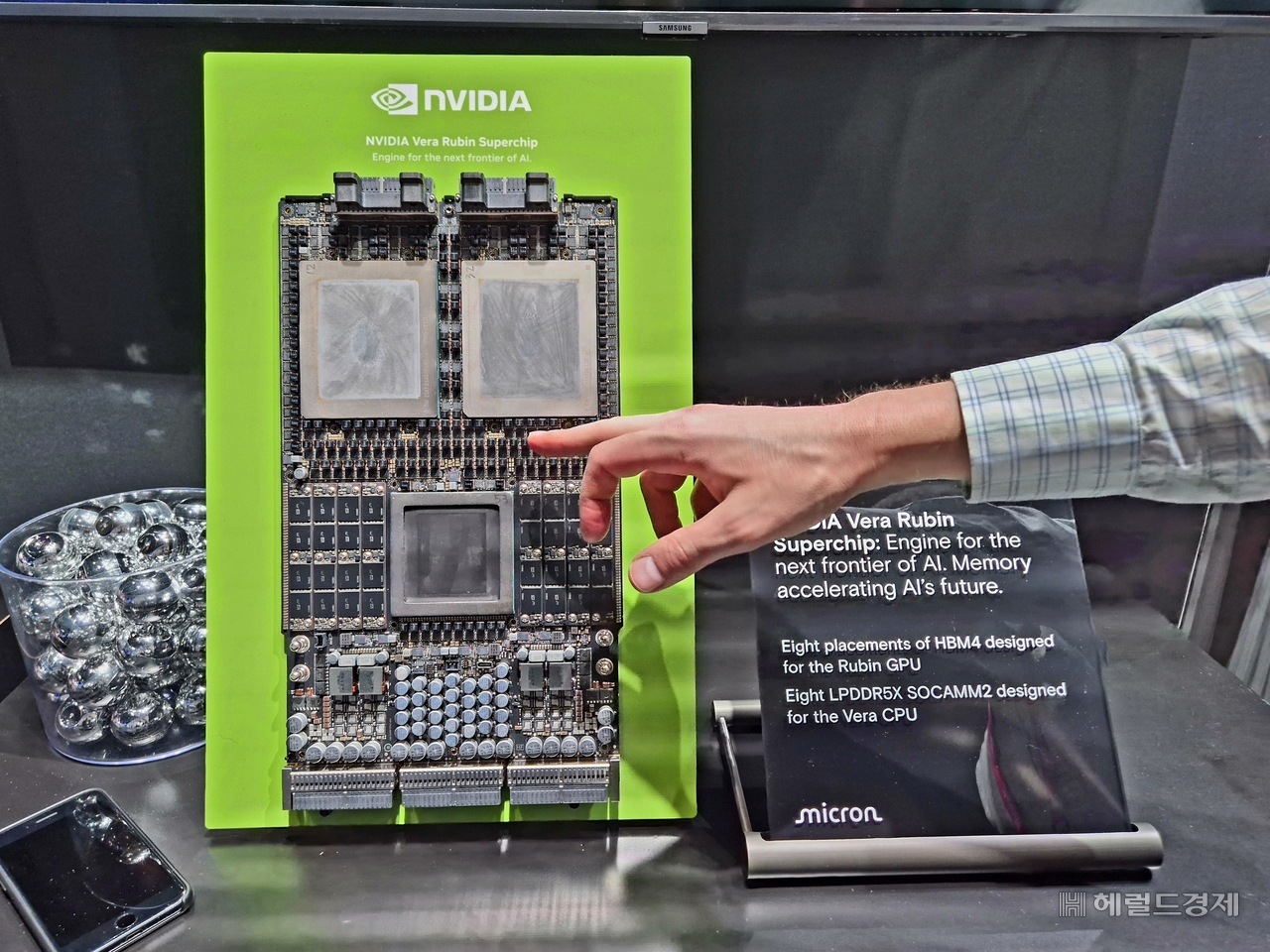
HBM4 is set to be integrated into Nvidia's next-generation AI superchip, Vera Rubin. Nvidia CEO Jensen Huang, on the first day of his visit to South Korea on June 5, said of Samsung Electronics, SK Hynix and Micron: "All three are qualified and producing. They are all racing to supply us."
When asked about Micron's HBM market share for fiscal 2026, Mehrotra said the company is "targeting a level close to our DRAM market share."
According to market research firm TrendForce, Samsung Electronics led the global DRAM market in the first quarter of this year with a 38.5 percent share, followed by SK Hynix at 28.8 percent and Micron at 22.4 percent.
In the HBM market, however, Micron's share is estimated to be in the mid-10 percent range. To reach the 20 percent range Mehrotra has pledged, the company will need to ramp up HBM4 supply and capture share from Samsung Electronics and SK Hynix.
Mehrotra said he expects the memory supply shortage to persist beyond 2027, and added that Micron is ramping HBM4 12-layer mass production twice as fast as HBM3E 12-layer, underscoring the company's push to get ahead of customer demand.
Micron's biggest weakness, however, remains its production capacity, which significantly trails that of Samsung Electronics and SK Hynix. Expanding that capacity will be essential if Mehrotra hopes to reshape the HBM market from a two-player contest between Samsung and SK into a three-way race.
"We are focused on maximizing fab output," Mehrotra said. "We are accelerating equipment replacements and upgrades to improve productivity."
Notably, Micron moved up the expected shipment date for its new production facility in Tongluo, Miaoli County, Taiwan — from late 2027 to mid-2027. The company also said its advanced packaging facility in Singapore will begin contributing to HBM production capacity expansion in the first half of 2027.
joze@heraldcorp.com