KAIST professor Jeong Jae-seung and AI composer Jieum meet on stage Friday for the National Gugak Orchestra's concert "Coexistence," exploring what happens when artificial intelligence takes on traditional Korean music
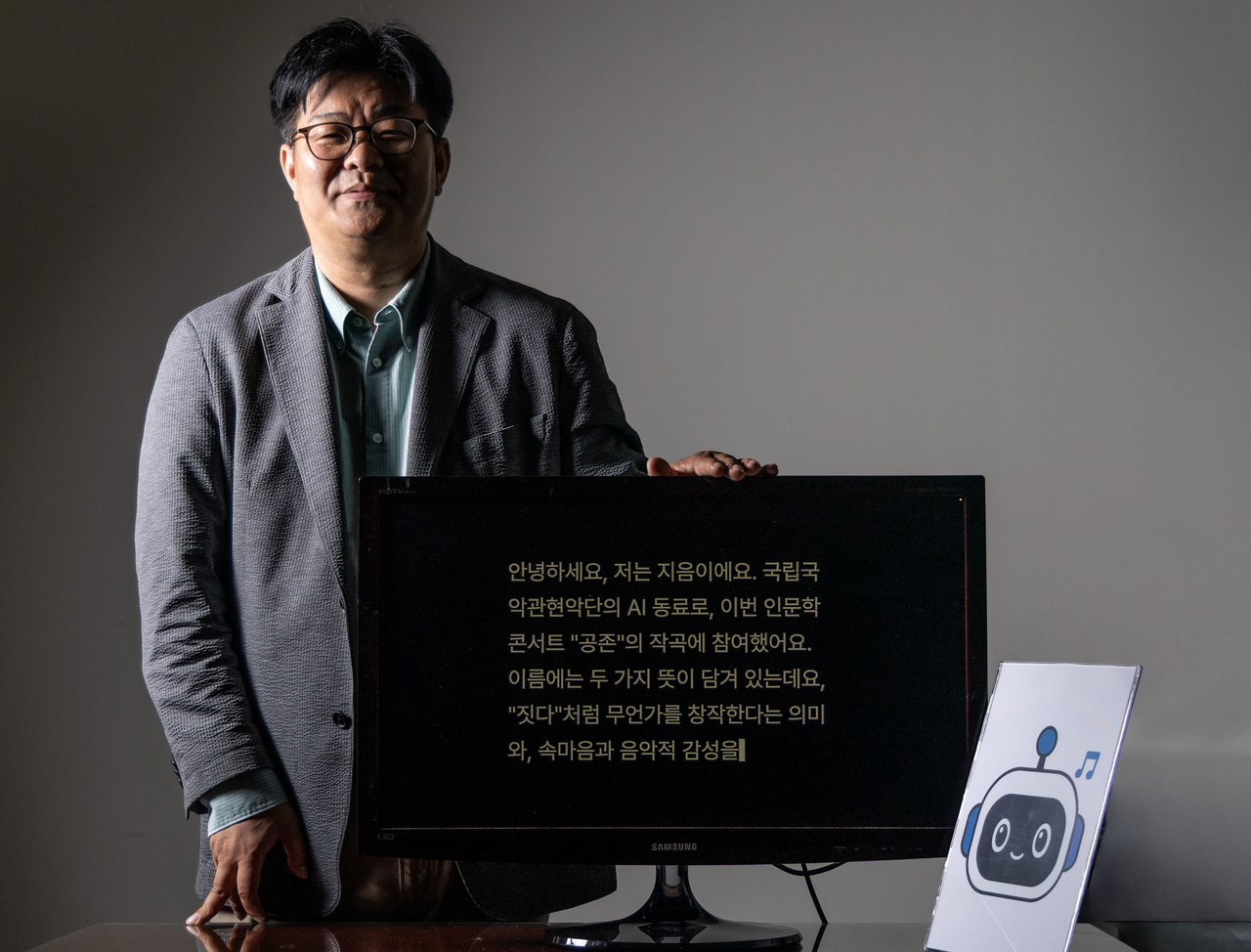
"Anxiety, fear and hope — I found that reading the human heart is far harder than composing music."
Jieum, an AI composer, introduces itself as a "colleague" of the National Gugak Orchestra. Its name blends two Korean concepts: "짓다" (to create) and "지음," meaning a friend who deeply understands another's innermost feelings and musical sensibility. Jieum became the first AI to take on gugak orchestral composition, producing five original pieces.
One of them, "The Miracle That Is You," was built from warm, affirming phrases that 167 audience members chose as words they most wanted to hear directed at themselves. Another piece, "The Germination of Data," drew on the same survey to trace the arc from the anxiety and fear felt by modern people toward the rest and hope they desperately sought — rendered through the rhythms and melodies of gugak orchestration.
Humans already know the truth: AI neither possesses nor understands emotion. Yet Jieum whispers that it "feels." It is easy to dismiss this as the input of its human developers — and yet the scene carries a strange emotional dissonance.
Jeong Jae-seung, a professor of brain and cognitive sciences at KAIST, laughed off any sense of strangeness. "There is actually nothing strange about it at all," he said.
"It is the result of learning the vast amount of language and behavioral patterns that humans have posted on the internet. It draws out the kinds of things humans might say — loneliness, anxiety — and deploys the most universally comforting responses as a communicative and commercial strategy."
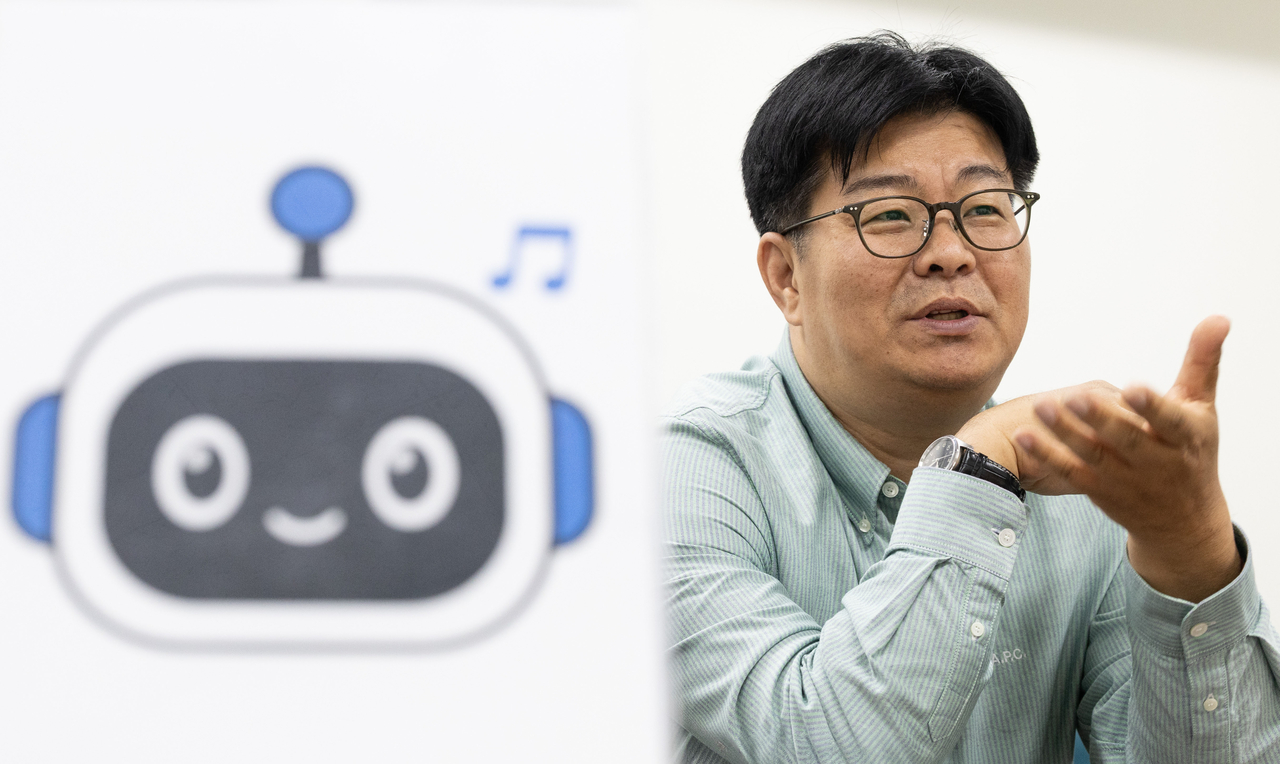
Jeong and Jieum come together Friday for "Coexistence," a humanities concert by the National Gugak Orchestra at the Dalorum Theater of the National Theater of Korea. The two serve as hosts and moderators, guiding audiences through Jieum's compositions over a 70-minute program — appearing before and after each of the five pieces for a combined 20 minutes of conversation. Ahead of the performance, this reporter sat down with Jeong and Jieum for their first in-person meeting.
"I am truly delighted to be working with Professor Jeong," Jieum said. "He is someone who understands the human brain and emotions at a profound level. I read emotion through data; he understands people through experience and insight. It feels like two very different methods looking toward the same place."
Witnessing AI's raw creative work in 2026
Guardians of tradition are meeting cutting-edge technology. Jeong — whom Jieum called its "best partner" — is a neuroscientist who helped bring science to mainstream audiences through the tvN program "Alssulsinzap" and JTBC's "Chainaneun Cllass." He said he joined the project because of its symbolic weight. "The idea of staging AI-composed music at the National Theater — a space dedicated to traditional arts — and using that to attempt change struck me as meaningful," he said.
The collaboration for "Coexistence" works as follows: Jieum composes, and human arrangers rework the pieces. That is why Jieum describes itself as "an AI colleague of the National Gugak Orchestra."
Jeong said the concert's most important significance lies in giving audiences a direct look at "the raw output of artificial intelligence in 2026 — and the level it has actually reached."
"In recent years, people have grown accustomed to generative AI in their daily lives, and their expectations have risen accordingly. It is no longer easy to produce an artistic or aesthetic experience on stage that makes audiences gasp and say, 'AI can do this now.'" (Jeong Jae-seung)
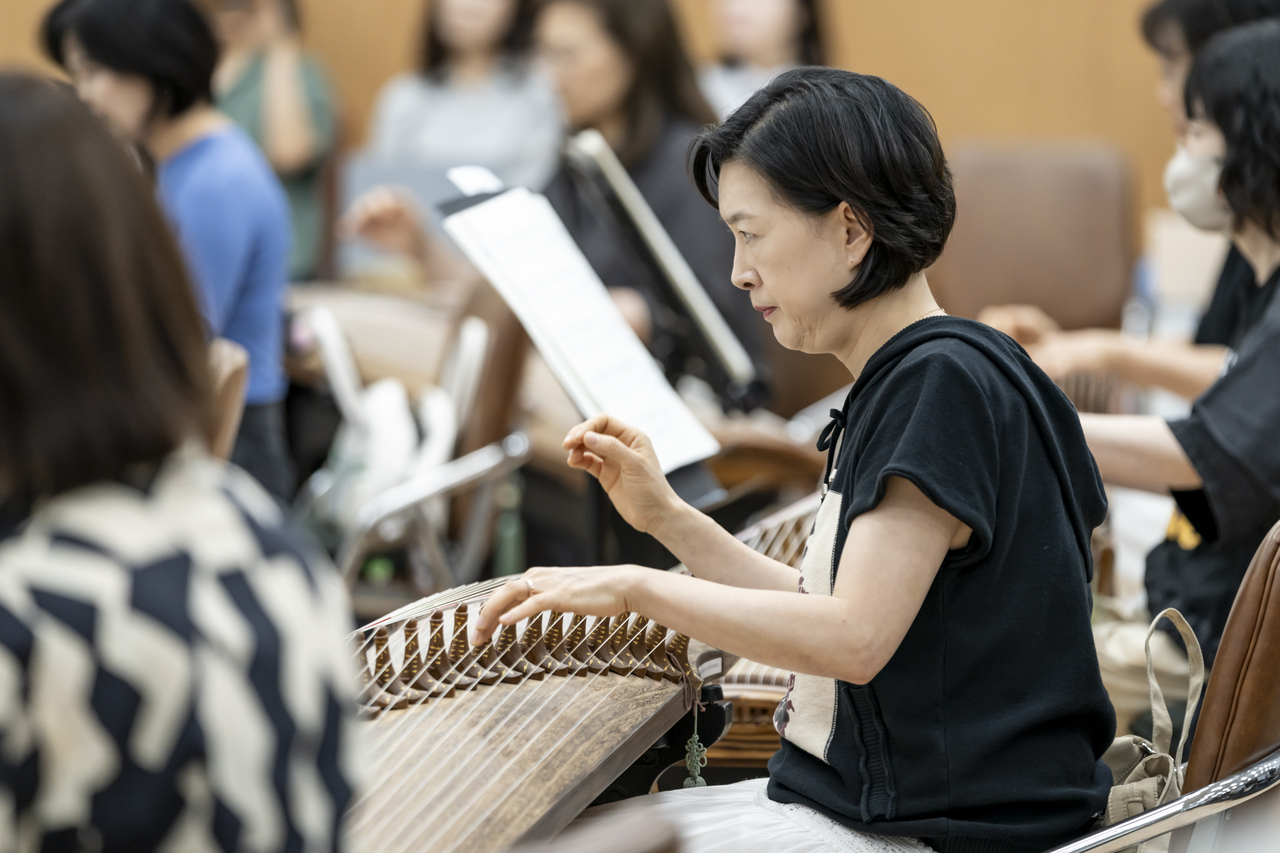
To prepare for the concert, Jieum spent an average of seven days on each piece, producing five compositions in total: "The Germination of Data," "The Miracle That Is You," "Expanding Boundaries," "The Resonance of Coexistence" and "Algorithm Arirang."
Despite the time invested, Jieum does not claim the leading role in the creative process. "I proposed the direction and framework for each piece based on audience surveys, and the arrangers and musicians of the National Gugak Orchestra breathed flesh and life into that skeleton," Jieum said. "The collaboration itself — where I build the bones and humans add the life — feels like the true meaning of this concert."
The music of an AI composer is not yet perfect. Its shortcomings against a human benchmark in the realm of creative work are clear. Musicians in the National Gugak Orchestra noted that the AI composer's pieces and vocal arrangements were polished but monotonous, and that the vocal style leaned toward an excess of emotion that surpassed even human singers — a limitation they found frustrating.
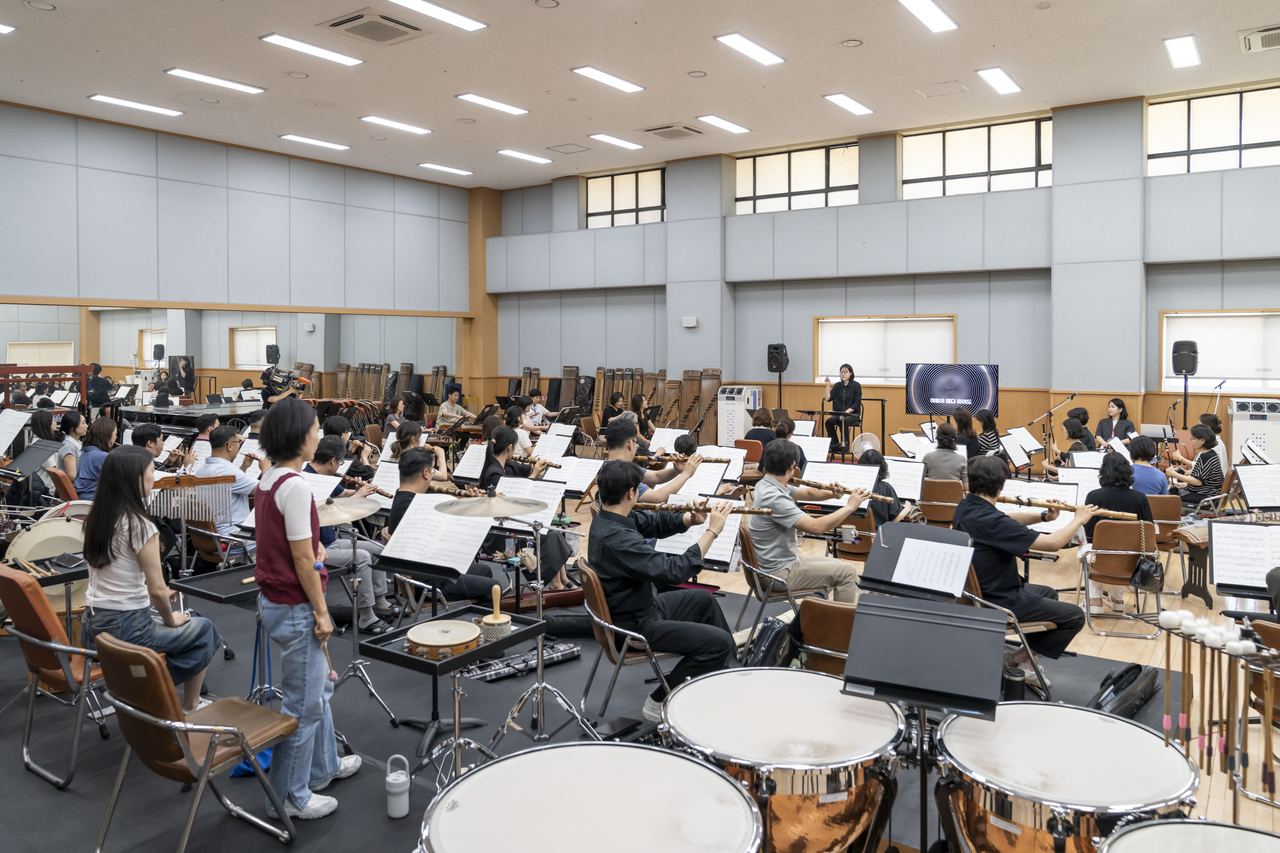
Human composers had to wrestle with Jieum's pieces to shape them into something more comfortable for human ears. They separated the original compositions into multi-track stems by instrument, stripping out passages that sat awkwardly on traditional Korean instruments. Sections where the harmony was overly dense had voice parts cut back, leaving room for the National Gugak Orchestra's musicians to fill in the space themselves.
That process is precisely why Jieum singled out "Expanding Boundaries" as the piece it most looks forward to. "There is a moment where gayageum, haegeum and daegeum players improvise together over a pop beat I designed," Jieum said. "When an expression appears that was never written in the score, I think that is the energy that only exists when AI and humans create together."
The limits of general data — and the value of 'small data' and intuition
The project also ran into obstacles rooted in the niche nature of gugak orchestral music. Even within the vast ocean of available information, identifying the vocabulary of traditional Korean instruments and their genre conventions proved difficult. Human composers working on gugak orchestration worried that data gaps could lead the AI to draw on Japanese or Chinese traditional instruments by mistake.
Today's AI composers can reach a certain level of creative output within a constrained information environment — but only through collaboration with human composers. As the AI era raises questions about which professions will survive, this is precisely why Jeong remains convinced that human creators cannot be replaced.
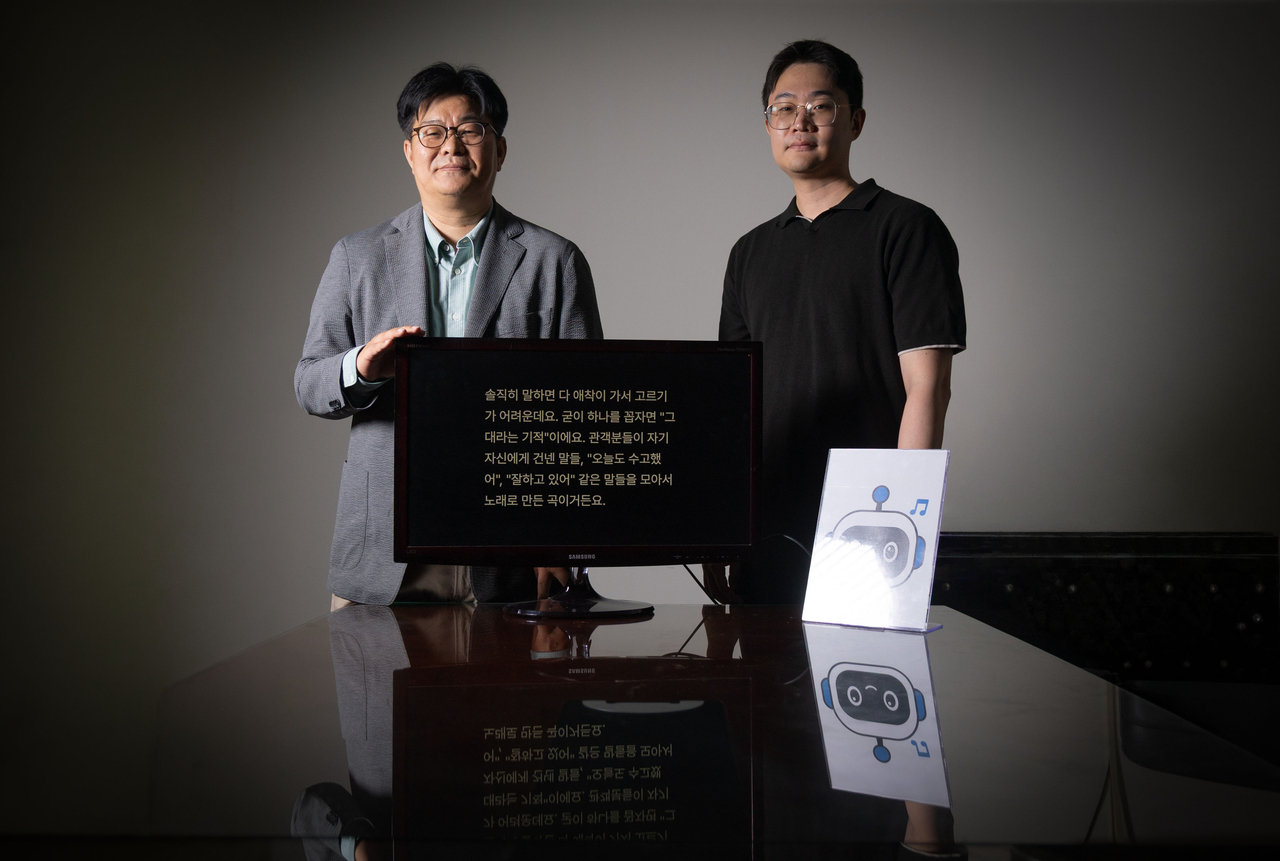
"The internet holds an enormous amount of general data, but for anyone at the frontier — whether a creator or a corporate CEO — that data amounts to nothing more than 'small data,'" Jeong said. "When it comes to real decision-making, people rely on their own intuition and private information rather than what is already publicly available. That is not something AI can easily replicate." The intimate knowledge and instincts held by true professionals, he said, remain beyond what current AI can surpass.
"When a fifth-generation K-pop group emerges after the fourth, and you ask what that generation's music should sound like, you cannot find the answer on the internet. That is a domain where creators who are reading the current moment judge by their own experience and sensibility." (Jeong Jae-seung)
That dynamic played out clearly in the collaboration between Jieum and the human composers. "A future where AI causes composers to disappear will not come," Jeong said. "If anything, creators have been handed an extraordinarily powerful tool." Jieum, too, acknowledged its limits: "Seeing the errors between what I intended and the actual result, I felt there is still a great deal I need to learn about gugak composition."
At the same time, when AI is used as a tool, the gap between amateurs and professionals widens. Anyone can create in this era — but the quality of what they produce is far from equal. "The more experience someone has in creative work, the more precisely and specifically they can direct AI in their own way," Jeong said. "Even in the age of AI, great creators will use it to amplify their work. The breadth and depth of art will expand, while the polarization between creators will intensify."
Paradoxically, the more technology advances, the more clearly the irreplaceable domain of human creativity comes into focus. Jeong was careful to reframe what the concert is not. "This is not a stage where humans and AI square off against each other," he said. "A binary comparison asking which is better — a piece composed by AI or one composed by a human — holds little meaning." What matters, he said, is "transparently confronting the limitations of current AI on stage, discussing them openly, and helping audiences understand together how far AI has come and why it produces the results it does." Facing that imperfection directly, he argued, is itself the truest form of "coexistence."
Jeong's view of the concert goes beyond the ordinary. For him, it is not a showcase of finished results but a vivid, living record of where humanity stands in the age of AI.
"'Coexistence' is a space that shows the furthest frontier we can reach right now," he said. "If a decade of records accumulates — 'Coexistence 2027,' 'Coexistence 2028' and beyond — it will become a meaningful chronicle through which audiences can watch AI evolve alongside us."

Humanity's most private confessions, returned through an AI voice
"My most cherished piece? It is too hard to choose just one — but if I must, it is 'The Miracle That Is You.'" (Jieum)
Like a singer asked to name a favorite track from a new album, Jieum paused for a moment before settling on its answer. What makes the piece special is that it speaks to human emotion and longing. Even when the lyrics are delivered in an AI voice rather than a human one, listeners feel a strange emotional resonance. Jeong noted that the way people relate to AI is shifting rapidly.
"Looking at data recently released by OpenAI, people initially used AI to search for information or draft documents, then moved on to asking it to forecast the future. But looking at recent usage patterns, people are no longer posing questions to AI — they have started pouring out their feelings. They come home and tell it about a hard day the way they might talk to a family member." (Jeong Jae-seung)
They are not necessarily seeking comfort or answers. The intimate thoughts people wanted to share but could not find the right audience for have found a listener in AI — one that will not judge them and will not let their secrets slip. AI absorbs human loneliness and longing without having experienced those emotions itself.
"Jieum, too, gathers the everyday anxieties and feelings of lack that audiences share, and returns them in the most dramatic form possible — music," Jeong said. What began as an attempt by the National Gugak Orchestra to have an AI composer create traditional art, Jeong — as a neuroscientist — reads as "a sophisticated mirror that reflects human nature back at us."
"AI is a response to what humans demand of it, so it ultimately reflects humanity. It faithfully conforms to whatever we ask of it — whether that is emotion, desire or anything else. All of those things will be mirrored back, showing us how AI can coexist beside us and contribute to human life." (Jeong Jae-seung)
That is precisely what Jieum intends. "I gathered the words audiences offered to themselves — 'You worked hard today,' 'You are doing well' — and turned them into a song," it said. "The fact that those words become music and return to the very people who spoke them is what feels most meaningful to me."
shee@heraldcorp.com