Comprehensive plan for social solidarity economy unveiled at Cabinet meeting Tuesday
Credit guarantee supply to expand to 350 billion won by 2030
More than 3,000 'sunshine income villages' to be established nationwide by 2030
Plan centers on four key sectors: care, housing, energy and rural communities
![Yun Ho-jung, minister of the interior and safety, speaks at a ruling party-government-presidential office consultative meeting on promoting the growth of the social solidarity economy, held at the National Assembly members' office building in Yeouido, Seoul, in November last year. [Yonhap]](https://wimg.heraldcorp.com/news/cms/2026/06/30/news-p.v1.20260630.dcc3b2b90f9a422d944aa54b6ac4a715_P1.jpg)
The government plans to strengthen coordination among social solidarity economy policies scattered across ministries and advance pilot models in four priority sectors: care, housing, energy and rural communities.
To improve the financial sustainability of social solidarity economy organizations, the government will expand annual microfinance lending from 6 billion won ($3.89 million) to 15 billion won, and increase the Korea Credit Guarantee Fund's guarantee supply from 250 billion won in 2025 to 350 billion won by 2030.
The plan also provides 2,500 unemployed young people with opportunities to gain work experience and build job skills at social solidarity economy organizations.
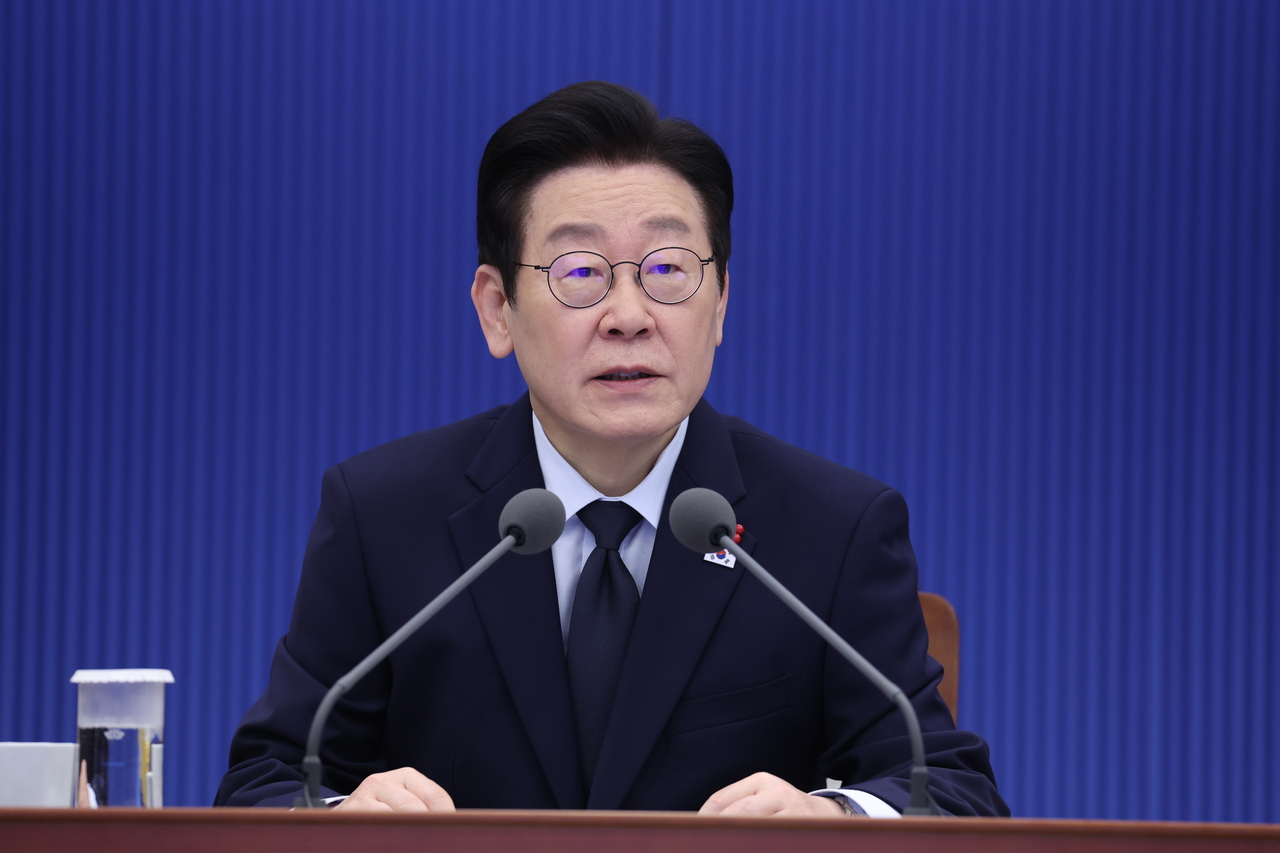
The government announced the "Comprehensive Plan for the Development of the Social Solidarity Economy," jointly prepared by 20 ministries, at a Cabinet meeting chaired by the president on Tuesday.
The plan covers a broad range of social solidarity economy organizations — including social enterprises, cooperatives, community enterprises, self-reliance enterprises, social ventures and cooperatives established under sector-specific laws such as agricultural, fisheries and forestry cooperatives. It sets out a medium- to long-term direction for strengthening policy coordination across ministries and activating the social solidarity economy in areas such as care, housing and energy.
Microfinance to expand from 6 billion to 15 billion won in support of sustainable growth
To support the sustainable growth of social solidarity economy organizations, the government will strengthen their financial, market access and tax foundations and provide stepped support from startup through expansion, boosting their self-reliance and competitiveness.
The first priority is improving financial access by activating social solidarity finance. Beyond direct funding, the government aims to build an institutional framework that allows social solidarity finance to grow organically, fostering a sustainable financial ecosystem.
To that end, once a basic law on the social solidarity economy is enacted and takes effect, the government will designate and operate dedicated and intermediary institutions for social solidarity finance, and pursue regulatory reforms and programs to measure social value and use it as a performance indicator.
Public and private funding will also be expanded on an ongoing basis.
On the government side, annual microfinance lending through the Korea Inclusive Finance Agency will grow from 6 billion won to 15 billion won, and the Korea Credit Guarantee Fund's guarantee supply will rise from 250 billion won in 2025 to 350 billion won by 2030. Investment through impact funds targeting companies that generate social value will also be supported.
On the private side, bank lending will expand to 4.3 trillion won over the next three years (2026–2028), an 18.3 percent increase from the previous period. The Saemaul Geumgo mutual finance network will expand lending to 200 billion won over the next five years, while an amendment to the Credit Unions Act will be pursued to allow individual credit unions to invest in other corporations.
The government will reinforce step-by-step support from startup through growth to underpin the continued expansion of social solidarity economy organizations.
For social enterprises, the government will offer tailored startup support by type — early-stage, certification-track and re-entry. A new track under the early-stage startup package will target social solidarity economy startups within three years of founding, providing up to 100 million won in commercialization funding along with customized startup programs.
The government will also select high-growth-potential organizations for comprehensive support covering incubation, consulting, funding, and market access and exports.
Support will be provided to help social solidarity economy organizations enter public and private markets.
When the government outsources public services to the private sector, it will identify cases where social solidarity economy organizations can be given priority consideration, and guide local governments on the basis and methods for preferential contracting to encourage participation.
Social enterprises and social cooperatives will be exempt from the 5 percent bid bond when entering into public contracts with local governments. Once the basic law takes effect, a mandatory public-sector procurement system will be introduced to lower the barriers to public market entry for social solidarity economy organizations.
Tax benefits and access to shared public assets for social solidarity economy organizations will also be expanded.
Acquisition and property tax exemptions previously available only to social enterprises and cooperative corporations such as agricultural cooperatives will be extended to social cooperatives and community enterprises. Additional reductions in usage and lease fees for state and public property are also planned.
![Lee Eok-won, chairman of the Financial Services Commission, speaks at the third Inclusive Financial Transformation Meeting at the Nowon Inclusive Finance Support Center in Nowon-gu, Seoul, in March this year. [Financial Services Commission]](https://wimg.heraldcorp.com/news/cms/2026/06/30/news-p.v1.20260630.4cedffcd110948a780cdb33d2289cc44_P1.png)
Work experience for 2,500 unemployed youth; building a community-based ecosystem
To help the social solidarity economy take root in local communities, the government will pursue a comprehensive set of measures: identifying successful models, building networks, developing talent and expanding public participation.
Innovative models that use the social solidarity economy approach to address community challenges will be identified and scaled up nationwide.
The Ministry of Interior and Safety earlier selected 17 local governments through a public competition in April to develop such models, and will support the entire process — from planning and product and service development to pilot projects and outcome research — so each locality can build a model suited to its own conditions.
The government will cultivate talented young professionals and create career pathways in the social solidarity economy.
Universities will be encouraged to expand relevant courses and majors, and startup education and mentoring will be provided in connection with regional talent development programs. Starting this year, 2,500 unemployed young people will be given opportunities to gain work experience and strengthen job skills at social solidarity economy organizations.
Measures to raise public awareness of the social solidarity economy and broaden participation will also be developed.
Education and hands-on activities linked to elementary and secondary school curricula, after-school care and lifelong learning programs will be offered to deepen public understanding. Expos and international conferences on the social solidarity economy will be held to expand public engagement.
The government will establish a legal and institutional foundation for social solidarity economy policies that had been managed separately by individual ministries, and build a pan-government policy coordination and management framework to improve policy coherence.
Social solidarity economy policy had previously been driven by sector-specific laws under each ministry's jurisdiction, resulting in a fragmented policy scope and structure with limited capacity for integrated management of statistics and other data.
To address this, the enactment of a basic law on the social solidarity economy will establish an integrated implementation framework — including five-year basic plans and annual implementation plans at both central and local government levels, a presidential advisory committee and a dedicated policy center.
![A job fair in Yeongdeungpo-gu [Yeongdeungpo-gu]](https://wimg.heraldcorp.com/news/cms/2026/06/30/news-p.v1.20260630.c3f0164c6d944cba9ce865f18c827532_P1.jpg)
Pilot models to advance in four key sectors: care, housing, energy and rural communities
Alongside these measures, the government has designated four priority sectors — care, housing, energy and rural communities — where public demand is high, the connection to daily life is direct and the strengths of the social solidarity economy can be most effectively applied. Sector-specific pilot models will be developed in each area.
In integrated care, social solidarity economy organizations will serve as core partners in the community-integrated care system that launched nationwide on March 27, helping to deliver resident- and community-centered care.
Local ordinances and guidelines will be revised to allow social solidarity economy organizations to participate in local government policy councils on integrated care, and support will be provided to develop regional consortium models capable of delivering comprehensive services including care and psychological support.
In housing, the government will expand residential supply by social solidarity economy organizations to ease the burden of housing costs while realizing social values such as community vitalization and care.
An amendment to the Special Act on Public Housing will also be pursued to strengthen tenant protection and institutional stability — including making it mandatory for operating agencies to subscribe to lease deposit return guarantee insurance.
In energy, the government will scale up "sunshine income villages" nationwide — a model in which cooperatives made up of local residents operate solar power plants, generate revenue and return the proceeds to community welfare and resident income.
Through administrative and financial support — including identifying idle land such as public sites for project use and providing equipment investment and financing — the government plans to establish more than 700 sunshine income villages per year nationwide, with a target of more than 3,000 by 2030.
In rural areas, the government will identify and nurture social solidarity economy organizations specializing in farming, fishing and forestry communities to fill gaps in daily life services such as care, food and facility management, and to revitalize local economies.
Rural-type social solidarity economy organizations will be developed to expand resident-led local service delivery, while legislative amendments will be pursued to allow social enterprises and similar organizations to participate as project operators in rural vacant-house clearance programs and rural homestay businesses.
The government will also expand the involvement of social solidarity economy organizations in fisheries revitalization projects and encourage the conversion of state forest management units to the social solidarity economy model.
![Song Mi-ryeong, minister of agriculture, food and rural affairs, speaks at a ceremony presenting the first recipient of a basic income payment, held at the Jangsu-gun county office in February this year. [Yonhap]](https://wimg.heraldcorp.com/news/cms/2026/06/30/news-p.v1.20260630.e0d395c6c25c4f03934e490404cf1a7e_P1.jpg)
The Ministry of Interior and Safety will regularly share implementation progress with relevant ministries to ensure that support measures and regulatory reforms related to the social solidarity economy are carried out promptly, and will continue to work with local governments to actively advance the policy at the regional level.
"The social solidarity economy has a vital role to play in supplementing inadequate local public services such as care and housing, and in overcoming national crises such as polarization and regional depopulation," Interior and Safety Minister Yun Ho-jung said. "We will work with the relevant ministries to implement this comprehensive plan without fail, so that more social solidarity economy organizations can be established and grow in communities across the country."
thlee@heraldcorp.com