A passenger in his 50s who collapsed at Bulgwang Station last month credited staff CPR and AED response with saving his life; automated defibrillators are deployed at every station on lines 1–8, with regular emergency training for all staff.
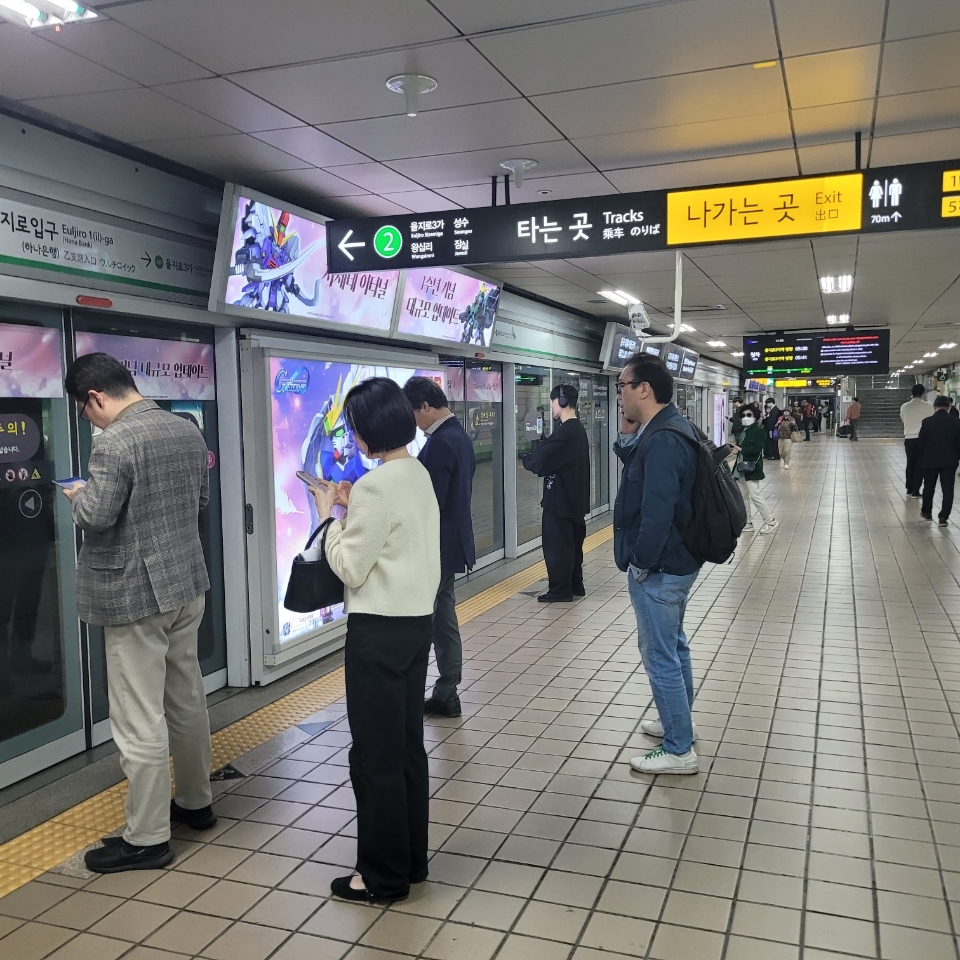
Seoul Metro (president Kim Tae-gyun) said its staff saved the lives of 171 passengers who suffered cardiac arrests inside subway stations over the past five years through prompt emergency response.
That works out to an average of three lives saved per month.
The critical window for cardiac arrest patients is generally four to six minutes, making rapid initial response the decisive factor in survival.
The number of cardiac arrest passengers rescued on Seoul subway lines 1 through 8 was 68 in 2022, 31 in 2023, 28 in 2024 and 32 in 2025. This year, staff have saved 12 passengers through CPR and automated external defibrillators (AED) at stations including Konkuk University (Line 7), Naebang, Samsung and Express Bus Terminal (Line 3).
Last month, a passenger in his 50s who collapsed from cardiac arrest on a platform at Bulgwang Station was saved by staff and afterward repeatedly expressed his gratitude, saying he had "been given a new life thanks to the swift action of the station staff."
At around 5:39 a.m. on May 6, a man in his 50s lost consciousness and collapsed on the platform of Bulgwang Station on Line 6. Station manager Lee Sang-hyeon and employee Lee Dong-hyeon, who were on duty at the platform, discovered him, checked his responsiveness and immediately began CPR. At around 5:43 a.m., deputy station chief Lee Sang-chil arrived at the scene with an AED, and emergency treatment combining CPR and the defibrillator continued for about 10 minutes. The passenger regained his pulse and breathing at around 5:55 a.m. and was transported to a hospital by paramedics.
Seoul Metro attributed the results to its ongoing emergency training programs and systematic response protocols.
The company has deployed at least one AED at every station on lines 1 through 8. At 10 high-traffic stations — including Seoul Station and Hongik University Station — up to seven units are available to ensure rapid access in an emergency.
In addition, the company inspects equipment at least once a month and replaces consumables such as batteries and pads on schedule to keep all units in working order.
Seoul Metro also conducts regular hands-on training so that staff can respond quickly and calmly when a cardiac arrest or other emergency occurs.
Ma Hae-geun, head of Seoul Metro's operations division, said frontline staff quietly protecting passengers' safety are "the unsung heroes of Seoul's subway." He added that the company would continue to strengthen its emergency response capabilities and rigorously maintain related facilities and equipment "to build a safe subway environment where citizens can ride with peace of mind."
seouldream01@heraldcorp.com