Ministry of Climate, Environment and Energy holds industry-academia forum; levy rates unchanged since 2012
![[123RF]](https://wimg.heraldcorp.com/news/cms/2026/06/30/news-p.v1.20260630.4ab0c9bd45124e34938e07b2dc644edd_P1.jpg)
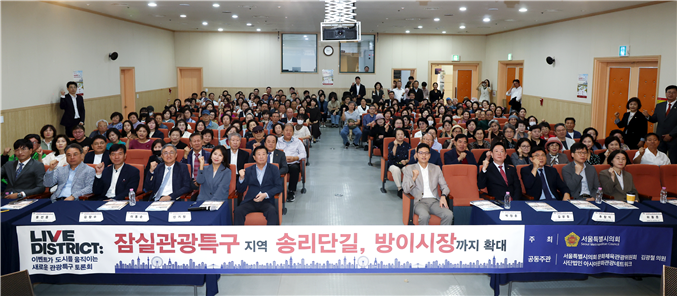
The Ministry of Climate, Environment and Energy convened a public-private consultative body meeting Tuesday at Seoul Biz Center in Yongsan-gu, Seoul, to discuss reforms to the waste charge regime.
The forum brought together industry representatives from the Korea Plastic Packaging Container Association and the Korea Plastics Industry Cooperative Federation, researchers from the Korea Environment Institute, and experts and civic groups including the Green Consumer Network.
The ministry said it plans to use the consultative body to closely examine the production and use of short-lived plastic products such as disposables, their recyclability, and the criteria and rates used to calculate waste charges — with the aim of drafting a reform proposal.
Tuesday's meeting covered the current operation and shortcomings of the waste charge system, international trends including plastic tax regimes abroad, and the direction of future reforms.
The waste charge system, in place since 1999, levies the cost of waste disposal on manufacturers and importers of products that generate hard-to-recycle waste.
The charge applies to manufacturers and importers of plastics, textile products other than clothing, leather goods, bags and footwear, and medical, precision and optical instruments and watches.
It also covers containers holding pesticides or toxic substances, antifreeze, disposable diapers, cigarettes, and ice packs containing superabsorbent polymer as a coolant.
Waste charge rates have remained unchanged since 2012, prompting criticism that the system can no longer keep pace with rising plastic waste disposal costs and that its price-signal function has become inadequate.
The ministry said overhauling the waste charge framework could steer manufacturers toward material substitution, the use of recycled raw materials, and integration into recycling systems — ultimately reducing plastic use and raising recycling rates.
"The time has come to reform the waste charge system in order to fulfill the era's defining task of transitioning to a plastic-free circular economy," said Kim Go-eung, director general of the ministry's resource circulation bureau. "Through the consultative body's discussions, we will carefully review the burden on industry and the public, and strike a balanced consideration of the system's effectiveness and social acceptability."
thlee@heraldcorp.com