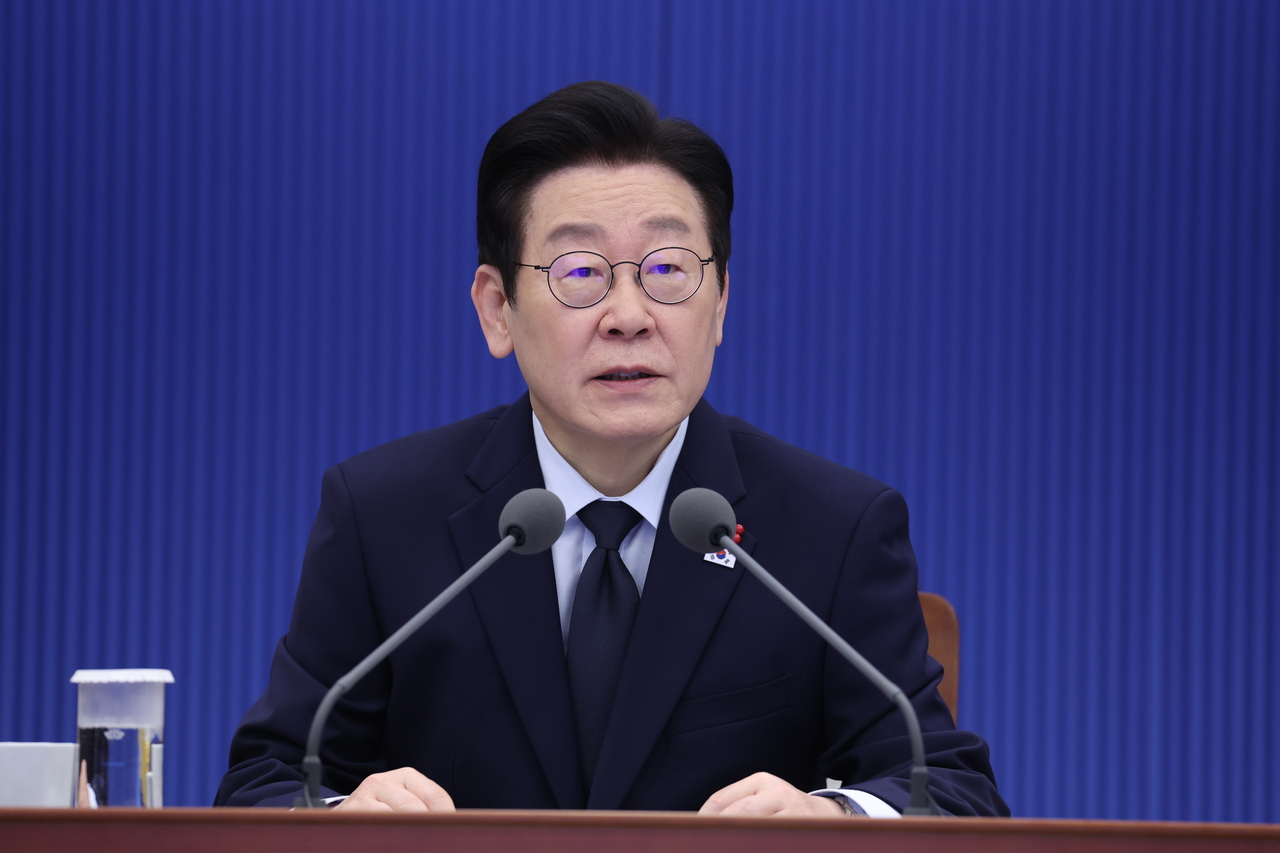
'Dissenting views may be hard to voice,' mayor warns
'Stop demonizing multi-home owners — expand youth housing options'
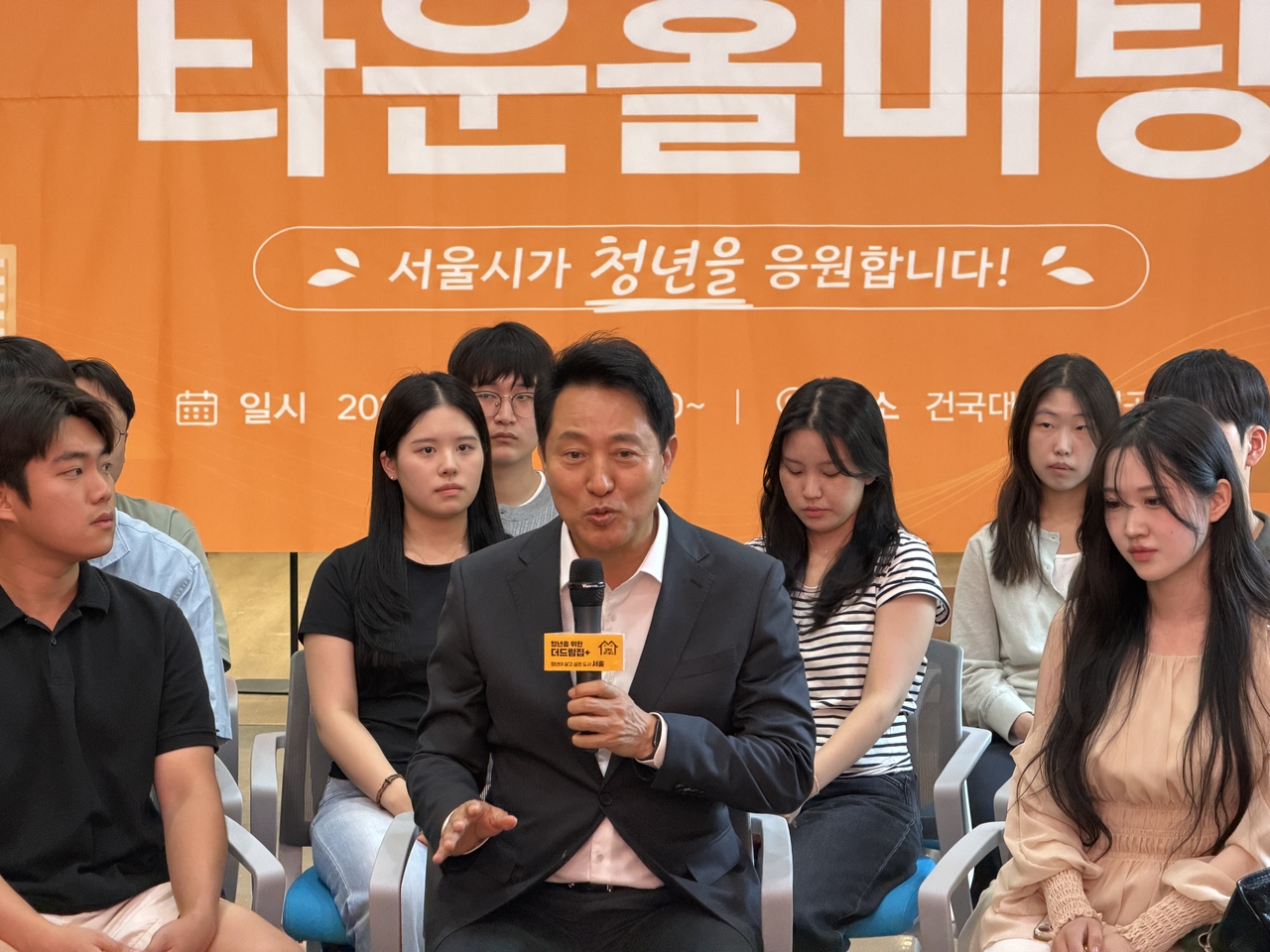
Seoul Mayor Oh Se-hoon said he plans to attend the cabinet meeting on July 7 to deliver data on the Seoul real estate market directly to the central government.
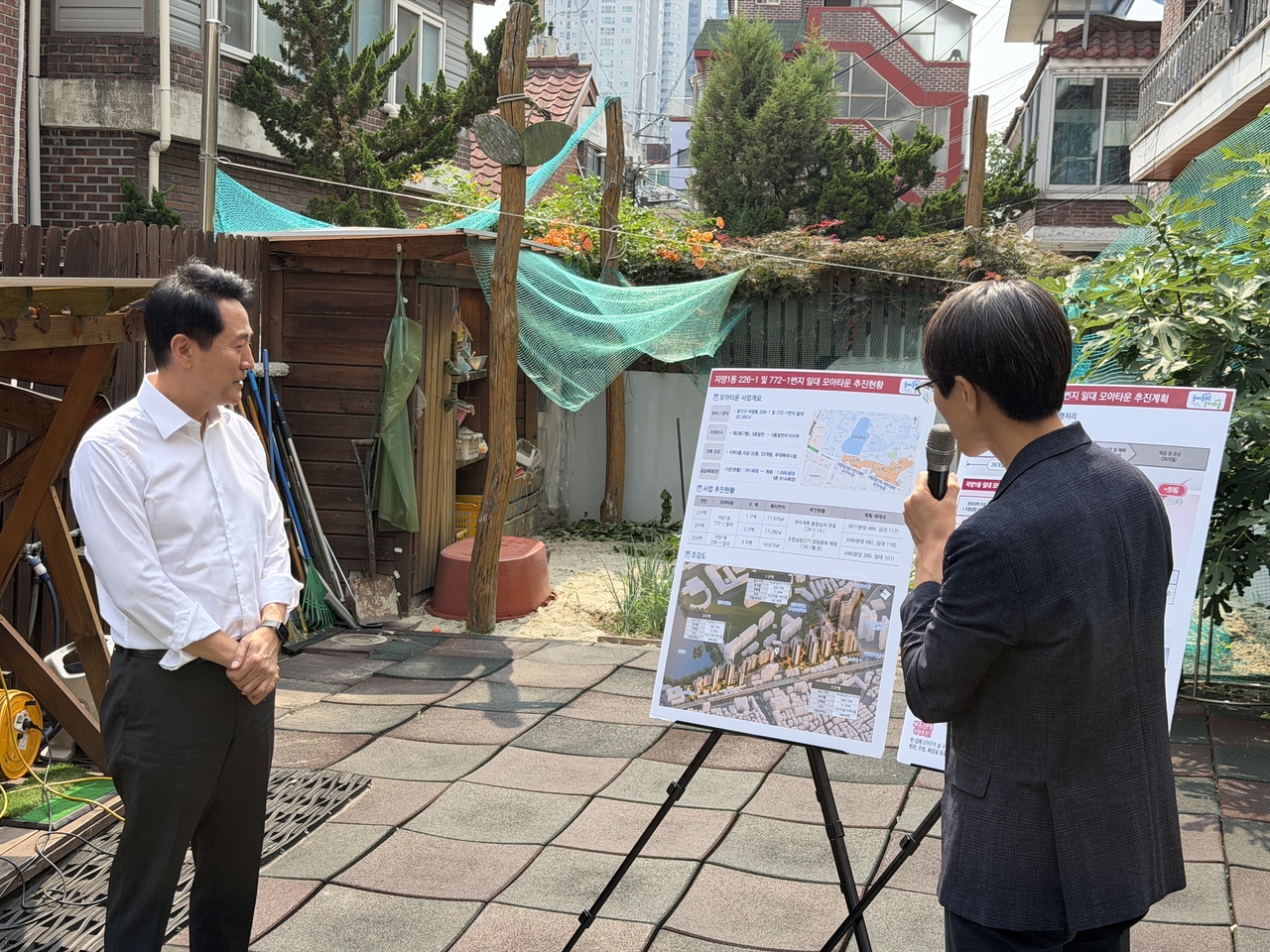
Oh made the remarks Tuesday afternoon after hosting a town hall meeting on youth housing stability policy with about 30 students at Konkuk University, then visiting a Moatown redevelopment site in Jayang-dong, Gwangjin-gu, near the campus, where he spoke to reporters.
"I requested a meeting with President Lee Jae Myung on real estate matters, but have not yet received a response," Oh said. "For now, I'm taking it to mean: if you have something to say, come to the cabinet meeting and say it."
He added that he believed it would be more effective to "sit down calmly and convey Seoul's data and the voices of its citizens without filtering anything out," and said he would wait a little longer since the next cabinet meeting is still days away. Oh said that if a separate meeting does not materialize, he will attend the cabinet meeting and present the materials he has prepared.
Oh also warned that the president's strong personal convictions — expressed continuously on social media — could create an atmosphere in which ministers with differing views feel reluctant to speak up. "When that happens, ministers from related ministries may find it burdensome to voice a different opinion, even if they have one," he said.
Tuesday marked the final day of Oh's eighth elected term, and the youth housing forum and Moatown site visit were his last scheduled field activities. "I believe housing is ultimately the biggest concern for Seoul residents," he said. "Young people in particular are the future generation — the generation most deeply affected by housing issues."
Oh also noted that Kim Yong-beom, the presidential office's policy chief, had recently spoken about the need to expand housing supply. "During the election I kept saying 'just build, build, build,' and seeing the policy chief make a similar argument made me think it may have had some effect," he said.
Oh also expressed concern about the government's push to tighten regulations on private rental housing operators. "The side effects of policies that treat private landlords as adversaries ultimately fall on young people and low-income residents," he said. "Multi-home owners need to exist — it is precisely because they hold multiple units that those units become available for rent."
The Seoul Metropolitan Government plans to expand the supply of various types of youth housing to address the shortage facing young residents. "Youth housing demand cannot be met through a single type of housing," Oh said. "We need to offer a range of options suited to different needs — studio apartments, dormitory-style housing, shared housing, public rental units and asset-building housing." The city plans to supply about 74,000 units of youth housing over the next four years.
"If these plans proceed without a hitch and fiscal capacity grows, the supply volume can increase further," Oh said. He added that the city is also establishing a housing promotion fund, with plans to raise about 220 billion won ($143 million) per year over 10 years for a total of 2.2 trillion won.
Meanwhile, at the Moatown site in the Jayang 1-dong 226-1 and 772 area that Oh visited Tuesday, a proposal was also presented to supply "generation-divided apartments" linked to youth housing stability.
A generation-divided apartment is a unit designed to allow two households to live independently within a single home, with separate entrances, kitchens and bathrooms. The concept aims to improve the poor living conditions typical of studio-heavy neighborhoods near universities and to offer young people a more stable housing option.
For landlords, the arrangement allows them to earn rental income while retaining single-home tax benefits. Young tenants, meanwhile, gain access to a safe living environment and apartment-level community facilities.
"Homeowners can opt into the generation-divided apartment format during the project authorization process," said Yang Jun-mo, head of the Seoul Metropolitan Government's strategic housing supply division. "We plan to encourage participation by offering incentives such as expanding the exclusive use area by the size of the balcony as a baseline benefit."
Yang added that the city estimates demand for about 100 units in the area, and said it plans to review applying the same model to Moatown sites near other universities beyond Konkuk.
quq@heraldcorp.com